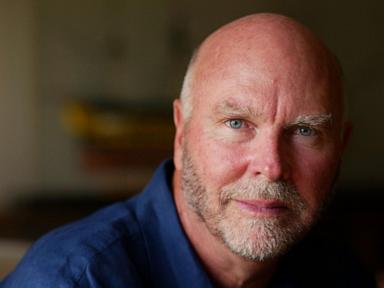
J. Craig Venter was never going to settle for a quiet life in a lab. Most scientists are content to slowly add bricks to the wall of human knowledge. Venter wanted to build the entire skyscraper himself. He was arrogant, relentless, and arguably the most influential biologist of the last fifty years. When news broke of his death at 79, the headlines focused on the race to sequence the human genome. They framed it as a contest between him and the government. That’s missing the bigger picture. Venter didn't just beat the public project; he broke the model of how science is funded and executed.
The human genome project was stuck in bureaucratic slow motion during the nineties. It was a massive, government-funded effort that promised results in decades. Venter looked at the glacial pace and decided he could do it faster. He started Celera Genomics. He aimed to finish the job in just three years. People laughed. The scientific establishment treated his plan like a pipe dream. It was considered impossible to sequence the entire human code with his "shotgun" approach. He proved them wrong by finishing the draft sequence in record time.
Disrupting the status quo
The battle wasn't just technical. It was a collision of philosophies. Venter viewed the genome as data. He wanted it open and accessible for the public, but he needed a profit engine to sustain the work. The government scientists, led by Francis Collins, feared a private company would lock away the code of life behind patents. This tension defined the era. It forced the government project to accelerate, effectively shortening the timeline for one of the greatest scientific achievements in history.
You need to understand the technical leap he actually took. Conventional wisdom said you had to map the genome piece by piece, like organizing a library book by book. Venter’s team used a computer-heavy method that shredded the DNA into millions of tiny fragments and used massive algorithms to reassemble them. It was brute force computing applied to biology. It worked. His success shifted the entire field of genetics into the digital age. Without Venter’s audacity, genomic research might still be stuck in the manual, analog procedures of the early twentieth century.
Beyond the human genome
People forget that Venter was already a legend before he tackled human DNA. He was the first person to sequence the genome of a free-living organism. He chose Haemophilus influenzae. It was a proof of concept. He wanted to show that you didn't need a decade to map a genome if you had the right computational tools. He was basically proving he could dominate the field long before he made national headlines.
After Celera, he didn't retire to a beach. He went sailing. Literally. He traveled the world on his yacht, the Sorcerer II, sampling ocean water. Why? He wanted to identify new species of bacteria and viruses in the wild. He was cataloging the "metagenome" of the planet. This wasn't just hobby science. He discovered millions of new genes. He fundamentally changed our understanding of microbial biodiversity. He was always looking for the next massive data set to conquer.
The synthetic life controversy
His ambition eventually pushed into the territory of synthetic biology. In 2010, his team created the first self-replicating synthetic cell. They effectively wrote the code for an organism, synthesized that DNA from scratch, and injected it into a cell. The press called it "playing God." Venter just called it engineering. He saw cells as software. If you can rewrite the code, you can build new biological machines.
Some critics found this dangerous. They worried about safety and ethics. Venter argued that we were already manipulating life through selective breeding and chemical intervention. His approach was just more precise. He wanted to design algae that could produce biofuel or bacteria that could clean up oil spills. The ethics of synthetic life are still being debated in halls of power globally. Venter, however, never waited for the debate to end. He was already onto the next lab test.
Practical lessons from a disruptor
If you look at the career of J. Craig Venter, you shouldn't just see a brilliant biologist. You should see a blueprint for how to challenge an entrenched industry. He succeeded because he exploited the inefficiencies of his competition. He understood that technology moves faster than bureaucracy. He knew how to leverage computing power when his rivals were still relying on legacy methods.
The key takeaway is simple. When everyone tells you that something is impossible or that it must be done in a specific, slow way, check the math yourself. Venter’s success came from questioning the fundamental assumptions of how sequencing worked. He didn't just work harder than the government scientists. He worked differently. He focused on scale, speed, and automation.
Most people don't have a laboratory or a multi-million dollar budget. Yet, the principle remains relevant. Efficiency is usually hidden in the processes we take for granted. Look at your own work or your own field. Where are the bottlenecks? What processes have been accepted as "standard" for years but could be completely reinvented with modern tools? That is where the next breakthrough happens.
Venter wasn't perfect. He was notoriously difficult to work with and had his fair share of public spats. He was often criticized for his ego. But the world doesn't move forward because of modest people who follow every rule. It moves because people like Venter are willing to burn down the old way of doing things to build something more effective. He left us with a map of our own biology and a roadmap for how to challenge the status quo. That’s a legacy that will last much longer than any news cycle. Don't waste time mourning the man by just repeating the same headlines. Look at the work he left behind and ask what you can optimize in your own life today. Start by identifying the biggest barrier in your path and finding a faster, automated way to tear it down. That’s how you honor a life defined by radical disruption.