Russia’s drones just hit the port of Izmail again. This isn't just another headline in a long war. It’s a calculated strike on the world’s dinner table. When Russia targets the Danube, they aren’t just trying to break Ukrainian spirit. They’re trying to choke off the last reliable way Ukraine gets its grain to the rest of us. You’ve probably seen the grainy night-vision footage of blasts near the Romanian border. It’s terrifyingly close to NATO territory, and that’s exactly the point.
The port of Izmail sits right on the edge. You can practically throw a stone from the Ukrainian docks and hit Romania. By sending Iranian-designed Shahed drones into this specific corner of the Odesa region, Moscow is playing a high-stakes game of "how close can we get?" without triggering a full-scale regional escalation.
Why Izmail Is the New Center of Gravity
Most people forgot about the Danube ports until the Black Sea Grain Initiative collapsed. Now, these river terminals are the lifeline. Izmail and Reni have become the primary exit points for millions of tons of wheat, corn, and barley. If these ports go down, global food prices spike. It’s that simple.
The strategy behind these drone swarms is obvious. Russia wants to make it too expensive and too risky for shipping companies to operate here. Insurance premiums for vessels in the Danube are already through the roof. Every drone that gets past Ukrainian air defenses makes it harder for a captain to justify docking in Izmail.
The damage isn't just physical. It's psychological. These attacks happen at night. They target grain silos, loading cranes, and storage warehouses. You don't need to sink every ship to stop trade. You just need to destroy the infrastructure that puts the grain on the ships.
The Drone Problem No One Is Solving
Ukraine’s air defense is spread thin. We know this. While Kyiv gets the fancy Patriot systems, smaller ports like Izmail often rely on older Gepard anti-aircraft guns or mobile teams with heavy machine guns. These work, but they aren't perfect. The Shahed drones are cheap—basically lawnmowers with wings and explosives. Russia can lose twenty of them as long as one hits a silo.
It’s a math problem that favors the attacker. It costs Ukraine more to shoot down a drone than it costs Russia to build one. That’s the reality of modern attrition.
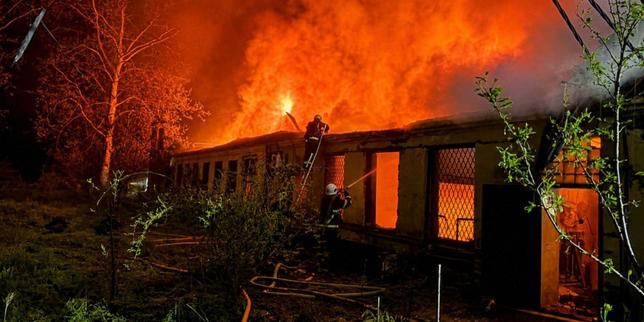
I’ve looked at the reports from the ground. The fire crews in Izmail are exhausted. They’re fighting massive grain fires that burn for days because grain is incredibly flammable when it’s packed tight. When a drone hits a silo, it doesn’t just blow up. It creates a dust explosion that can level an entire block.
Proximity to NATO Is a Feature Not a Bug
The border is the Danube itself. This means Russian drones are navigating within meters of Romanian airspace. We’ve already seen fragments of these drones land on Romanian soil.
The official line from NATO has been cautious. They don't want to start World War III over a stray piece of plastic and metal in a Romanian field. But this creates a "gray zone." Russia knows they can push the envelope. They’re testing the "red lines" every single week. If they can strike Izmail with impunity, they prove that being a NATO neighbor doesn't actually buy you a safety buffer.
The Economic Fallout Is Real
Don't think this is just a local issue. When Izmail stops moving grain, the impact hits North Africa and the Middle East within weeks. Countries like Egypt and Lebanon depend on this specific route.
- Grain prices jump on the Chicago Board of Trade.
- Shipping companies pull their vessels from the Black Sea.
- Logistics costs for truck and rail transport through Europe increase.
The "Solidarity Lanes" through Poland and Romania are clogged. The river is the only way to move the volume needed to keep the Ukrainian economy breathing. Every crater in an Izmail pier is a hole in the Ukrainian budget.
What Happens When the Drones Keep Coming
The local administration in Odesa says they’re working on better shielding for the ports. Honestly, you can’t shield a whole harbor. You need more kinetic interception. Ukraine is screaming for more short-range air defense specifically for the Danube corridor.
If you’re watching the news, look past the "infrastructure damage" labels. Look at the specific targets. They’re hitting the fuel depots too. No fuel means the tugboats can’t move. No tugs mean the grain ships stay stuck at the mouth of the river.
The world needs to stop treating these as random strikes. They’re a siege by other means. To help, we need to support the NGO efforts providing mobile power and fire-fighting equipment to these river towns. Pressure on western governments to provide specialized C-RAM (Counter Rocket, Artillery, and Mortar) systems for these ports is the only way to keep the grain moving. Stay informed on the shipping routes and support initiatives that diversify grain exports away from single points of failure. The battle for the Danube is the battle for global stability.