A smartphone video changes everything. On a sunlit street in the Pilastro neighborhood of Bologna, 42-year-old Abderrahim Fakir lay face-down on the pavement. Two police officers pinned him down, their weight pressing into his body while emergency medical workers stood nearby. Fakir, a Moroccan-born small business owner who had lived in Italy since childhood, cried out for help over and over. He begged them to stop. Then, his voice faded, his body went still, and he was pronounced dead at the scene.
That single recording ripped open a raw, festering nerve across Italy. It ignited mass protests in Bologna and Rome, triggered bitter comparisons to the murder of George Floyd, and placed Prime Minister Giorgia Meloni’s hardline security policies squarely in the crosshairs. But the real firestorm isn't just about what happened on that pavement. It's about a controversial new legal shield protecting public officials and a political climate where immigration is weaponized for maximum electoral gain. For a deeper dive into this area, we recommend: this related article.
Anatomy of a Tragedy and the Public Backlash
Police arrived in Pilastro after locals reported a man acting erratically and damaging cars. According to official statements, officers tried to calm Fakir before deploying pepper spray and forcing him to the ground. Witnesses and family members noted that Fakir was experiencing an acute crisis, potentially a psychiatric episode. Yet, the intervention escalated instantly into physical dominance rather than de-escalation.
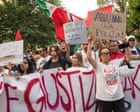
The fallout was immediate. Crowds flooded the streets of Bologna. Demonstrators hurled firecrackers, police deployed tear gas and water cannons, and the national debate fractured along predictable ideological lines. For broader details on this issue, extensive coverage is available at The Guardian.
Government ministers rushed to defend law enforcement. Interior Minister Matteo Piantedosi condemned those criticizing the police as untrustworthy of the state's justice system. Far-right figures praised the officers' conduct, while right-wing media outlets quickly surfaced decades-old drug convictions from Fakir's youth to paint him as a troublemaker.
Opposing voices pushed back with fury. Senator Ilaria Cucchi—whose own brother died tragically in police custody in 2009—denounced the public expressions of gratitude toward the officers involved. She argued that Meloni's coalition has fostered an environment seeped in hostility and structural racism.
The Dangerous Loophole Inside Italy's New Security Law
Fakir's death marks a grim milestone. It is the first time a newly enacted security bill providing a legal shield for public officials has been invoked.
Under this legislation, police officers and public workers enjoy greater insulation from criminal prosecution if it's argued they acted within the line of duty or self-defense. While prosecutors in Bologna opened an investigation into involuntary manslaughter involving two officers and four healthcare workers, those individuals are not formally registered as criminal suspects unless authorities definitively prove the restraint was unjustified.
Legal experts and human rights advocates call this a recipe for systemic impunity. Fabio Anselmo, the lawyer representing the Fakir family, warned that the rule threatens to sabotage the integrity of the investigation. When officers can return to work days after a civilian dies under their knees, accountability feels entirely out of reach for ordinary citizens.
For immigrant communities living in neighborhoods like Pilastro, the message is chilling. Many residents expressed deep fear of speaking out against state authorities, knowing that uniforms carry institutional protection while marginalized residents are treated as expendable.
How Migration Becomes a Political Weapon
The handling of Fakir's death highlights a broader, calculated strategy. Far-right factions in Italy have long championed unbridled authority for law enforcement. By framing security through a lens of constant threat, political leaders mobilize their base using fear.
When crimes or missteps by immigrants are amplified while state violence against them is excused, migration is actively weaponized. It distracts from economic stagnation, shifts public anger toward vulnerable populations, and secures votes by manufacturing a perpetual state of crisis. Fakir was a legal resident, a small business owner, and a human being who panicked—yet in death, he was reduced to a political football.
If Italy's judicial system fails to transparently investigate lung compression and police protocols in this case, the social fabric will tear further. True security requires accountability, not blankets of legal immunity that silence those who die waiting for help.