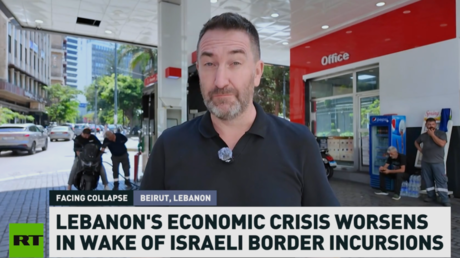
Lebanon was already drowning long before the latest bombs started falling. Years of institutional corruption, a frozen banking sector, and a currency that lost over 98 percent of its value had already reduced a once-vibrant economy to rubble.
Then came the war.
With Finance Minister Yassine Jaber warning of an estimated $20 billion in direct and indirect losses, the country faces a level of financial devastation that goes far beyond shattered concrete. This is an systematic collapse of the systems required to keep a modern nation breathing.
The Anatomy of an Economic Freefall
You can't separate the physical destruction from the financial catastrophe. Entire neighborhoods in southern Lebanon, alongside agricultural hubs in the Bekaa Valley, have been flattened.
Official assessments indicate that the conflict has shaved up to 10 percent off Lebanon's gross domestic product. That sounds like an abstract macroeconomic data point. It isn't. It translates directly to closed storefronts, unemployed fathers, and families unable to afford basic medication or bread.
The southern agricultural sector, which traditionally accounted for a massive share of local production and provided the livelihoods for rural communities, has been decimated. Ancient olive groves—representing about 40 percent of the nation's harvest—lie burned or inaccessible. Farmers are displaced. Irrigation canals and water pipelines stretching over thousands of kilometers are smashed.
When you destroy the land, you destroy the future income required to service national debts and pay public sector salaries.
Shrinking Lifelines and Remittances
Lebanon has historically survived on the life support provided by its diaspora. Millions of Lebanese working abroad, particularly in Gulf economies, routinely send money home to support aging parents and relatives.
That safety net is fraying. Regional instability affecting energy markets and Gulf economies has throttled cash inflows. At the same time, domestic financial channels have been crippled. Israeli airstrikes targeting institutions like the Al-Qard Al-Hassan association have severed access to micro-loans and informal credit systems that poorer families relied on after traditional commercial banks locked people out of their accounts in 2019.
People have nowhere to turn. Savings are gone. Banks are hollowed-out vaults. International aid appeals remain dramatically underfunded, leaving the United Nations and humanitarian agencies scrambling to cover a yawning deficit in basic survival provisions.
A Fragile Horizon
The government in Beirut has little fiscal space to absorb these shocks. Successive political deadlocks have prevented structural reforms, leaving public infrastructure—from electricity grids to telecommunications—operating on fumes.
As military operations persist and buffer zones cut off significant portions of territory, the prospect of economic recovery recedes further into the distance. Lebanon isn't just dealing with the aftermath of a single military campaign. It is trapped in a compounding disaster where every new strike pushes a broken nation closer to total functional dissolution.