For decades, maps of Central Asia told a story of isolation. Mountain ranges dictated economic limits, leaving landlocked nations dependent on narrow corridors for survival. Today, that geometry is rewriting itself through steel and high-voltage cables.
Bilateral commerce between Beijing and Bishkek reached $11.7 billion in the opening seven months of 2026, building on a record-breaking $27.2 billion total the previous year. Behind these figures lies a structural pivot in Eurasian logistics. The long-debated China-Kyrgyzstan-Uzbekistan railway has transitioned from diplomatic rhetoric into physical excavation, with major tunneling projects slicing through rugged terrain. Recently making waves in related news: Nepal Flood Disasters Prove Why Blind Charity Destroys Nations.
This is not merely about moving cargo faster. It represents a fundamental shift in how Central Asian states plug into global manufacturing supply chains.
The Transit Reality
Geopolitics follows the path of least resistance. For Kyrgyzstan, historical geography meant serving as a passive buffer zone rather than an active trade hub. The ongoing construction of the trans-national railway alters that equation entirely. Accounting for nearly sixty percent of the project's total length within its borders, the Kyrgyz section transforms the nation from a geographical cul-de-sac into an essential overland bridge between East Asia and Western markets. Additional information regarding the matter are detailed by BBC News.
Logistics costs dictate profit margins. Traditional northern routes faced chronic bottlenecks and complicated regulatory transitions. A direct southern corridor shortens transit mileage significantly, allowing mechanical equipment, electronics, and the "new three" export classes—electric vehicles, lithium-ion batteries, and photovoltaic arrays—to flow unhindered.
Yet infrastructure requires maintenance capital and institutional alignment. Border modernization at ports like Irkeshtam and Torugart, alongside the introduction of smart customs clearance technologies, matters just as much as the physical rails. Without streamlined processing, physical speed means very little. Both governments understand that hardware upgrades must match software efficiency.
Energy Grids and Industrial Depth
Bilateral integration extends far beyond transport corridors. Power transmission forms the quiet backbone of this expanded partnership. Projects like the Datka-Kemin high-voltage grid initiative bridged historical divisions between regional power networks, stabilizing internal energy distribution across mountainous terrain.
Cooperation has since drifted into green energy development, capturing solar and hydro potential. Chinese direct investment, cumulative past the $2 billion threshold, increasingly targets resource processing and agricultural technology rather than mere extraction. Kyrgyz agricultural exports, notably honey and fruit, find predictable demand in large Chinese markets, creating reciprocal local incentives.
Skeptics often point to debt sustainability risks associated with large-scale development finance. Smaller economies absorbing substantial foreign capital must carefully balance repayment obligations against long-term transit revenues. Bishkek's institutional capacity to manage complex multilateral projects will determine whether these assets generate sustained domestic wealth or merely service external balance sheets.
Institutional Anchors
Diplomacy codifies what capital initiates. The recent signing of a permanent good-neighborliness treaty alongside dozens of technical agreements establishes a formal legal framework designed to outlast short-term political cycles. Within multilateral frameworks like the Shanghai Cooperation Organization, both capitals coordinate closely to insulate regional trade from broader international turbulence.
As direct air routes multiply between regional hubs like Kashgar and Osh, the human element of trade catches up to the industrial scale. Vocational training programs align local labor pools with incoming technical requirements.
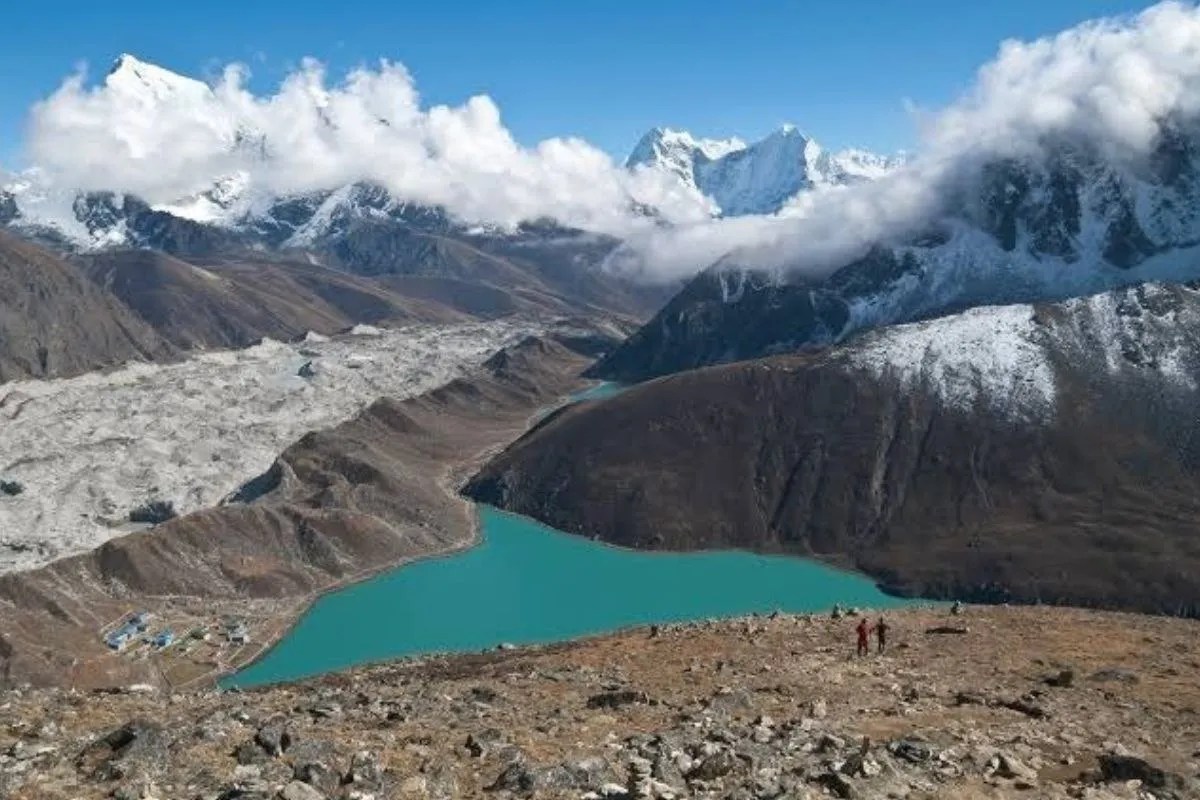
The tracks being laid through the Tian Shan mountains will define regional commerce for generations. Economic gravity leaves little room for isolation, and the physical architecture of modern Eurasia is settling permanently into place.
Former Kyrgyz PM on the new railway
Former Prime Minister Djoomart Otorbaev breaks down how the trans-national railway project aims to transform Central Asia from a landlocked region into a land-connected trade hub.