The Weight of an Empty Stage
There is a precise kind of silence that fills an auditorium just before a curtain rises. It smells of hot projection lamps, fresh carpet glue, and the collective breath of two thousand people holding theirs in unison. For a decade, that silence belonged to one man. He wore the uniform of the Silicon Valley ascetic—the dark mock turtleneck, the faded denim, the sneakers that looked like they had walked miles of concrete. He paced the wooden boards with the casual rhythm of a jazz musician who knew the room was already won.
When he stepped aside, he handed the keys to a quiet engineer.
John Ternus did not look like a showman. He looked like the guy who spent his Saturday afternoons meticulously rebuilding the engine of a 1968 Porsche, hands stained with grease, entirely unconcerned with whether anyone was watching. Behind steel-rimmed glasses, his eyes scanned metal tolerances with a brutal, unforgiving geometry. Under his watch, the hardware divisions grew quieter, denser, and impossibly more expensive to manufacture. He built things that felt like they had been carved from a single block of meteor iron.
And now, September 9 has arrived.
It is a date circled in red ink across every newsroom, every trading floor, and every kitchen table where a cracked smartphone screen sits as a quiet domestic grievance. This time, the whisper network is carrying something heavier than usual. They are whispering about a crease. They are whispering about a hinge. They are whispering about the moment a Cupertino executive finally surrenders to the geometry of the fold.
Consider the ordinary physics of disappointment. You slide your phone from your pocket. The glass is spider-webbed from an accidental drop against a asphalt curb. You tap the screen anyway, watching your thumb ghost over the fracture lines. For years, the reigning philosophy of the world's most valuable company has been simple: rigid perfection. If it bends, it breaks. If it folds, it compromises.
We were told that a hinge is a point of failure. We were told that a screen must be a flat, unyielding plane of ion-strengthened ceramic shield.
Yet desire has a way of outrunning engineering dogma. Across the Pacific, rival factories spent half a decade churning out folding rectangles that snapped, popped, and gathered dust in their creases like old window sills. They were prototypes dressed up as luxury goods. They felt delicate. They felt provisional. Millions bought them anyway, driven by a primal hunger for something—anything—that changed the shape of the device we stare at four hours a day.
Ternus watched from the inside. He watched the failures pile up. He watched the market demand a shape his engineers refused to build until the physics finally bent to their will.
The Anatomy of a Transition
To understand why this particular autumn afternoon matters, you have to look past the marketing gloss and examine the machinery of succession.
Leadership in a trillion-dollar hardware giant is rarely a dramatic coup. It is an attrition of patience. Tim Cook mastered the art of the global supply chain, turning assembly lines across Shenzhen and Austin into a single, breathing organism that could deliver ninety million pocket-sized computers in a matter of weeks. He was the master of scale.
Ternus is something else. He is the master of the millimeter.
Imagine standing on the floor of an Apple reliability lab. The air hums with the low-frequency drone of environmental chambers cooking phones at sixty degrees Celsius while mechanical thumbs tap glass screens four hundred thousand times an hour. In the corner, a robotic arm pinches a sample hinge, opening and closing it with the metronomic indifference of a guillotine.
This is where Ternus earned his stripes. He didn't rise through marketing campaigns or software pipelines. He rose by sweating the thermal dissipation of a fanless laptop chassis. He rose by arguing over the radius of a corner curve until the manufacturing tolerances shrank to the width of a red blood cell.
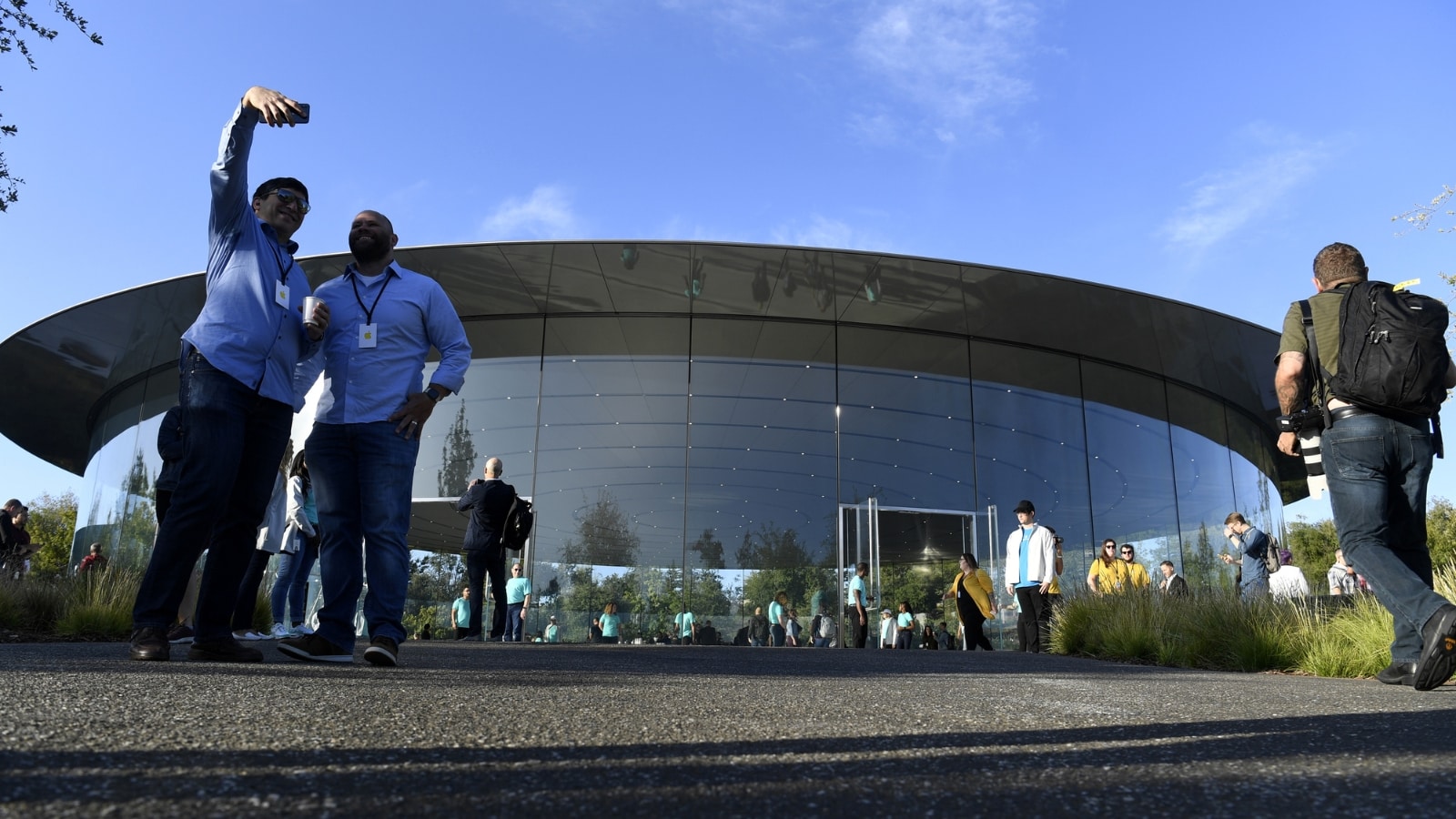
When a CEO makes their debut under the glare of Apple Park's Steve Jobs Theater lights, they are not merely launching a product. They are performing an act of psychological reassurance. Wall Street wants to know if the margins will hold. Die-hard loyalists want to know if the soul of the machine has survived the transition from the old guard to the new.
And the skeptics? The skeptics want to see if the king is wearing clothes.
The rumored foldable iPhone—call it what you like, though Cupertino's marketing machine will undoubtedly christen it with a monosyllabic gravity—represents the ultimate test of this transition. It is easy to iterate on a rectangle. You make the chip faster, the camera lens wider, the titanium frame a fraction of an ounce lighter. That is the work of a well-oiled machine operating in cruise control.
Redefining form factor is entirely different. It requires jumping off a cliff and weaving the parachute on the way down. If the hinge squeaks, the entire edifice of precision engineering looks hollow. If the crease in the OLED display catches the overhead fluorescent light like a scar, the illusion of magical perfection shatters.
The Foldable Paradox
There is an inherent tragedy to the folding phone category as it exists today.
You buy a device that promises the best of both worlds: a compact phone that opens into a sprawling tablet. But the moment you unfold it, you are forced to make a sensory compromise. Your finger crosses the middle of the screen, dipping into a subtle valley. Your eye registers the distortion. You learn to ignore it, the way you learn to ignore a slight rattle in the dashboard of an otherwise fine car.
For a company built on zero compromise, that valley has always been an existential insult.
Rumors suggest Ternus and his team spent years rejecting designs that felt even slightly mushy under thumb. They watched competitors flood the market with plastic-backed screens that scratched if a stray grain of sand found its way into your pocket. Apple's unwritten rule has always been simple: we are never first, but when we arrive, we rewrite the grammar of the room.
Think back to the original tablet. Long before the iPad appeared, Microsoft had pushed stylus-driven slate computers into the market for a decade. They were clunky, heavy, and ran operating systems designed for a mouse and keyboard. The world looked at them and shrugged. Then Apple took the glass, stripped away the stylus orthodoxy, and made a child swipe a screen with a bare finger. Suddenly, an entire industry woke up.
The folding phone stands at that exact precipice today.
It is currently a playground for enthusiasts willing to tolerate high failure rates and astronomical price tags. It is a category waiting for an adult to walk into the room, take the raw materials, and forge them into something so intuitive that your grandmother could use it without a manual tutorial.
If John Ternus steps onto that stage and unveils a device that opens like a leather-bound journal—completely flat, utterly silent, and structurally bulletproof—he does more than launch a new SKU. He signals that the post-Jobs era has finally found its own design philosophy. Not one of preservation, but one of aggressive, calculated reinvention.
The Architecture of the Future
Look closely at the invitation sent out to journalists for this September gathering. It is not the usual riot of abstract color blobs that Apple favors for software-heavy updates. It is minimal, stark, playing with shadows and depth. It hints at dimensionality. It hints at layers.
Behind the scenes, engineers have spent the last thirty-six months solving problems that sound more like aerospace engineering than consumer electronics. How do you route delicate ribbon cables across a moving axis without snapping them after ten thousand twists? How do you distribute battery cells evenly across two paper-thin halves so the device doesn't feel top-heavy in one hand? How do you trick the operating system into reflowing complex interface elements the exact millisecond the hinge crosses ninety degrees?
These are not questions that interest the casual buyer scrolling through a specification sheet. But they are the invisible architecture of trust.
When you spend two thousand dollars on a piece of glass and aluminum, you are not buying raw computing power. You are buying the absence of anxiety. You are buying the quiet confidence that the device in your pocket will not betray you halfway through a cross-country flight or during an emergency call on a rainy highway.
This is where Ternus holds his advantage. He is not a visionary in the theatrical, turtleneck-wearing mold. He is an operational realist who respects the brutal laws of physics. He knows that magic is just engineering executed so cleanly that the seams disappear.
The auditorium lights will dim soon. The bass-heavy introductory audio track will thump through the subwoofers, rattling the chests of journalists and analysts alike. A slide will click over, shifting from pitch black to a brilliant, impossible white.
And somewhere in the wings, a quiet engineer with steel-rimmed glasses will take a breath, adjust his cuffs, and walk out to show the world whether a hinge can carry the weight of an entire empire's future.