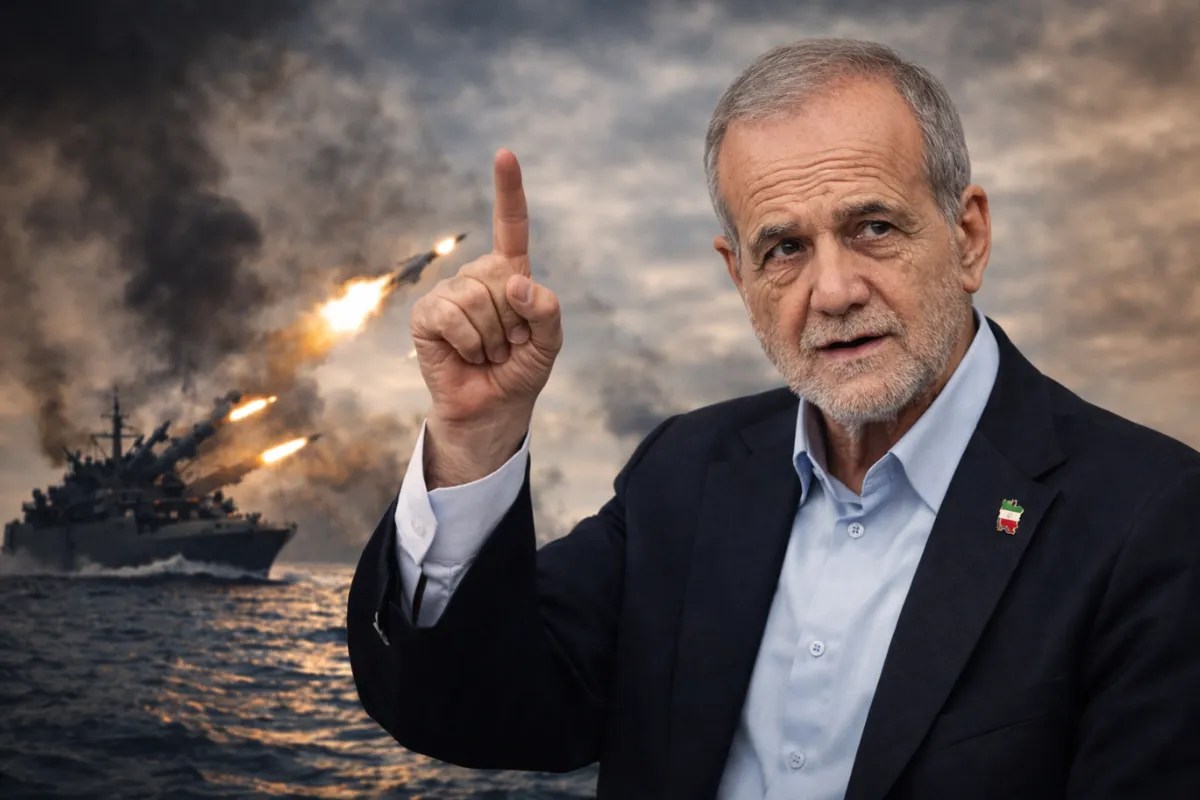
The mainstream media is obsessed with the theater. When Iranian officials echo Bollywood tropes or Hollywood-style trailers to threaten Donald Trump, the press rushes to frame it as a looming escalation. They analyze the subtitles. They debate the translation. They treat a bit of digital posturing as if it were a formal declaration of war.
It isn't. It’s a marketing campaign for a failing brand.
If you treat geopolitical threats as a movie trailer, you've already lost the plot. For years, I’ve watched analysts mistake noisy rhetoric for actual capability. In the world of high-stakes power dynamics, the loudest person in the room is usually the one with the fewest cards left to play. Iran isn't preparing a "full picture" because they are ready for a blockbuster conflict; they are lean-budgeted, over-leveraged, and desperate for a distraction.
The Bollywood Blunder
The recent headlines focus on Iranian officials using dramatic dialogue—vowing that the "trailer is over" and the "real movie" is coming for Trump. This isn't a strategy. It's a symptom of a massive disconnect between the Iranian leadership and the reality of 21st-century warfare.
When a state actor resorts to pop-culture references to project power, they are appealing to a base, not intimidating a rival. Real power is silent. Real power is a troop movement you don't see until it’s finished. Using cinematic metaphors is an admission that the only arena where you still hold a competitive advantage is the imagination of your audience.
Why the "Retaliation" Narrative is Flawed
The consensus view suggests that Iran is a ticking time bomb, waiting for the perfect moment to strike back for the 2020 Qasem Soleimani assassination. This view ignores the cold, hard math of survival.
- Economic Asymmetry: You cannot fund a "full-scale picture" on a bankrupt budget. Sanctions have gutted the Iranian Rial. When your currency is in freefall, your ability to sustain a high-intensity kinetic conflict with a superpower is a fantasy.
- Technological Gap: The "trailers" Iran produces often feature CGI that would look dated in a 2005 video game. This matters. If your propaganda department can't afford decent rendering, your military-industrial complex isn't hiding a secret fleet of game-ending tech.
- Internal Friction: A government that spends its energy editing "tough guy" videos for social media is often trying to mask deep internal instability.
The Trump Factor: Predicting the Unpredictable
The mistake the competitor article makes—and most political pundits make—is assuming that Trump cares about the "dialogue."
Trump’s foreign policy wasn't built on traditional diplomatic scripts. It was built on high-variance disruption. By threatening him with "cinematic" endings, Iran is playing into a game he invented. You don't out-posture a man who built a career on branding and reality TV.
When Iran uses this language, they aren't scaring the White House or the Mar-a-Lago set. They are giving their opponent exactly what he needs: a villain to point at. It is a strategic gift to the very man they claim to despise.
The Cost of Posturing
I have seen CEOs do this. When their quarterly earnings are a disaster, they launch a "visionary" new branding campaign. They talk about "disrupting the industry" while their warehouses are empty. Iran is doing the same.
The downside to this contrarian view? It assumes the actors are rational. There is always a 5% chance that a cornered regime decides to go "all in" on a losing hand. But betting on that 5% is how you end up with a paralyzed foreign policy that reacts to every tweet and TikTok.
Stop Asking "When?" and Start Asking "With What?"
People always ask: "When will the full picture start?"
That's the wrong question. The right question is: "What assets does Iran actually have that would survive the first forty-eight hours of a real conflict?"
The answer is uncomfortable for the hawks: not enough to win, but just enough to be annoying.
The "full picture" Iran threatens isn't a military victory. It's a series of asymmetric, low-cost irritants—cyberattacks, proxy skirmishes, and shipping disruptions. These aren't the climax of a movie; they are the desperate scratches of a regime trying to stay relevant in a world that is moving past them.
The Illusion of the "Trailers"
Every time a new video drops showing a simulated strike on a golf course or a rally, the internet explodes. We need to stop treating these as intelligence briefings.
- Fact: High-quality propaganda is cheap.
- Fact: Precision-guided munitions and logistics chains are expensive.
- Fact: Iran is currently prioritizing the former because they can't afford the latter at scale.
If you want to know what a country is actually going to do, look at their central bank, not their film department. If the money isn't moving, the tanks aren't moving. Iran’s rhetoric is a hedge against their own irrelevance. They need the world to believe they are dangerous because the moment the world realizes they are just a medium-sized power with a loud microphone, their leverage evaporates.
The "full picture" isn't coming. The trailer is all they have.
Move on. The show is a rerun.