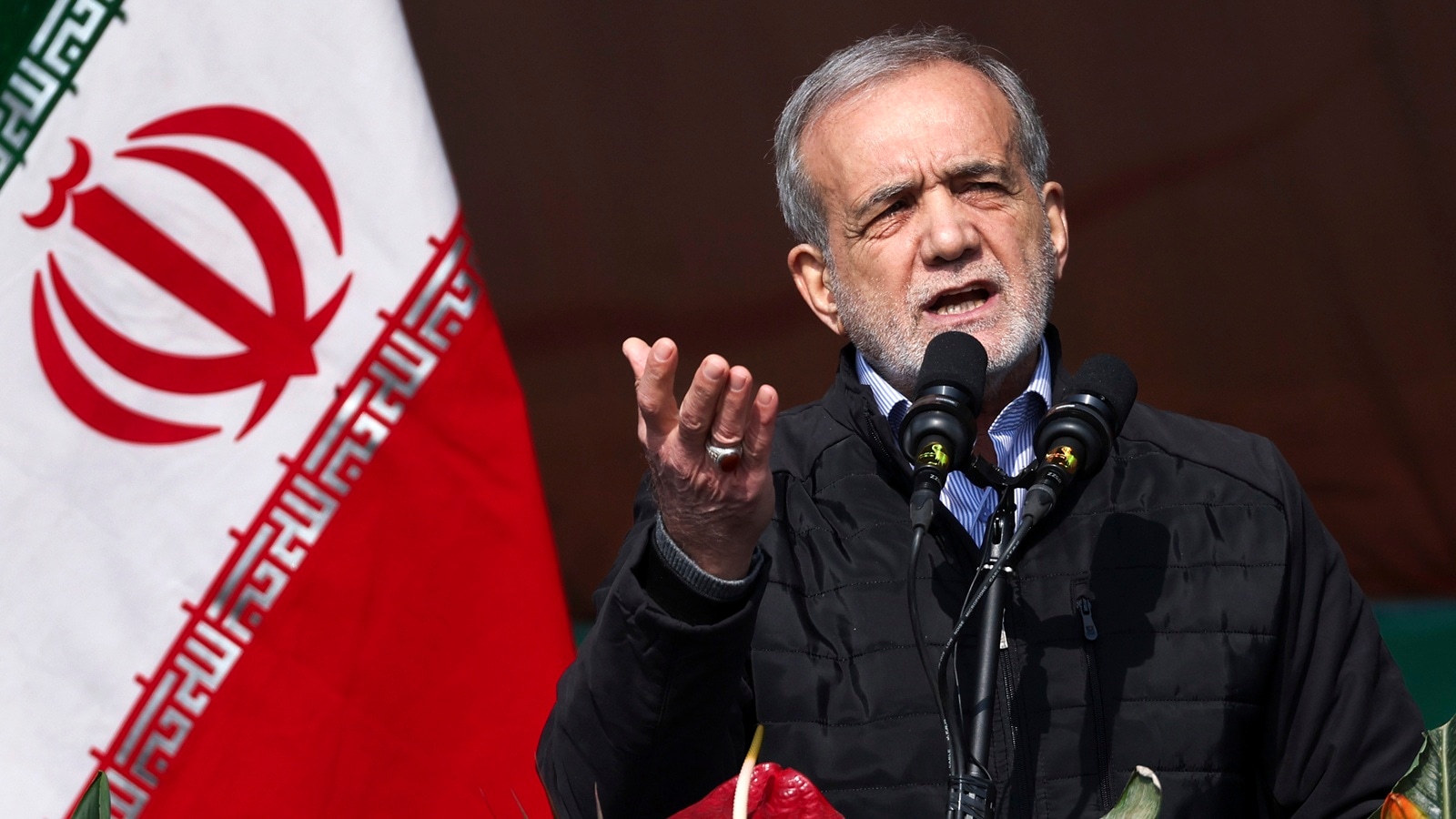
Masoud Pezeshkian didn't waste any time. Shortly after taking office, the Iranian President hopped on a call with Pakistan’s Prime Minister Shehbaz Sharif. It wasn't just a standard "congrats on the new job" chat. This was a calculated move. Pezeshkian went straight for the jugular, calling out what he described as the United States' "bullying behavior" and its impact on the region.
You see this kind of rhetoric often in Middle Eastern politics, but this specific call signals a shift in how Tehran plans to handle its neighbors under the new administration. Pezeshkian is walking a tightrope. He needs to fix a broken economy back home while showing the world that Iran won't be pushed around by sanctions or Western demands. By reaching out to Islamabad first, he’s making it clear that regional alliances come before Western approval.
The conversation focused on the Gaza crisis and the broader geopolitical mess that’s currently unfolding. Both leaders find themselves in a tough spot. Pakistan needs stable energy and trade, while Iran needs friends to help bypass international isolation. It’s a marriage of necessity, fueled by a shared frustration with how Washington dictates global terms.
Why the Islamabad Tehran Connection Matters Right Now
The relationship between Iran and Pakistan has always been a bit "it’s complicated." They share a massive border that’s often a headache for security forces. Militants cross back and forth. Smuggling is rampant. Yet, when Pezeshkian calls Sharif to complain about US pressure, he’s tapping into a very real sentiment in Pakistan.
Public opinion in Pakistan is largely critical of US foreign policy, especially regarding Israel and Palestine. Pezeshkian knows this. By framing the US as a "bully," he’s speaking a language that resonates with the Pakistani street, even if the Pakistani government has to play a more careful diplomatic game because of their own reliance on IMF loans and Western trade.
Breaking Down the Bullying Rhetoric
When an Iranian leader talks about bullying, they're usually referring to the "Maximum Pressure" campaign. These are the sanctions that have strangled Iran’s oil exports and made everyday life a struggle for millions of Iranians. Pezeshkian is an interesting figure because he’s often labeled a "reformist" or at least a pragmatist. People expected him to be softer.
He isn't.
By using this aggressive language with Sharif, he’s signaling to his own hardliners in Tehran that he hasn't gone soft. He’s also telling the US that his willingness to talk doesn't mean he's going to surrender. It's a classic power play. He’s looking for a way to build a "united front" among Islamic nations to counter Western influence.
The Gaza Factor and Regional Unity
The situation in Gaza was the elephant in the room during this call. Pezeshkian urged Sharif to take a more active role in stopping the "Zionist regime's" actions. This puts Pakistan in a weird position. Historically, Pakistan has been a staunch supporter of the Palestinian cause, but it also has deep ties to Saudi Arabia and the UAE—countries that have had their own complicated dealings with Israel.
Tehran wants to lead the charge. They want to be the moral and political center of the "Resistance." Pezeshkian’s call was an attempt to pull Pakistan closer into that orbit. He’s basically saying, "We can't rely on the West to fix this. We have to do it ourselves."
Economics Over Ideology
Strip away the fiery speeches and you'll find the real reason these two were talking: money. Iran and Pakistan have a multi-billion dollar gas pipeline project that’s been stalled for years because Pakistan is terrified of US sanctions.
- Iran has finished its side of the pipe.
- Pakistan is staring at massive fines for not finishing theirs.
- The US has explicitly warned Islamabad against moving forward.
Pezeshkian’s mention of US "bullying" is a direct reference to this. He’s trying to convince Sharif that the benefits of trade and energy security outweigh the risk of making Washington angry. It’s a gamble. Pakistan’s economy is on life support. They can’t afford to lose US support, but they also can’t afford to ignore their energy-rich neighbor forever.
How the US Might React to This New Alliance
The State Department usually responds to these things with a standard line about "monitoring the situation." But make no mistake, they’re watching Pezeshkian’s every move. If Iran manages to pull Pakistan—a nuclear-armed nation—into a tighter economic and political embrace, it complicates US strategy in South Asia significantly.
The US uses its financial system as a weapon. It’s effective. However, the more they use it, the more countries like Iran and Pakistan look for "workarounds." We’re seeing more trade in local currencies. We're seeing more bartering. The "bullying" Pezeshkian mentions is actually driving these countries to create an alternative economic system that the US can’t control.
The Border Security Headache
We can't talk about this call without mentioning the Sistan-Baluchestan region. This is the border area where both countries have dealt with separatist groups. Earlier this year, they actually traded missile strikes. It was a mess.
Pezeshkian and Sharif both emphasized "security cooperation" during their talk. They’re trying to bury the hatchet. They realize that if they’re busy fighting each other at the border, they can’t effectively challenge the "bullies" on the global stage. It’s a "the enemy of my enemy is my friend" situation, even if they don't always trust each other.
Pezeshkian Is No Pushover
There’s a misconception that because Pezeshkian wants to engage with the West, he’s going to be a puppet. That’s wrong. His call to Sharif proves he’s a nationalist first. He believes in a strong, independent Iran that leads a regional bloc.
He’s looking for leverage. Every time he builds a bridge with a neighbor like Pakistan, his hand gets stronger when he eventually sits down with European or American negotiators. He’s showing that Iran has options. They aren't just sitting around waiting for the US to lift sanctions. They’re active.
What This Means for the Region
Expect more of these calls. Pezeshkian will likely reach out to Central Asian leaders and perhaps even some of the Gulf states next. He’s trying to create a buffer zone of friendly or at least "neutral" states.
The goal is simple: make sanctions irrelevant. If you can trade with your neighbors and move goods through regional corridors, the "bullying" from across the ocean doesn't hurt as much. It’s an ambitious plan. Whether Pakistan has the backbone to follow through—given their own financial ties to the West—remains to be seen.
Watch the progress of the Iran-Pakistan gas pipeline over the next few months. That’s the real litmus test. If ground breaks on the Pakistani side, you’ll know Pezeshkian’s "anti-bullying" rhetoric actually worked. If nothing happens, it was just another political phone call in a region full of them.
Keep an eye on the diplomatic shifts in Islamabad. Watch for any sudden visits from US officials. They'll try to counter this move with their own carrots and sticks. The tug-of-war over Pakistan’s loyalty is just getting started.