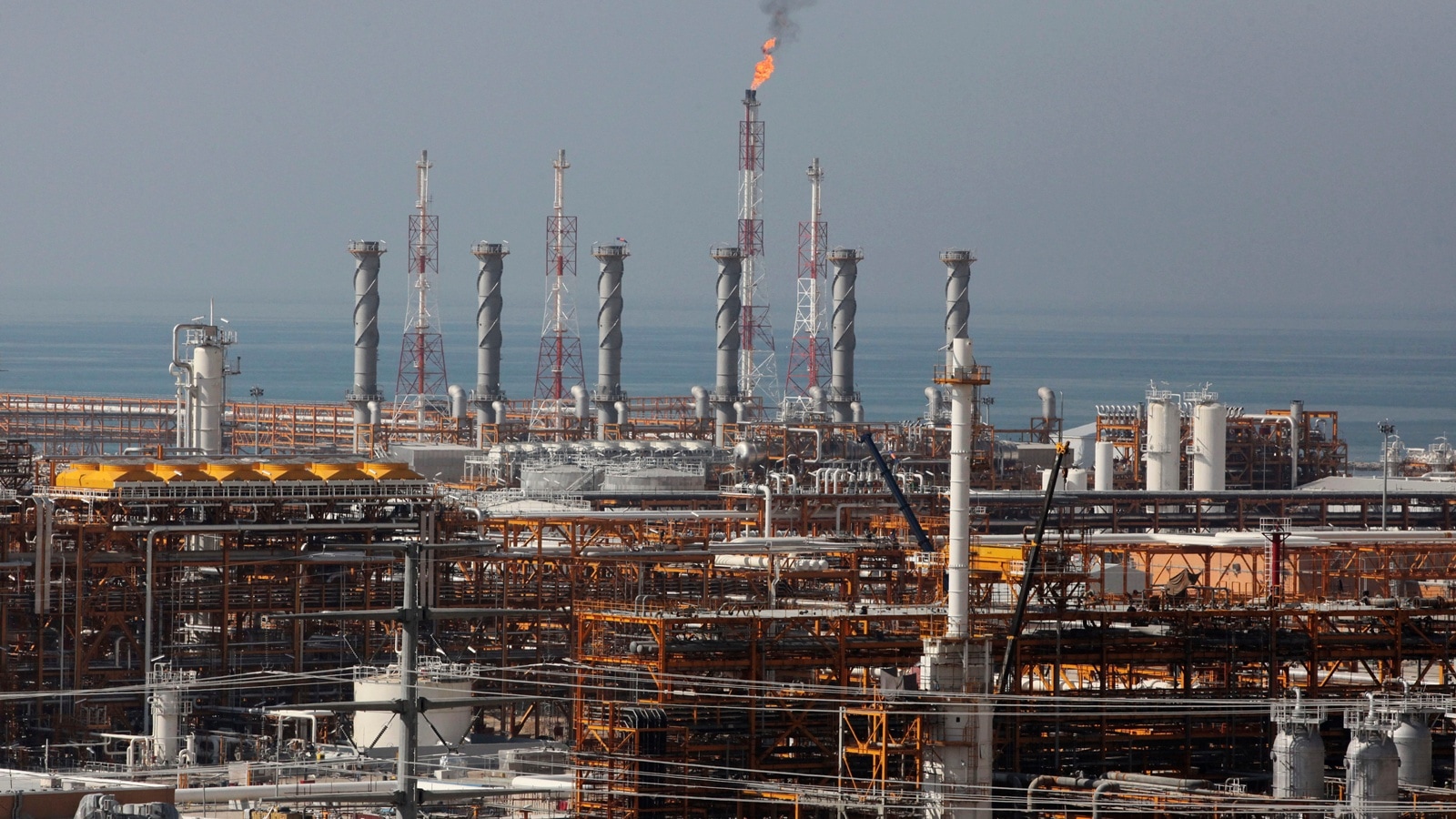
In a nondescript concrete hall deep within the Iranian desert, there is a silence that carries a specific, metallic frequency. It is the sound of air filtration systems humming at a constant, nervous pitch. Behind thick glass and lead-lined barriers sits a collection of canisters containing roughly seven tons of uranium. To a layman, it is just specialized cargo. To a physicist, it is a thermodynamic puzzle. To the man sitting in the Oval Office, it is a ticking clock without a face.
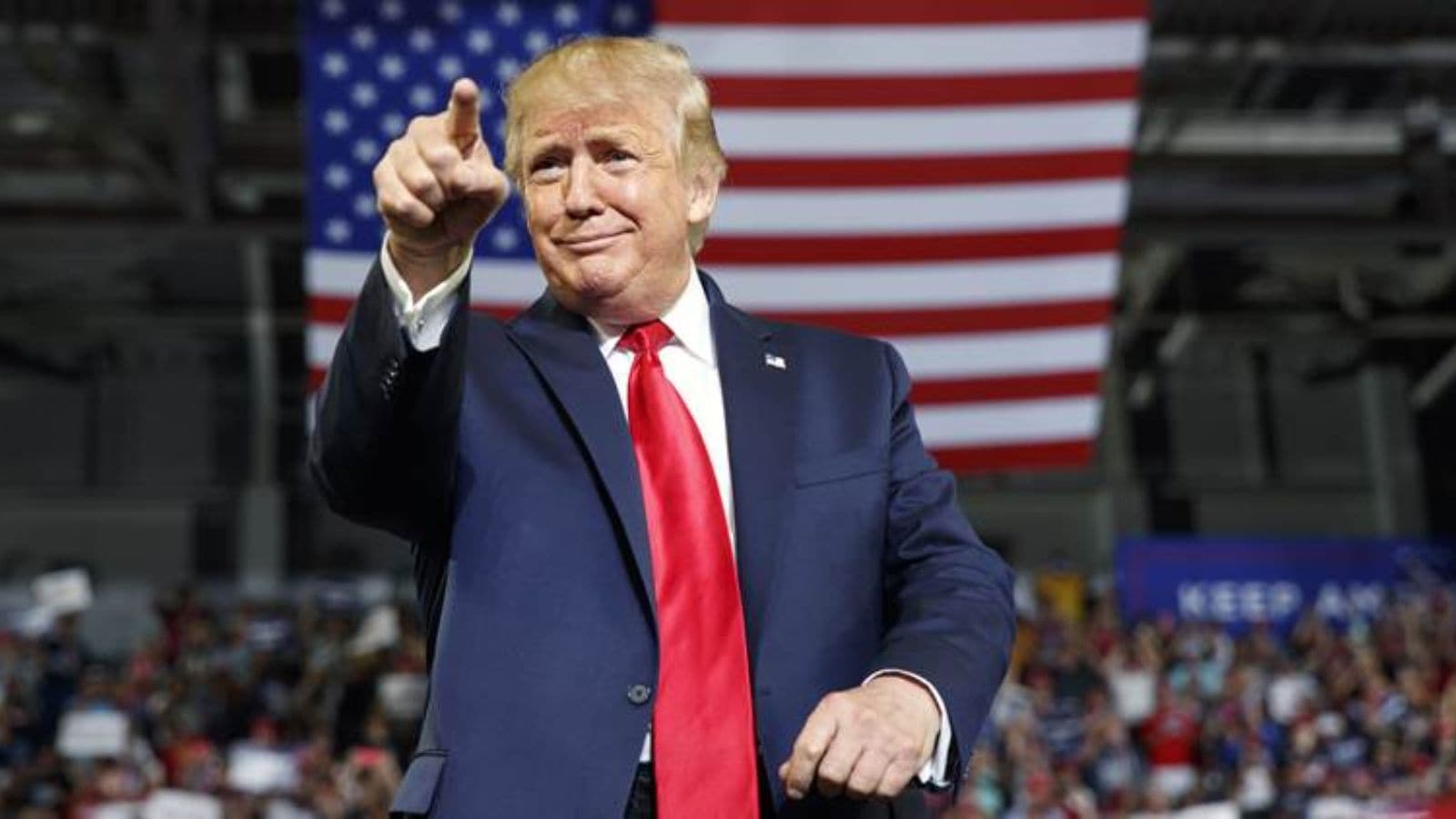
Donald Trump has always viewed the world through the lens of the "deal." But the deal currently sitting on the table in Tehran isn't about real estate or tariffs. It is about chemistry. Specifically, it is about what happens to $UF_6$—uranium hexafluoride—when it is spun through thousands of silver cylinders at supersonic speeds.
The dilemma facing the administration isn't just political. It is a question of physical custody. If the goal is to prevent a nuclear breakout, the most direct path isn't a treaty or a drone strike. It is a moving truck.
The Geography of Fear
Consider the logistics of a nightmare. For years, the international community has debated the "breakout time"—the theoretical window of weeks or months Iran would need to produce enough weapons-grade material for a single bomb. We treat this like a sports clock, watching the seconds bleed away. But for the people living in the shadow of the Natanz or Fordow enrichment plants, the clock isn't a metaphor.
Uranium enrichment is a process of refinement. You start with "yellowcake," a sandy substance that is relatively harmless to hold. Then, through a series of chemical transformations, you increase the concentration of the isotope $U-235$. Most nuclear power plants run on uranium enriched to about $3%-5%$. Iran has already pushed past that, hitting $20%$ and even $60%$ purity.
At $60%$, you aren't making electricity. You are making a statement.
The "Retrieval Option" now being whispered about in Washington corridors involves a physical extraction. The United States, or a designated third party like Russia or a European coalition, would physically take possession of Iran’s enriched stockpile and move it out of the country. In exchange, Tehran might get sanctions relief or natural uranium in its raw, unrefined state. It sounds simple on paper. It is a logistical and diplomatic ghost story in practice.
The Hypothetical Technician
Imagine a technician named Elias. He doesn't exist, but thousands like him do. Elias spent his twenties studying nuclear engineering in Isfahan. He knows the weight of the canisters. He knows that if he turns a valve too quickly, the pressure differential could ruin a year’s worth of work.
To Elias, that stockpile is a point of national pride. It is proof that his country cannot be held back by the West. To a strategist in D.C., that same canister is a "threat vector." This is the friction that defines the current standoff. One side sees a scientific achievement; the other sees a fuse.
When the Trump administration looks at these seven tons, they aren't seeing Elias’s hard work. They are seeing a calculation of risk. If they leave the fuel there, the "breakout" could happen on a Tuesday morning while the world is looking at a different crisis. If they demand its removal, they risk a total collapse of communication.
The risk of retrieval is high. Moving nuclear material across borders requires a level of trust that has been eroded to a fine dust over the last decade. You need specialized ships. You need constant satellite surveillance. You need an ironclad guarantee that the ship won't "disappear" in the Strait of Hormuz.
The Physics of Persuasion
There is a law in physics known as the Second Law of Thermodynamics. It states that entropy—disorder—always increases in an isolated system. Diplomacy follows the same rule. Without the constant input of energy and negotiation, things fall apart.
The previous nuclear deal, the JCPOA, was an attempt to manage that entropy. When the U.S. exited, the system became isolated. The pressure began to build. Now, the Trump administration is attempting to reverse the flow. They want to reach into the machine and pull out the fuel.
But how do you convince a nation to hand over its most potent leverage?
In the past, the carrot was the global economy. The stick was "maximum pressure." Neither fully emptied the canisters. The current strategy appears to be a high-stakes gamble on the idea that Iran is tired. Tired of the hum of the centrifuges. Tired of the shadow of the B-52s.
Yet, the danger of "retrieval" isn't just that Iran might say no. It’s that the act of moving the fuel creates a new kind of vulnerability. A stockpile in a mountain is a static threat. A stockpile on a highway or a cargo ship is a target.
The Ghost in the Room
Every discussion about Iranian nuclear fuel eventually hits a wall: the memory of 1979. For the American side, it is the trauma of the hostage crisis. For the Iranian side, it is the memory of the CIA-backed coup in 1953. These aren't just history lessons; they are the invisible ghosts sitting at the negotiating table.
When a U.S. President weighs the risk of "retrieving" nuclear fuel, he isn't just looking at the $60%$ enrichment levels. He is looking at his own legacy. He is looking at the possibility of a "Grand Bargain" that would eclipse every previous administration’s efforts.
The human element here is ego. On both sides.
Leaders want to be the ones who stopped the sun from rising on a nuclear-armed Middle East. But to do that, they have to navigate the smallest details. They have to worry about the seals on the canisters. They have to worry about the temperature of the hold on a transport ship. They have to worry about a single mid-level commander who decides that "retrieval" looks too much like "surrender."
The Cost of Doing Nothing
If the decision is made to leave the fuel where it is, the world enters a state of permanent anxiety. We become accustomed to the "near-miss." We treat the enrichment levels like the weather report—something to be checked and sighed at, but ultimately ignored.
But nuclear material doesn't care about our fatigue. It sits. It radiates. It waits.
The seven tons currently in Iran represent a choice. Not just for Trump, but for the global order. If the U.S. chooses the risk of retrieval, they are choosing a path of active intervention. They are saying that the physical presence of the fuel is a line that cannot be crossed.
If they choose to wait, they are betting on the hope that the "breakout" never actually happens. They are betting that the hum in that concrete hall will never turn into a roar.
Consider the moment the first canister is lifted onto a truck. The driver shifts into gear. The tires crunch on the desert gravel. In that moment, the abstract concept of "geopolitics" becomes a very real weight on a very real axle. The driver doesn't care about the Grand Bargain. He cares about the brake pads. He cares about the road ahead.
The administration is currently looking for that driver. They are looking for a way to turn a global crisis into a transport problem. It is a desperate, brilliant, and terrifyingly fragile plan.
As the sun sets over the enrichment plants, the centrifuges continue their work. They don't have opinions. They don't have ghosts. They only have the laws of physics. And the laws of physics dictate that if you keep spinning the cylinders, eventually, you run out of room to hide the results.
The decision isn't whether to act. The decision is whether we are prepared to carry the weight of what we find when we finally open those canisters.
The silence in the desert is getting louder.