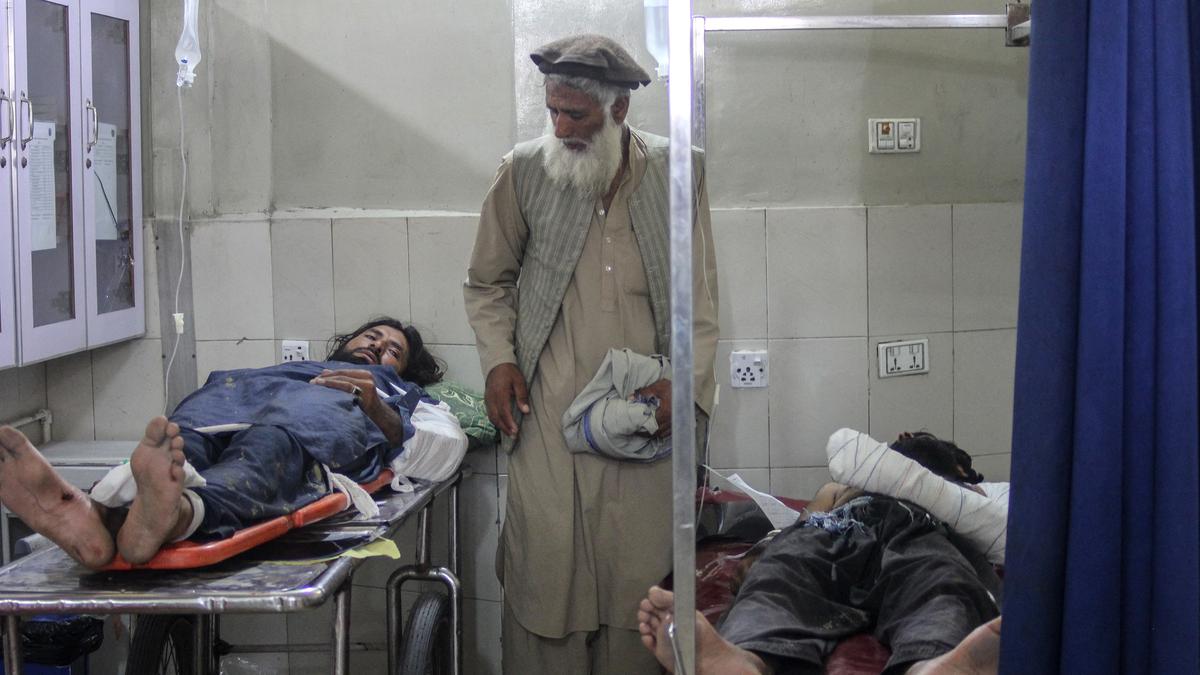
A commercial flatbed truck crammed with families and their entire life savings overturned on the Kabul-Nangarhar highway in eastern Afghanistan on Saturday morning, killing 22 people and injuring 36 others. The victims, predominantly women and children, were returning refugees driven out of Pakistan by systemic deportations. Local public health officials confirmed that the vehicle drifted into a ditch in Laghman province after the driver fell asleep from exhaustion.
While mainstream coverage treats this as an isolated tragic accident, the disaster is the predictable result of a massive humanitarian crisis. Decades of conflict have left Afghanistan with broken infrastructure, and neighboring states are forcing millions of vulnerable people back into its borders under the worst possible conditions.
The Economics of Desperation on the Border
The families on that truck were not reckless; they were priced out of safety. Pakistan began its massive crackdown on undocumented migrants in late 2023, and over 447,000 Afghans have been forced across the border since the beginning of this year alone. When the state expels you, it does not provide a tour bus.
Returning refugees must rent space on whatever transport they can find. Commercial flatbed trucks, designed for cargo rather than human beings, have become the standard transport for those fleeing eviction.
- Excessive Overloading: Families pile their mattresses, cooking utensils, livestock, and up to forty relatives onto a single chassis to split the cost.
- Absence of Safety Gear: These open-air cargo beds lack seatbelts, side railings, or protective canopies.
- Extreme Driver Fatigue: Drivers operate continuously for 18 to 24 hours to maximize their profit margins before border checkpoints close or local authorities demand bribes.
Aminullah Sharif, the public health director for Laghman province, confirmed that sleep deprivation caused the driver to drift off the asphalt. On these narrow mountain passes, a single second of sleep equals a fatal plunge. Ten children and five women died before they could reach a regional hospital.
Infrastructure Traps and the Kabul Highway
The road connecting the border city of Jalalabad to the capital city of Kabul is a notorious death trap. It is a vital economic artery that winds through steep mountain gorges, but it receives almost no modern infrastructure maintenance.
[Pakistan Border] ---> (Jalalabad) ---> [Laghman Province / Crash Site] ---> (Kabul)
                                              |
                                     (Narrow Mountain Passes)
The current administration cannot handle the logistics of this mass migration. Decades of corruption, war, and frozen international funds have stalled vital infrastructure projects. Asphalt surfaces are deeply pitted with craters, roads lack clear lane markings, and mountain passes completely lack guardrails.
When a driver veers off the road in Laghman, there is no barrier to catch the vehicle. The truck simply rolls into a steep ditch or a rocky ravine, crushing the passengers beneath their own heavy belongings.
Policy Failures Forced This Crisis
This tragedy is rooted in regional geopolitics. Islamabad claims its deportation policy targets national security threats, but the enforcement has swept up millions of ordinary laborers, including many who were born in Pakistan and have never lived in Afghanistan.
At the same time, western sanctions on the Taliban administration have crippled the local economy. The country cannot safely absorb hundreds of thousands of penniless arrivals. International aid agencies are underfunded, leaving returnees to navigate the dangerous journey from border transit camps to their home provinces completely on their own.
+-------------------------------------------------------------+
|               The Forced Returnee Pipeline                  |
+-------------------------------------------------------------+
| 1. Geopolitical Pressure -> Expelled from Pakistan/Iran     |
| 2. Financial Scarcity    -> Forced into unsafe cargo trucks |
| 3. Broken Infrastructure -> Dangerous, unmaintained roads   |
| 4. Minimal Oversight     -> Fatal accidents and casualties   |
+-------------------------------------------------------------+
This was not an isolated incident. Just last August, a bus carrying returnees from Iran collided with two vehicles in western Afghanistan, killing 78 people. The transport network for refugees is inherently unsafe, and more casualties are inevitable as long as countries continue mass expulsions without providing safe transit.
The international community views these repatriations through bureaucratic tracking data and regional policy debates. For the families packed onto the backs of cargo trucks, however, the reality of repatriation is a hazardous journey across broken mountain roads where a tired driver can cost an entire family their lives.