The sea at midnight does not look like water. It looks like obsidian, cold and heavy, a vast liquid floor that swallows light and offers nothing in return.
For the twenty-three men aboard a loaded crude oil carrier cutting through the Gulf of Oman, that blackness is the workplace. They live in a world of vibration. The rhythmic, deep-chested thrum of a two-stroke diesel engine vibrates through the soles of their boots, into their shinbones, and up through the steel frames of their bunks. You get used to it. After three weeks at sea, the silence of dry land feels unnatural, almost broken. For a deeper dive into similar topics, we suggest: this related article.
But when the first round tore through the superstructure, it wasn't the engine they heard. It was the sharp, metallic slap of kinetic energy meeting steel. High-velocity gunfire doesn't sound like the movies. It cracks. It rips.
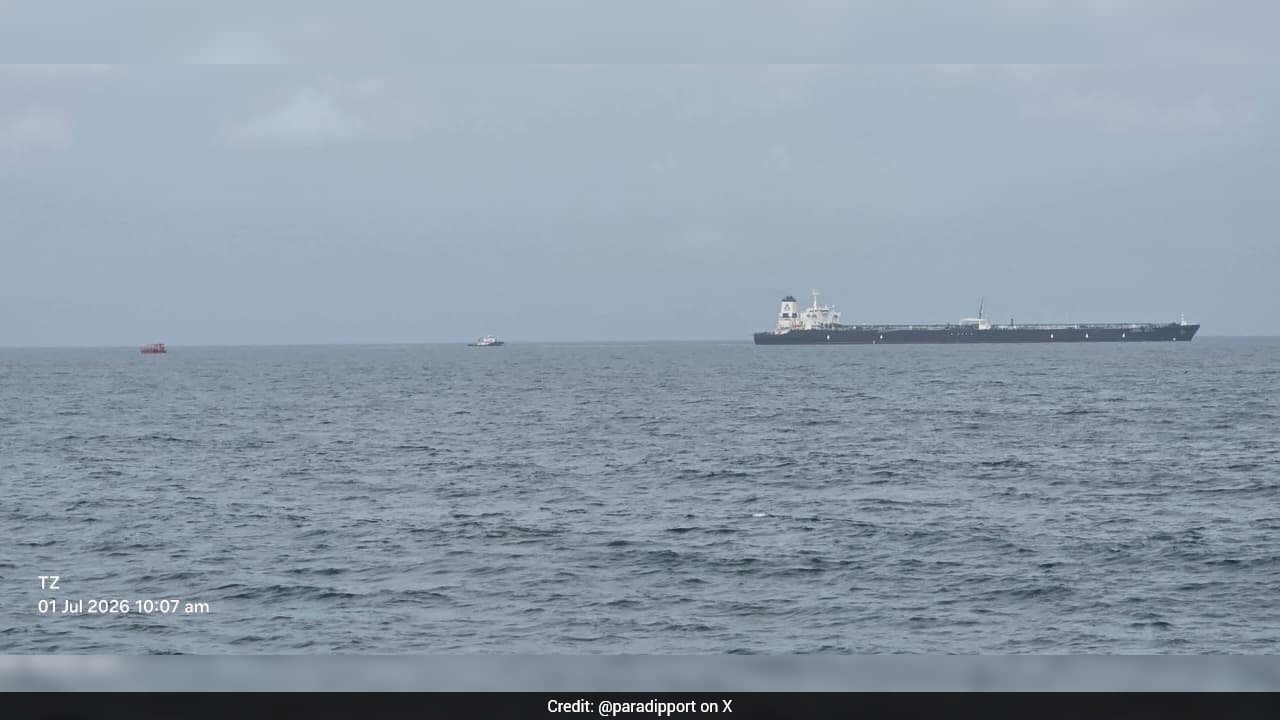
The ship, bound for an energy-hungry terminal on the eastern coast of India, had just entered the narrow bottleneck of the Strait of Hormuz. It is a strip of water so narrow that the shipping lanes are only a few miles wide. On a map, it looks like a throat. For global energy markets, it is exactly that. And someone had just squeezed. For further context on the matter, extensive coverage is available at The New York Times.
We read about these incidents in the business sections of newspapers as data points. A sentence tucked between stock tickers and currency fluctuations: Tanker sustains minor damage in geopolitical flashpoint. We calculate the risk in cents per barrel. We talk about insurance premiums, maritime defense corridors, and supply chain disruptions.
But supply chains do not bleed. Ships do not feel fear. People do.
The Room Where the World Breathes
To understand why a few holes in a steel hull halfway across the world matter to a family turning on a light switch in Odisha, you have to look at the sheer scale of our reliance on the invisible.
Consider a hypothetical third officer named Amit. He is twenty-eight, sends eighty percent of his paycheck home to a suburb of Kolkata, and spends his four-hour watches staring at a radar screen that pulses with green dots. Each dot is a floating warehouse. Some carry grain; others carry microchips. His ship carries two million barrels of crude oil.
If you poured that oil out, it would fill eighty Olympic-sized swimming pools. If you refine it, it keeps an entire metropolis moving for days. It fuels the trucks that deliver milk, the trains that carry steel, and the power plants that keep the summer heat from becoming lethal.
When Amit’s ship was targeted, the attackers weren't trying to sink it. Sinking a double-hulled supertanker with small arms fire is nearly impossible. They were sending a message. The bullets were punctuation marks in a long, ongoing argument about who owns the right to global trade.
The crew did what seafarers have done for millennia: they endured. They executed emergency protocols, kept the engines turning, and pushed through the choke point. They did not stop because stopping in the Strait of Hormuz is how a crisis becomes a catastrophe. They kept moving until the dark waters of the Gulf gave way to the wide, gray expanse of the Arabian Sea, and eventually, the long approach to the Paradip port in Odisha.
When the vessel finally docked, the local port authorities conducted their inspections. The hull was scratched. The crew was exhausted. The oil was unloaded. The system worked, this time.
But the terrifying truth of modern global commerce is that it relies entirely on the assumption that the bullets will miss.
The Fiction of the Border
We like to think of our lives as self-contained. A nation has borders, a city has limits, a home has walls. We buy fuel at a station down the street and treat it as a local transaction.
It is a comforting fiction.
Every economy is an organism that breathes through maritime pipelines. More than eighty percent of global trade by volume travels on the water. The ocean is the ultimate highway, completely free and wildly dangerous. When a tanker navigates a flashpoint like Hormuz or the Red Sea, it enters a zone where the laws of sovereign nations blur into the laws of physics and raw power.
When an incident like this occurs, the reaction in trading hubs from Singapore to London is immediate, mathematical, and entirely decoupled from the human experience on board.
- Maritime insurance underwriters adjust their "war risk" premiums.
- Shipping companies calculate the cost of rerouting vessels around the Cape of Good Hope—a detour that adds ten days and hundreds of thousands of dollars in fuel costs to a single journey.
- Energy analysts adjust their forecasts, adding a "geopolitical premium" to the price of a barrel.
By the time those bullets fired near Hormuz reach the consumer, they have transformed into a subtle, creeping inflation. A rupee more per liter at the pump. A slight increase in the price of groceries. A budget that doesn't stretch quite as far as it did last month.
We do not see the gunfire. We see the bill.
The Men on the Water
The true vulnerability of this system isn't the steel or the oil. It is the human element.
There are roughly two million merchant seafarers in the world. A massive percentage of them come from developing nations—India, the Philippines, Ukraine, Bangladesh. They sign nine-month contracts that isolate them from their families, living in a world of endless gray horizons, deafening engine rooms, and repetitive meals.
They are the literal muscle of global civilization. Yet, they are almost entirely invisible until something goes wrong.
When pirates or militia groups target a vessel, they are exploiting the fact that these crews are civilians. They are not naval officers. They do not have armor or heavy weaponry. Their only defense is the speed of their ship, the height of their freeboard, and their ability to stay calm under pressure.
Imagine standing on a bridge wing, watching a fast-attack craft skim across the water toward you, knowing that you are responsible for a cargo that could devastate an ecosystem if ignited, and realizing that your only protection is a layer of marine-grade paint and a prayer.
The tanker that arrived in Odisha didn't just bring oil; it brought twenty-three men who had looked into that specific abyss and chosen to keep working. They cleaned the decks, monitored the pressures, and steered the ship into port. They stood on the deck as the giant unloading arms connected to the ship's manifold, listening to the hiss of millions of gallons of crude being pumped into onshore tanks.
The True Cost of Daylight
The ship will leave Odisha soon. It will clean its tanks, take on fresh provisions, and head back out into the Bay of Bengal, heading toward another terminal, another choke point, another midnight watch.
The holes in the superstructure will be patched with fresh steel and painted over until they are nothing but slight irregularities in the texture of the wall. The incident will fade from the news cycle, replaced by the next escalation, the next political debate, the next market report.
We will go about our days. We will turn the keys in our ignitions, feel the engines roar to life, and complain about traffic. We will enjoy the bright, air-conditioned safety of our offices and homes, completely oblivious to the fact that our comfort is bought and paid for by men standing on steel plates in hostile waters, watching the dark horizon for a flash of fire.
The system holds because the people within it refuse to break. But every time a ship survives a gauntlet to reach a quiet port, it is not a victory for the system. It is a reprieve. It is a reminder that the line between our orderly, predictable lives and the chaos of the open sea is thin, fragile, and maintained by those who have no choice but to sail through the dark.