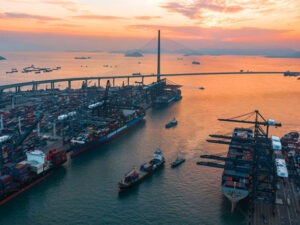
The steel hulls baking under the Persian Gulf sun are not just vessels; they are floating prisons of corporate negligence. Right now, dozens of seafarers remain trapped on abandoned ships near major shipping lanes, slowly starving as their freshwater supplies hit bottom. While initial reports focus on the immediate plea for food, the reality is a systemic failure of international maritime law that allows ship owners to vanish the moment a vessel becomes a liability. These men are the collateral damage of a global supply chain that prioritizes "flag of convenience" loopholes over human life.
The crisis usually follows a predictable, grim pattern. A ship owner runs into financial trouble, the vessel is detained for unpaid debts or mechanical failure, and the owner simply stops answering the phone. Because the ship is technically its own legal entity, the crew cannot leave without forfeiting their back pay or, in many cases, facing arrest for "abandoning" the vessel under local port laws. They are stuck in a legal limbo where the only thing thinner than the rations is the accountability of the stakeholders involved.
The Mechanics of Corporate Disappearance
Maritime abandonment is not an accident. It is a calculated exit strategy. When a vessel’s operating costs exceed its scrap value or its earning potential, some companies find it cheaper to walk away than to settle their debts. By using a complex web of shell companies and offshore registries, these owners insulate themselves from the misery they leave behind on the water.
The Persian Gulf has become a focal point for this phenomenon due to its high traffic and the specific legal complexities of its various jurisdictions. When a ship is arrested in these waters, the crew often becomes the last priority. Local authorities focus on harbor dues and environmental risks, while the banks that hold the mortgage on the ship focus on asset recovery. The humans on board—often from developing nations like India, the Philippines, or Syria—are treated as part of the ship's inventory, expected to maintain the vessel even as their power generators run out of fuel.
Without fuel, there is no air conditioning. In temperatures that regularly exceed 100 degrees Fahrenheit, the interior of a steel ship becomes a literal oven. Without power, the desalination plants that provide drinking water fail. The crew is then forced to rely on the charity of passing ships or local NGOs, begging for the basic necessities of survival while the multimillion-dollar global shipping industry sails past them.
The Failure of the Maritime Labour Convention
The Maritime Labour Convention (MLC) was supposed to be the "Seafarers' Bill of Rights." It includes provisions requiring ship owners to have insurance that covers the costs of abandonment, including up to four months of owed wages and the price of a flight home. On paper, the system is designed to trigger automatically. In the heat of the Gulf, the system is broken.
Many of the abandoned ships in this region fly flags from nations that lack the will or the infrastructure to enforce these rules. If a ship is registered in a country that hasn't ratified the latest MLC amendments, the crew has almost no recourse. Even when insurance exists, the process of claiming it is a bureaucratic nightmare that can take months—months the crew does not have when their food is measured in handfuls of rice.
Furthermore, the legal definition of "abandonment" is often contested by insurers. They may argue that as long as the owner is still "communicating"—even if that communication consists of empty promises and no money—the ship isn't technically abandoned. This creates a trap where seafarers stay on board, hoping for a payday that will never come, while their physical and mental health deteriorates.
A Ghost Fleet Built on Debt
To understand why this keeps happening, you have to look at the "shadow fleet" and the bottom-feeders of the shipping world. These are older vessels, often poorly maintained, bought by small-time operators on high-interest credit. They operate on the thinnest of margins. When a single mechanical failure occurs or a charterer fails to pay a bill, the entire financial house of cards collapses.
The Persian Gulf is a transit hub for these marginal players. The proximity to conflict zones and sanctioned oil markets means there are always ships willing to take risks for higher payouts. When those risks don't pan out, the owner cuts their losses. They change the company name, register a new entity in a different tax haven, and leave the old ship to rot at anchor.
The port states themselves are often reluctant to intervene. Seizing a ship and repatriating a crew is an expensive, legal headache. If a port allows a crew to disembark, the port then becomes responsible for the safety of a dead ship that could drift into a shipping lane or leak oil. Consequently, many authorities find it "safer" to keep the crew trapped on board as unpaid watchmen, effectively using them as free security for a derelict asset.
The Human Toll of the Waiting Game
Isolation is a weapon. Seafarers on abandoned vessels often have their passports confiscated by the captain or local agents. Their internet access is cut when the ship's bills go unpaid. They are cut off from their families, unable to send money home to support children or elderly parents. The psychological pressure is immense.
Suicide and medical neglect are the quiet killers in these scenarios. A simple tooth infection or a bout of food poisoning can become life-threatening when there is no way to reach the shore. The crew watches the lights of prosperous cities on the horizon every night, knowing that they are only a few miles from help that refuse to come unless a massive legal fee is paid.
The "pleas for aid" we see in the media are usually a last resort. By the time a crew starts holding up cardboard signs for passing tankers to see, they have already been through months of quiet desperation. They are not just asking for food; they are asking to be recognized as human beings in a system that sees them as line items on a balance sheet.
The Profitability of Neglect
We must stop viewing abandonment as a tragedy and start seeing it as a business model. For a certain tier of unscrupulous ship owners, the ability to dump a debt-laden asset and its crew is a feature, not a bug. They calculate the risk of being barred from certain ports against the immediate savings of walking away from a $500,000 wage bill. Usually, the savings win.
The solution isn't just more charity. It is a fundamental shift in how we track beneficial ownership. We need a global, transparent database that links every ship to its ultimate human owner—the "flesh and blood" person who profits from its voyages. If an owner abandons a crew in the Persian Gulf, every other vessel they own should be subject to immediate arrest in any port worldwide until the debt is settled.
Until the cost of abandonment exceeds the cost of repatriation, the ghosts of the Gulf will continue to multiply. We are currently allowing a small group of bad actors to externalize their business risks onto the most vulnerable workers in the world. This isn't just a maritime issue; it's a hole in the floor of global commerce.
Breaking the Cycle of Impunity
Fixing this requires more than just "thoughts and prayers" or a few crates of bottled water delivered by a local NGO. It requires port states to take a hard line against substandard shipping. If a vessel enters a port under a flag known for ignoring MLC standards, it should be subject to a massive "abandonment bond" that stays in escrow to cover crew wages if the owner disappears.
Banks and financial institutions must also be held accountable. If a bank is the primary creditor for a vessel, they should be legally mandated to provide for the crew's basic needs if the owner defaults. You cannot claim the value of the steel without also claiming the responsibility for the lives on board.
The current situation is a stain on an industry that likes to brag about its role in "connecting the world." If we can track a package of sneakers from a factory in Vietnam to a doorstep in London, we can certainly track the people who are moving those goods. The technology exists. The law exists. What is missing is the political will to treat seafarer abandonment as the human rights violation it clearly is.
The men currently starving in the Persian Gulf are waiting for a rescue that might never come from the legal system. They are the visible symptoms of a deep, systemic rot in the way we move goods across the planet. Every day they remain at anchor is a day the international community admits that its laws are suggestions and its ethics are for sale. Stop looking at the ships and start looking at the names on the bank accounts that abandoned them.