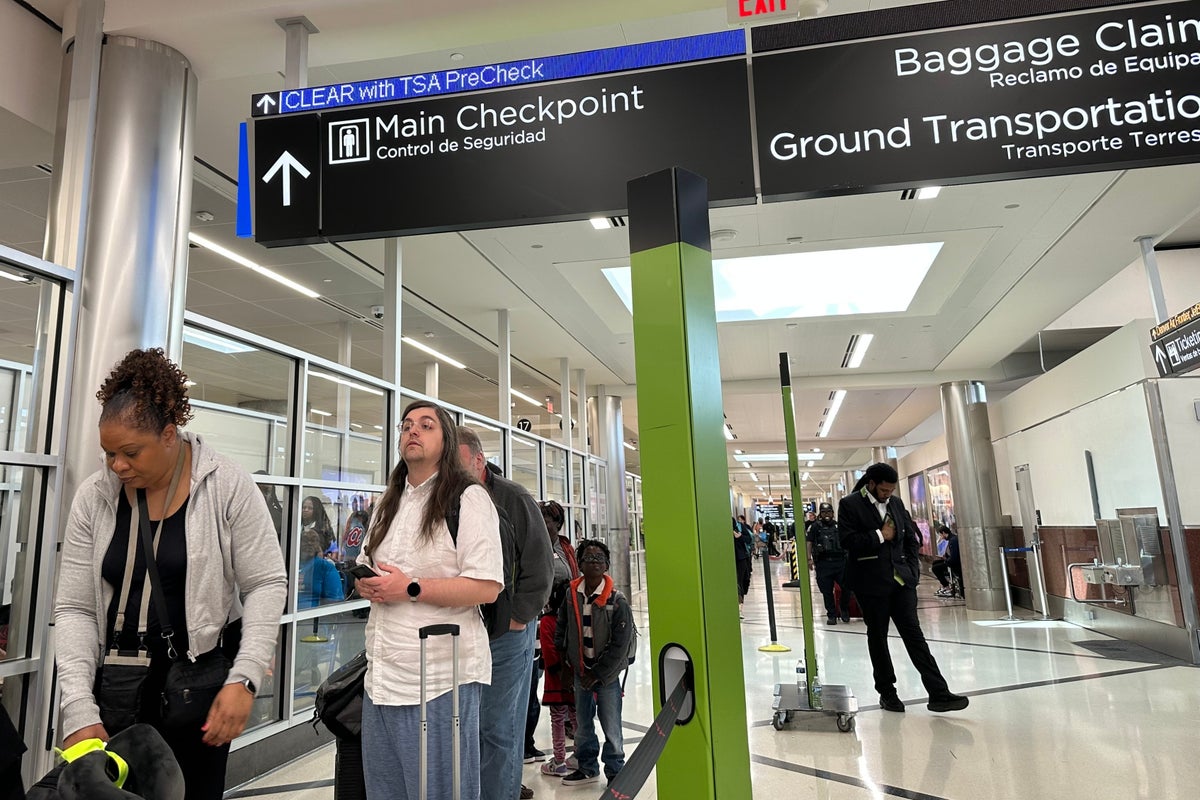
The logic seems airtight to the casual observer. If a government shutdown freezes the paychecks of the Transportation Security Administration (TSA), and those officers stop showing up to work, the solution is to find a way to keep the money flowing. Pay the officers, and the lines at O'Hare and LAX will shrink back to manageable levels. It is a simple diagnosis for a complex disease. However, treating the TSA's periodic staffing crises as a mere accounting error ignores a much darker reality within the belly of American infrastructure.
The American aviation system is currently being held together by a workforce that is overworked, under-supported, and fundamentally disconnected from the mission they are asked to perform. Paying them during a shutdown is not a fix. It is a temporary bandage on a compound fracture. To understand why the "just pay them" argument falls short, one must look at the systemic rot that makes the TSA the weakest link in the national security chain long before a budget battle ever reaches the floor of Congress.
The Myth of the Simple Solution
When the federal government shutters, the TSA is hit with a unique brand of cruelty. Unlike many other agencies, its frontline workers are deemed "essential," meaning they must report to work while their bank accounts remain stagnant. The narrative pushed by pundits is that this financial stress causes the "blue flu," where officers call out sick to work side jobs or simply out of protest.
While the financial pressure is real, the narrative that money is the sole lever of control is a fantasy. The attrition rate at the TSA has historically hovered at levels that would bankrupt a private sector company. Even when the paychecks are arriving on time, the agency struggles with a revolving door of talent. This is because the job itself has been engineered to be soul-crushing.
The TSA exists in a state of permanent friction. They are tasked with the impossible goal of 100% security efficacy—a metric they have failed repeatedly in internal "red team" testing—while simultaneously being judged by the flying public on how quickly a line moves. When a shutdown occurs, it doesn't just cut off pay. It validates the officer’s suspicion that the government views them as a line item rather than a professional security force. You cannot buy loyalty from a workforce that feels disposable.
The High Cost of Cheap Security
For decades, the United States has attempted to run a first-class security operation on a third-class budget. By keeping TSA salaries lower than almost any other federal law enforcement or security entity, the government created a system dependent on high-volume, low-skill labor.
Consider the training pipeline. A TSA officer receives a fraction of the specialized training given to Customs and Border Protection (CBP) agents or Federal Air Marshals. Yet, they are the primary interface for millions of travelers. When the pay stops, the most talented officers—those with the skills to transition to the private sector or other federal agencies—are the first to leave.
What remains is a hollowed-out core. The "shutdown answer" of merely guaranteeing back pay or securing a separate funding stream doesn't address the fact that we are asking people to perform high-stakes security work for wages that, in many major hubs, barely compete with local fast-food chains.
In cities like San Francisco or New York, the cost of living has outpaced federal pay scales so aggressively that a TSA officer is often one missed paycheck away from homelessness. Guaranteeing pay during a shutdown is a gesture, but it doesn't change the math of a career that offers no upward mobility and a staggering amount of daily verbal abuse from the public.
The Security Theatre Trade-Off
We have to talk about the efficacy of the screening process itself. The public tolerates the TSA because of a perceived trade-off: we give up our time and privacy in exchange for safety. However, the agency’s performance in undercover audits is notoriously poor.
During a shutdown, the pressure to "keep the lines moving" increases. Supervisors, wary of the political optics of four-hour wait times, often prioritize throughput over thoroughness. This is the hidden danger of the staffing crisis. It isn't just that you might miss your flight to Orlando. It’s that the person checking your bag is exhausted, worried about their mortgage, and potentially skipping steps to ensure the queue doesn't snake out the terminal door.
If the goal is truly "security," then the funding mechanism must be decoupled from the whims of the biennial budget brawl. But even then, we are left with an agency that has never quite decided if it is a security organization or a customer service department. By trying to be both, it fails at both.
A Broken Financial Model
The "Pay TSA" advocates often point to the September 11th Security Fee—that charge on your airline ticket—as a ready-made solution. In theory, that money should go directly to the officers. In reality, Congress has a long history of diverting those funds to offset the general deficit.
It is a shell game. Travelers believe they are paying for security, but that money is being used to balance books elsewhere in the federal budget. This creates a situation where the flying public is double-taxed for a service that isn't being properly funded at the point of delivery.
Even if the fees were locked in a "lockbox" specifically for TSA payroll, it wouldn't solve the logistical nightmare of a shutdown. Government spending is an interconnected web. An officer might be getting paid, but what about the maintenance contractors who fix the X-ray machines? What about the IT staff who manage the Secure Flight databases? A security screening checkpoint is not an island. It requires a massive backend infrastructure that also freezes when the budget lapses.
The Privatization Gamble
Whenever the TSA falters, the siren song of privatization grows louder. The Screening Partnership Program (SPP) allows airports to opt out of federal TSA screeners in favor of private contractors. Proponents argue that private firms can manage staffing more flexibly and keep pay flowing during a federal shutdown.
This is a dangerous oversimplification. Private contractors still operate under TSA oversight and follow TSA protocols. They are not a "free market" solution; they are a subsidized shadow of the federal agency. More importantly, privatization often leads to a race to the bottom in terms of wages and benefits, which is exactly the problem that causes the staffing crisis in the first place.
The handful of airports that have gone private, like San Francisco International, have seen mixed results. While they may have more flexibility in hiring, they are still beholden to the same broken security directives issued from Washington. Moving the payroll from a federal ledger to a corporate one does nothing to improve the quality of the security or the morale of the person wearing the uniform.
The Psychological Toll of the Checkpoint
To walk through a TSA line during a period of instability is to witness a slow-motion collapse of professional standards. You see it in the slumped shoulders and the curt instructions. The officers are not the enemy, yet the system is designed to make them the face of government incompetence.
The mental health of the workforce is a factor that no "simple pay" legislation can address. High rates of suicide, divorce, and chronic stress plague the agency. When the government shuts down, it sends a clear message to these individuals: your labor is essential, but your well-being is optional.
This psychological breach cannot be healed by a retroactive check. It requires a complete reimagining of what the TSA is supposed to be. Is it a professionalized, well-paid security corps on par with the Secret Service? Or is it a low-wage deterrent meant to make the public feel safe without actually being so? Currently, we are paying for the latter and expecting the former.
The Infrastructure of Resentment
The real reason the system is failing is that we have built an infrastructure of resentment. We have a traveling public that hates the process and a workforce that feels hated. A shutdown simply turns the volume up on a song that has been playing for twenty years.
The fix isn't just paying the officers. The fix is a radical overhaul of the agency’s structure. This includes:
- Professionalization: Elevating the TSA to a true law enforcement grade agency with the pay, training, and benefits to match.
- Funding Autonomy: Ensuring that security fees paid by travelers are used exclusively for security operations, protected from legislative raiding.
- Technological Integration: Moving away from the high-friction, manual labor model toward automated systems that reduce the burden on human screeners.
Anything less is just political theater. We can pass a law that keeps the checks coming during the next standoff in D.C., and the lines might move slightly faster for a few days. But the underlying rot will remain. The next time you stand in a ninety-minute line, remember that the person patting you down is part of a system that was designed to fail under pressure.
The aviation industry is a marvel of engineering, but it is resting on a foundation of sand. Until we decide that the people standing at the scanners are worth more than the political points scored during a budget fight, we will continue to fly on the edge of a crisis.
Stop looking for the simple answer in a paycheck. The solution requires a total reconstruction of the social contract between the state, the worker, and the traveler.
Demand a security force that is treated as an asset rather than a liability.