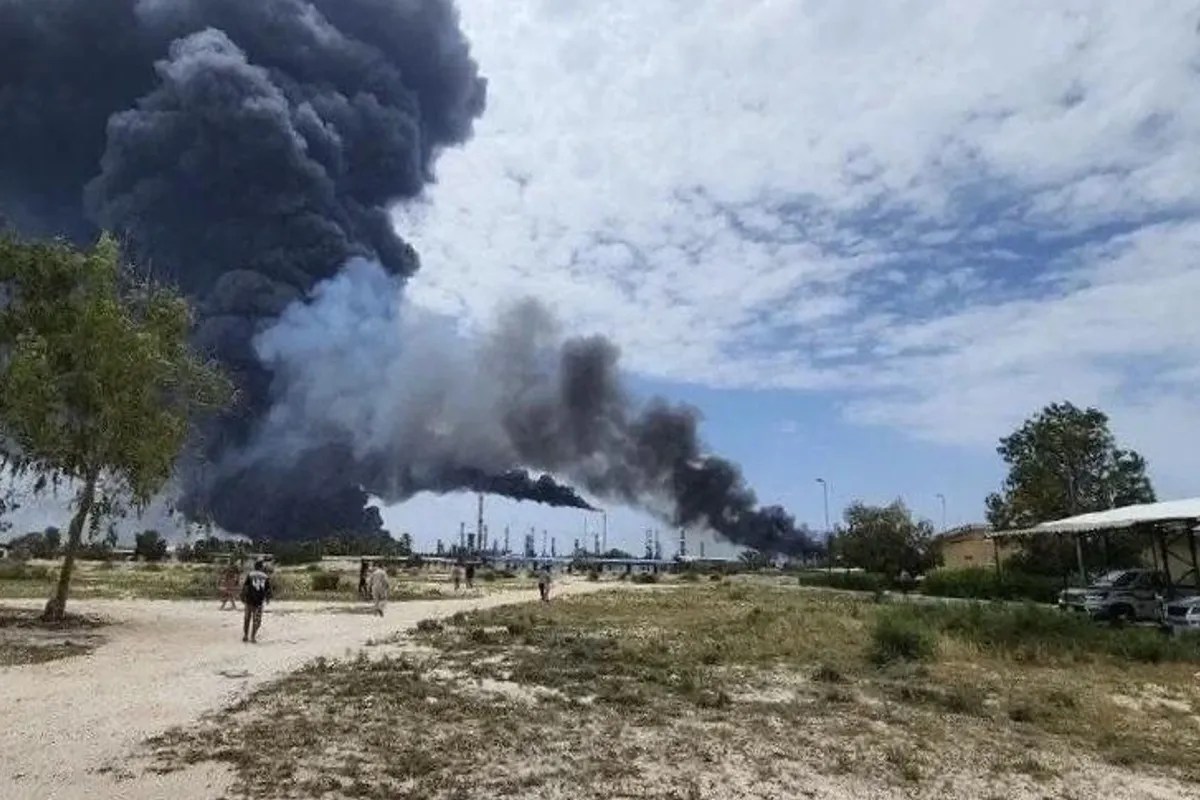
The smoke rising from Iranian oil infrastructure just hours after a whispered ceasefire isn't an anomaly. It is the predictable outcome of a geopolitical strategy where kinetic strikes serve as the only remaining form of high-stakes diplomacy. When a refinery burns, the global markets react to the price of Brent crude, but the real cost is measured in the total collapse of regional trust. The "ceasefire" was never meant to hold because the underlying incentives for war have shifted from territorial disputes to energy dominance and domestic survival.
Tehran’s oil sector is not just a collection of pipes and pressure valves; it is the regime’s central nervous system. Striking a refinery is a calculated attempt to induce a stroke. While official statements from both sides offer the usual mix of denials and "unidentified" aggressors, the timing of these attacks reveals a brutal truth. Peace is currently less profitable than a controlled, low-boil conflict for almost every major player involved.
The Mirage of Middle Eastern Stability
Diplomats love the word "ceasefire" because it suggests a return to a baseline of peace. In reality, there is no baseline. The region exists in a state of permanent friction where "quiet" is simply the time spent reloading. The recent strikes on Iranian soil demonstrate that the traditional rules of engagement have been shredded. We are no longer seeing a cycle of provocation and response. We are seeing a continuous, overlapping series of strikes where the lines between "war" and "negotiation" have blurred into a single, bloody continuum.
A ceasefire failing within hours suggests that the orders to strike were likely issued while the ink was still wet on the agreement. This isn't a breakdown of communication. It is a deliberate signal from hardliners within the military apparatus that the civilian government’s promises carry no weight. For the Iranian Revolutionary Guard Corps (IRGC), a cessation of hostilities is often viewed as a strategic liability. It allows the West to tighten sanctions without the distraction of a hot war. By keeping the fire burning—literally—the IRGC ensures that the "Iran Problem" remains a crisis that cannot be ignored or quietly managed through economic strangulation alone.
Energy as the Ultimate Kinetic Variable
The choice of a refinery as a target is a masterclass in psychological and economic warfare. Unlike a military base, which can be hidden or fortified, an oil refinery is a massive, stationary target with a high "spectacle value." You can see the fire from space. You can feel the economic impact at every gas pump in the hemisphere.
The Vulnerability of Downstream Assets
Iran’s energy sector is plagued by aging infrastructure and a lack of spare parts due to decades of sanctions. When a distillation unit or a cracker is hit, it cannot be easily replaced.
- Refining Capacity: Iran struggles to meet its own domestic gasoline demand despite being oil-rich.
- Infrastructure Fragility: Most Iranian refineries rely on technology from the 1970s and 80s, making them difficult to repair under current trade embargoes.
- Economic Isolation: Every barrel of refined product lost is a barrel that must be imported using precious foreign currency reserves.
This is why the refinery strikes are so effective. They don't just hurt the military; they punish the population. By creating fuel shortages and driving up internal inflation, the attackers are betting that domestic unrest will do more damage to the regime than any foreign invasion ever could. It is a strategy of "maximum pressure" delivered via missile rather than memo.
The Failure of Modern Mediation
The international community continues to use a 20th-century diplomatic toolkit to solve 21st-century proxy wars. The mediators are often three steps behind the technology being used on the ground. When a drone can be launched from a shipping container or a "fishing boat," attributing an attack becomes a weeks-long forensic exercise. By the time the evidence is presented to the UN, the war has already moved on to a new phase.
The failure of the ceasefire isn't a failure of the mediators' intent; it's a failure to account for the shadow actors. These are the militias, the private contractors, and the autonomous units that operate outside the direct chain of command. In the current landscape, a leader in Tehran or Tel Aviv might "agree" to a stop, but the commander of a drone battery 500 miles away has a different set of priorities.
The Attrition Trap
Both sides are now caught in an attrition trap. If Iran doesn't respond to a refinery hit, it looks weak and invites further aggression. If it does respond, it violates the ceasefire and justifies even harsher strikes. It is a mathematical certainty of escalation.
The logic of the "proportionate response" has died. In its place is a doctrine of "asymmetric disruption." If you hit my refinery, I won't hit yours; I’ll hack your water treatment plant or harass a tanker in the Strait of Hormuz. This unpredictability is what makes the current "failed ceasefire" more dangerous than the open warfare of previous decades. There are no clear boundaries, no red lines that haven't already been crossed, and no shared definition of what "victory" actually looks like.
The Intelligence Gap and the Grey Zone
One of the most overlooked factors in these sudden escalations is the role of intelligence "leaks" used as weapons. Often, a ceasefire is agreed upon while one side is sitting on actionable intelligence about a high-value target. The temptation to take the shot before the window closes is frequently stronger than the desire to maintain a fragile peace.
We are living in the era of the Grey Zone, where conflict is perpetual and "peace" is just a rebranding of low-intensity operations. The refinery attack was likely timed to disrupt the very diplomatic channels that were supposedly opening. It serves as a reminder that for certain factions, the worst possible outcome is a normalized relationship between Iran and the global community.
The Role of Non-State Actors
We cannot ignore the influence of proxy groups. Whether it’s groups in Lebanon, Yemen, or Iraq, these entities have their own agendas. They are not buttons on a dashboard that the Iranian leadership can press at will. They are partners with their own local grievances and survival instincts. When a ceasefire is announced in a boardroom in Geneva or Doha, it often feels like a foreign imposition to the man in the trench.
- Proxy Autonomy: Groups like the Houthis or Hezbollah have developed their own indigenous manufacturing capabilities, reducing their dependence on direct orders.
- Funding Streams: Illicit oil sales and black-market trade mean these groups can survive even if the central government tries to cut them off to satisfy a peace treaty.
Why the Market No Longer Believes in Peace
Oil traders used to panic at the mention of a Middle Eastern war. Now, they barely blink. This "conflict fatigue" is dangerous because it masks the genuine risk of a total systemic collapse. The market has priced in a certain level of chaos, but it hasn't priced in the total removal of Iranian oil from the global supply chain.
If the strikes move from refineries to the primary export terminals like Kharg Island, the global economy will face a shock that makes the 1970s look like a minor market correction. The current ceasefire failures are the warning shots before that ultimate escalation. The attackers are testing the world’s resolve and Iran’s air defenses simultaneously. Each failed agreement provides more data on how the "other side" reacts when pushed to the brink.
The Technological Arms Race
The shift from traditional air strikes to swarm drones and cyber-attacks has changed the cost-benefit analysis of breaking a ceasefire. In the past, losing a pilot or a multi-million dollar jet was a major deterrent. Today, a $20,000 drone can take out a $200 million refining unit.
The barrier to entry for high-impact sabotage has never been lower. This democratization of destruction means that even if the major powers want peace, a small, motivated group with a handful of loitering munitions can reignite a regional war in an afternoon. This is the structural flaw in any modern peace treaty: it only takes one person to break it, but it takes thousands to maintain it.
The Domestic Imperative
For the Iranian leadership, the refinery fire is a tool of internal control. It allows them to point to an external "Great Satan" or "Zionist Entity" as the cause of all domestic woes. When the lights go out or the gas lines grow long, the blame is shifted from government mismanagement to foreign "sabotage."
Ironically, the attackers might be doing the regime a favor by providing a scapegoat. A population that is cold, hungry, and angry at a foreign invader is less likely to focus that anger on the palace. This cynical cycle of "strike and consolidate" is the true engine of the conflict. The refinery burns, the people suffer, the regime tightens its grip, and the "ceasefire" becomes a footnote in a history book that no one has finished writing.
The international community must stop viewing these events as isolated incidents. They are part of a coherent, if brutal, strategy of endurance. The ceasefire didn't "fail"—it was discarded the moment its existence became more inconvenient than the war it was meant to stop.
The fire at the refinery isn't the end of the story. It’s the baseline for the next round of demands. As long as oil is the lifeblood of the global economy and the primary weapon of the Iranian state, refineries will continue to be the altars upon which peace is sacrificed. The world can keep drafting agreements, but as long as the incentives for escalation outweigh the rewards for stability, the smoke over the Persian Gulf will never truly clear.