In a cramped office above a bakery in Leeds, a small business owner named Sarah stares at her laptop. She sells handcrafted leather journals. To find her customers, she relies on digital advertising platforms owned by giants across the Atlantic. Every time someone clicks her ad, a few cents or dollars migrate from her British bank account to a server farm in Virginia or California. Sarah doesn't think about international tax law. She thinks about her rent. But Sarah is currently standing at the center of a high-stakes staring match between two world powers.
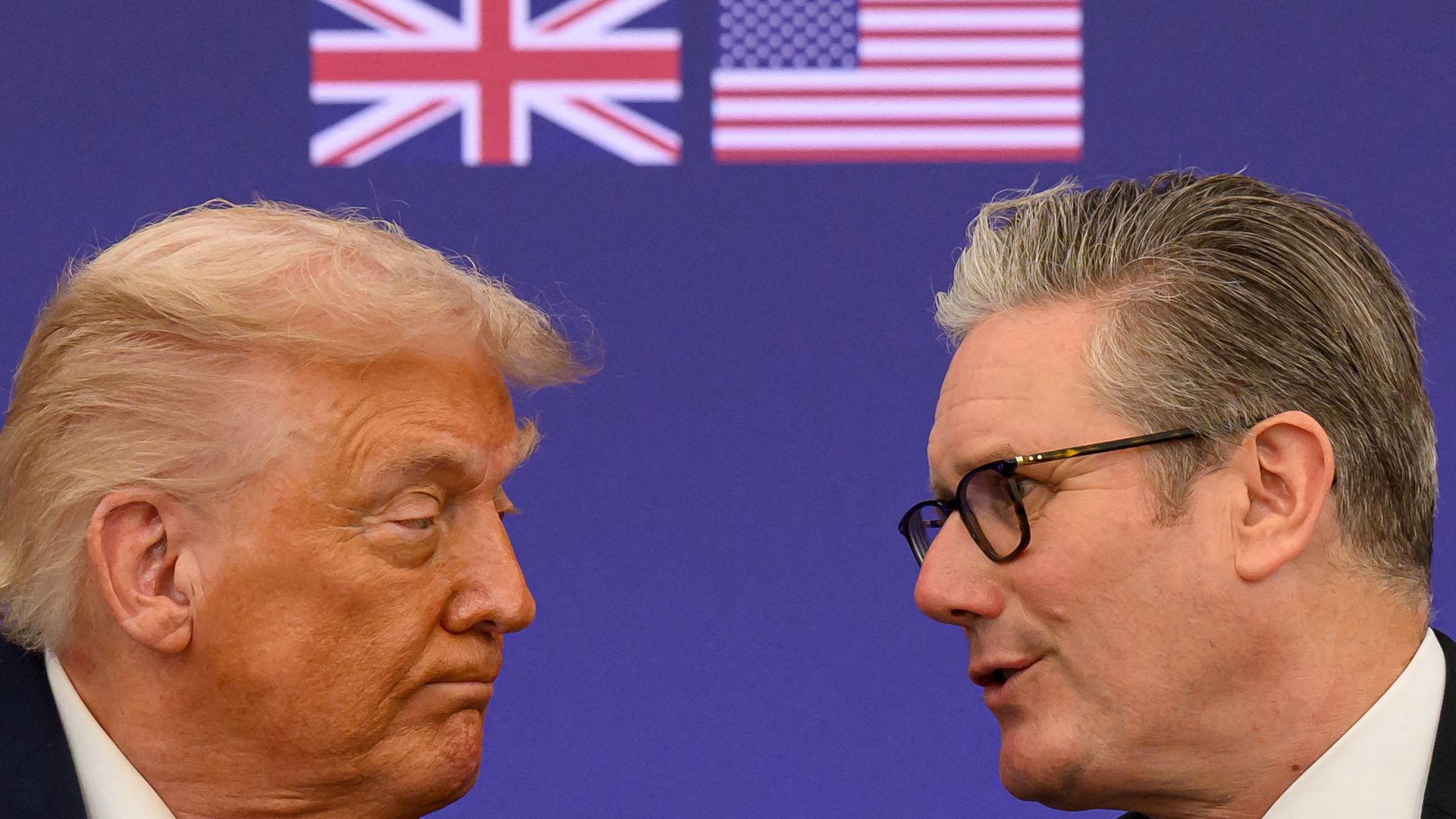
The conflict is ostensibly about a "Digital Services Tax," a dry, bureaucratic phrase that carries the weight of a trade war. The United Kingdom wants a 2% cut from the revenues of search engines, social media platforms, and online marketplaces that profit from British users. To the UK Treasury, it is a matter of fairness. To Donald Trump, it is a "big tariff" waiting to happen.
We often think of borders as physical things—lines on a map, checkpoints with armed guards, or cliffs overlooking the English Channel. But in the modern economy, the most important borders are invisible. They exist in the exchange of data and the flow of digital gold. When a British citizen buys a book on a US-hosted platform, where did that transaction actually happen? For years, the answer has been "wherever the tax rate is lowest."
The Art of the Threat
Donald Trump does not do subtlety. His approach to international diplomacy often mirrors a real estate negotiation in 1980s Manhattan: move fast, speak loudly, and always keep a heavy hammer visible on the table. The hammer, in this instance, is a massive retaliatory tariff on British goods.
Imagine the cargo ships crossing the Atlantic. They carry Scotch whisky, Savile Row suits, and high-end automotive parts. If the US follows through on its threat, these items suddenly become prohibitively expensive for American consumers. A bottle of Lagavulin that once sat comfortably on a shelf in a Boston liquor store might see its price tag jump by 25%. The result? The American consumer stops buying, and the Scottish distillery, miles away from the tech hubs of London or San Francisco, begins to bleed.
This is the collateral damage of a digital age dispute. The tech giants—the Googles and Amazons of the world—have the resources to weather a storm. Sarah in Leeds and the distiller in Islay do not.
The Ghost of Fair Play
The UK’s argument is rooted in a sense of historical grievance. For decades, the global tax system was built for a world of factories and warehouses. If you sold a car in London, you had a "permanent establishment" there, and you paid taxes on the profit. But you can’t put a brick-and-mortar store on a cloud server.
British lawmakers argue that tech companies extract immense value from the British public’s data and attention without contributing back to the infrastructure—the roads, the schools, the hospitals—that those same citizens use. It is a quest for a "level playing field."
However, the American perspective sees this as a targeted attack. From Washington’s viewpoint, the UK isn't just seeking fairness; it is picking the pockets of America's most successful exports. Why, the Trump administration asks, should American innovation be the primary funder of a foreign government’s budget?
The tension creates a peculiar irony. The UK, having recently navigated the choppy waters of Brexit to "take back control," finds its sovereign tax policy being dictated by a phone call from the White House.
A Game of Chicken with No Brakes
Negotiations of this scale are rarely about the money itself. The 2% tax is a rounding error for a company like Meta or Apple. The real issue is the precedent. If the UK successfully taxes the Silicon Valley elite, France will follow. Then Italy. Then the rest of the world.
For the US, this is a defensive maneuver to protect a digital hegemony. For the UK, it is a desperate attempt to modernize a tax code that is rapidly becoming obsolete.
Consider the atmosphere in the room during these discussions. On one side, British diplomats in sharp suits, armed with white papers and economic models, trying to explain the nuance of user-participation value. On the other side, a US administration that views the world through the lens of a scoreboard. Win or lose. Surplus or deficit.
Trump’s threat of a "big tariff" is designed to create internal pressure within the UK. He wants the British luxury goods industry to scream at Downing Street. He wants the car manufacturers to lobby the Prime Minister. He wants the pain of the physical economy to outweigh the potential gain of the digital tax.
The Human Cost of Abstract War
Behind every headline about "trade barriers" and "retaliation" are people who have never written a line of code or a tax bill.
There is the American worker at a port in New Jersey whose hours are cut because fewer British containers are arriving. There is the British app developer whose overhead increases because the US decides to squeeze digital exports in return.
The complexity of the modern world has made us all interconnected in ways that are frighteningly fragile. A tweet from a President or a policy shift in Parliament ripples through the lives of millions. We are living in an era where a dispute over a "like" button can end up costing a welder his job.
It is a confusing, often scary reality. We want the convenience of global tech, but we also want our local communities to thrive. We want free trade, but we also want fair taxes. These two desires are currently grinding against each other like tectonic plates.
The friction creates heat. That heat is what we see in the rhetoric coming out of the White House. It isn't just about a 2% tax. It’s about who owns the future. It’s about whether a nation-state still has the power to regulate a company that exists everywhere and nowhere at once.
The Empty Chair at the Table
What is missing from this narrative is a global consensus. For years, the OECD has tried to broker a deal that would satisfy everyone—a "Global Tax" that would render these local skirmishes unnecessary. But international cooperation is slow, and political cycles are fast.
Leaders are rewarded for "standing up" for their country, not for compromising in a boardroom in Paris. This makes the threat of a trade war a useful political tool, even if it is a disastrous economic one.
The UK finds itself in an impossible position. To drop the tax is to look weak and admit that their economic sovereignty has limits. To keep it is to risk an all-out trade war with their most important ally at a time when their economy is already reeling from the shocks of the last decade.
Sarah in Leeds still checks her ads. She sees the cost of her digital reach ticking up. She hears the news about tariffs and wonders if she’ll be able to afford the specialized leather she imports from a supplier in Chicago next year.
The "big tariff" isn't just a threat. It is a shadow that stretches across the Atlantic, darkening the storefronts of small businesses and the gleaming glass towers of tech giants alike. The tragedy of modern trade is that the weapons are chosen by the powerful, but the wounds are felt by the small.
The ink on the tax bill is barely dry, yet the air is already thick with the scent of a coming storm. We are watching the world’s first truly digital war, where the casualties aren't measured in territory, but in the quiet closing of shops and the rising price of a bottle of scotch on a shelf half a world away.