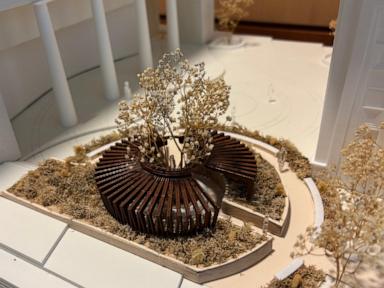
The discovery of human remains within the East Marshall Street Well on the Virginia Commonwealth University (VCU) medical campus represents a failure of institutional ethics that transcends simple negligence; it is a manifestation of the "Anatomical Industrial Complex" of the 19th century. In 1994, construction crews uncovered a mid-19th-century well containing the skeletal remains of over 50 individuals, primarily of African descent. These individuals were the byproduct of a systemic supply chain where bodies were illegally exhumed—often from graves of the marginalized—to serve as clinical specimens for medical education. Resolving this legacy requires a transition from reactive memorialization to a structured framework of restorative justice that integrates bioethical accountability, community-led ancestral governance, and permanent physical sanctification.
The Mechanics of Anatomical Extraction
To understand the necessity of the VCU memorial, one must first quantify the historical mechanism that created the well. In the 1800s, medical schools faced a structural deficit: the demand for cadavers to teach surgical techniques far outpaced the legal supply, which was typically restricted to executed criminals. This supply-demand gap birthed a clandestine economy centered on "resurrectionists" or grave robbers.
The extraction process functioned through a specific socio-economic lens:
- Target Selection: Graveyards for enslaved people, free Black residents, and the indigent were prioritized due to their lack of legal protection and physical security.
- Institutional Integration: Medical colleges did not merely consume these "materials"; they provided the financial incentives that sustained the trade.
- Waste Management: Once the anatomical "utility" of a body was exhausted through dissection, the remains were often disposed of in pits or wells—such as the one found at VCU—rather than being returned for proper burial. This transformed a human being into a disposable industrial byproduct.
The East Marshall Street Well is a data point in a larger pattern of institutionalized dehumanization. The presence of surgical marks on the recovered bones confirms their use as instructional tools, establishing a direct causal link between the growth of the medical institution and the desecration of the local Black community.
The Framework of the Family Representative Council
The VCU response is governed by a specific organizational structure known as the Family Representative Council (FRC). This body was established to solve a fundamental problem in restorative justice: who holds the "moral title" to remains when direct biological descendants cannot be identified through traditional genealogy?
The FRC operates on a mandate of "descendant community" sovereignty. In cases where the 19th-century remains lack specific names, the broader community of African descent in Richmond is designated as the surrogate family. This model shifts the power dynamic from the university (the historical transgressor) to the community (the historical victim).
Decision-Making Logic of the FRC
The FRC’s strategy is built upon three pillars of reparative action:
- Research and Identification: Utilizing ancient DNA (aDNA) analysis and stable isotope testing to determine the geographic origins and health profiles of the individuals.
- Reinterment: Planning the physical return of the remains to the earth in a manner that adheres to cultural and spiritual protocols identified by the community.
- Memorialization: Creating a physical site that serves as both a tomb and a public educational record of the institutional history.
Quantifying the Memorial’s Functional Requirements
A memorial of this magnitude cannot be a mere aesthetic installation; it must function as a site of "Active Memory." VCU’s commitment involves a dedicated space on the MCV (Medical College of Virginia) campus. The design requirements for such a project involve complex variables that balance public access with the sanctity of a burial ground.
The cost function of this project includes not only the physical construction but also the long-term stewardship of the site. A failure in maintenance or a lack of contextual education at the site would result in a "Secondary Erasure," where the significance of the remains is once again lost to the bureaucracy of the campus landscape.
Structural Obstacles to Memorialization
Building a memorial in an active medical center creates a competition for space and utility. The university must navigate:
- Zoning and Land Use: The site is located in a high-density urban environment where medical infrastructure is constantly expanding.
- Bioethical Protocols: Managing human remains in an educational setting requires strict adherence to ethical standards that were ignored in the 1840s.
- Public Perception: The university must maintain its reputation as a modern healthcare leader while simultaneously acknowledging its history as a site of exploitation.
The Role of Bioethics in Modern Medical Education
The memorial project is a catalyst for a curriculum overhaul. The discovery of the well necessitates a shift in how medical students are taught the history of their profession. If the students walk past a memorial every day, the "Hidden Curriculum"—the unsaid values and biases learned during medical training—is forced into the light.
The clinical utility of the East Marshall Street Well today lies in its ability to teach "Social Medicine." The disparity in how these individuals were treated in death mirrors the contemporary disparities in healthcare outcomes for Black patients. By deconstructing the history of the well, the institution can address the root of medical mistrust. This is not a matter of feelings, but of health outcomes; patients who do not trust the medical institution are less likely to seek preventative care, leading to higher morbidity rates.
Comparative Institutional Responses
VCU is not the only institution grappling with this legacy. The University of Georgia (UGA) and the University of Virginia (UVA) have also discovered remains of enslaved people or marginalized individuals used for labor or medical study. However, the VCU case is distinct due to the density of the remains and the specific disposal method of the well.
The VCU model is arguably more rigorous because it incorporates the FRC. Unlike other institutions that might opt for a simple plaque, VCU is attempting a full-scale integration of community governance. The limitation of this strategy is the time-scale; community-led processes are inherently slower than top-down institutional mandates. This creates a friction between the university’s desire for "project completion" and the community’s need for a "healing process."
Variables of Success for the Memorial
The success of the VCU memorial will be measured by four KPIs:
- Integration: How effectively is the memorial's history woven into the mandatory orientation for every medical student and faculty member?
- Permanence: Is the site legally protected from future campus expansion or repurposing?
- Engagement: Does the Black community in Richmond utilize the space, or does it remain an insular university asset?
- Transparency: Does the university continue to fund independent research into its own history of anatomical exploitation?
The Ancestral Burial Ground and the Urban Fabric
The decision to inter the remains at Richmond’s African Burial Ground—a site already heavy with the history of the slave trade—links the medical exploitation of the 19th century to the broader history of racialized violence in Virginia. This geographic choice acknowledges that the East Marshall Street Well was not an isolated incident but a node in a network of systemic oppression.
By moving the remains from the university’s storage to a sanctified burial ground, the university relinquishes its final claim of "ownership" over these bodies. This is the ultimate act of divestment from the anatomical trade.
Strategic Direction for Institutional Accountability
For the VCU memorial to transcend performance, the university must implement a "Legacy Policy" that goes beyond the physical structure. This involves the following tactical steps:
- Endowed Stewardship: Establish a permanent endowment specifically for the maintenance of the memorial and the ongoing work of the Family Representative Council, ensuring the project survives changes in university administration.
- Bioethical Research Standards: Formalize a protocol for any future discoveries of human remains on campus that defaults to community control rather than institutional ownership.
- Curriculum Audit: Audit the history and ethics courses within the VCU School of Medicine to ensure that the story of the East Marshall Street Well is taught not as an anomaly, but as a foundational element of the school’s historical development.
- Community Health Equity: Align the university’s healthcare outreach programs with the restorative goals of the memorial. The most authentic tribute to those whose bodies were taken without consent is the provision of high-quality, equitable care to their descendants today.
The memorial is not the end of the process; it is the physical infrastructure upon which a new institutional identity must be built. The goal is to move from a history of extraction to a future of reciprocity. This requires the institution to accept that its prestige was built, in part, on a well of human remains, and that its future legitimacy depends entirely on how it handles that debt.