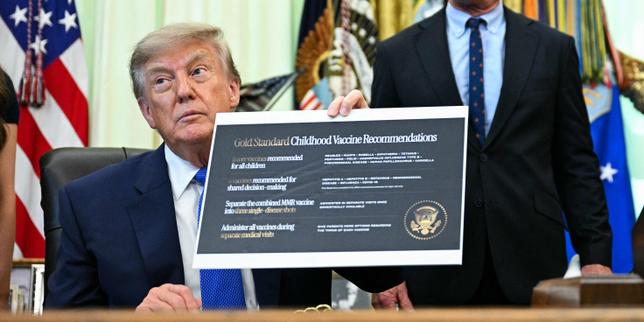
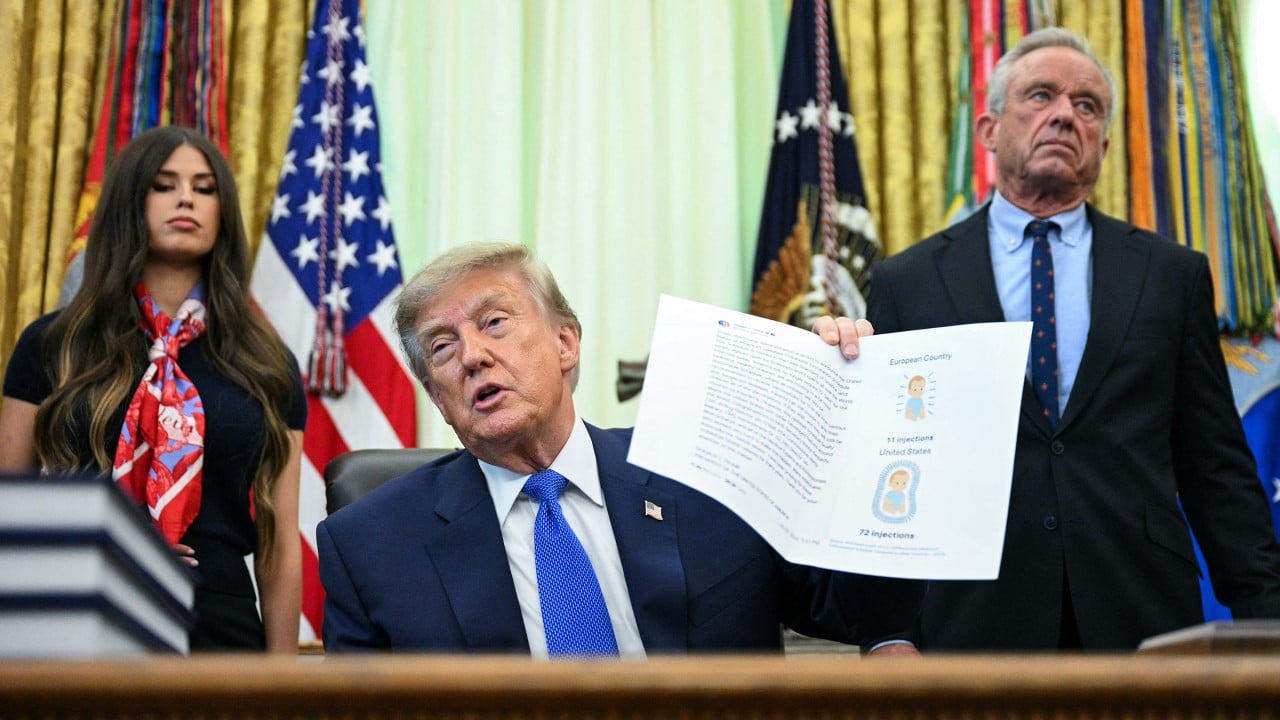
President Donald Trump signed an executive order targeting the foundational structure of the United States childhood immunization schedule. The directive aims to restrict federal backing to 11 core immunizations, break up combination shots like the measles, mumps, and rubella (MMR) vaccine into individual components, and spread pediatric doctor visits across an extended timeline. For families, pediatricians, and public health infrastructure, the move represents a direct collision between executive authority and decades of established epidemiological science.
The primary mechanics of the order sound bureaucratic on paper, yet they carry profound operational consequences for everyday healthcare delivery. By narrowing federal support to 11 core diseases and advocating for spaced-out inoculations, the administration is attempting to bypass judicial roadblocks that previously stalled sweeping changes attempted by the Department of Health and Human Services.
The Logistics of Separation
Breaking down the mechanics reveals an immediate logistical chasm. Consider the directive to split the MMR vaccine into three distinct injections delivered across separate appointments. Single-antigen measles, mumps, and rubella vaccines for routine pediatric use are not currently manufactured or readily available within the United States market.
Manufacturing single-dose vials requires a complete overhaul of production lines, regulatory clearances, and supply chains. Pharmaceutical firms have already signaled opposition, noting that utilizing individual components dramatically increases the total number of physical needle sticks a child must endure.
More injections mean more clinical encounters. More clinical encounters mean increased administrative burdens, higher co-pays for families, and greater opportunities for missed appointments. When a parent is told to bring a toddler back five separate times for what was previously managed in fewer visits, the friction coefficient of public health compliance spikes. Drop-off rates between initial doses and booster shots historically show a steep decline. Every extra hurdle introduced into the schedule increases the absolute number of unprotected children wandering through communities.
Administrative Judo and State Mandates
Federal overreach has limits, particularly when it comes to the policing of school attendance. The White House cannot directly rewrite state-level laws regarding mandatory school entry immunizations. State legislatures hold that constitutional authority.
Instead, the administration is deploying administrative judo. The executive order explicitly encourages states with active vaccine mandates to reconsider and update their statutory requirements to match the new, trimmed-down federal framework.
This creates a fragmented patchwork across fifty states. A child living in one state might face strict adherence to historical pediatric guidelines, while a child across a state line could see local school boards modifying exemptions based on federal pressure. This friction disrupts herd immunity thresholds. Pathogens do not respect state borders, and localized pockets of low immunization coverage serve as historical kindling for outbreaks.
The Cost of Friction
Proponents of the schedule restructuring argue that parental autonomy and alignment with certain European models justify the pivot. Critics within the pediatric community counter that comparisons to peer nations ignore structural differences in healthcare access, social support safety nets, and baseline public health surveillance systems.
When spacing out schedules, the vulnerability window expands. A baby protected against pertussis or pneumococcal disease under an accelerated timeline gets immediate systemic defense. Stretching those doses out over months leaves a developing infant exposed during their most fragile developmental window.
The economic fallout also demands scrutiny. Insurance providers operate within regulatory frameworks tied to recognized clinical standards set by groups like the American Academy of Pediatrics. If federal guidelines diverge from professional medical consensus, insurers face a complex labyrinth regarding coverage mandates for non-core visits, extra administrative fees, and out-of-pocket costs passed directly to consumers.
Decades of public health architecture were built on the premise that efficient, consolidated delivery protects the collective. Disassembling that architecture through executive decree shifts the burden of risk squarely onto individual parents navigating an increasingly contradictory medical landscape.