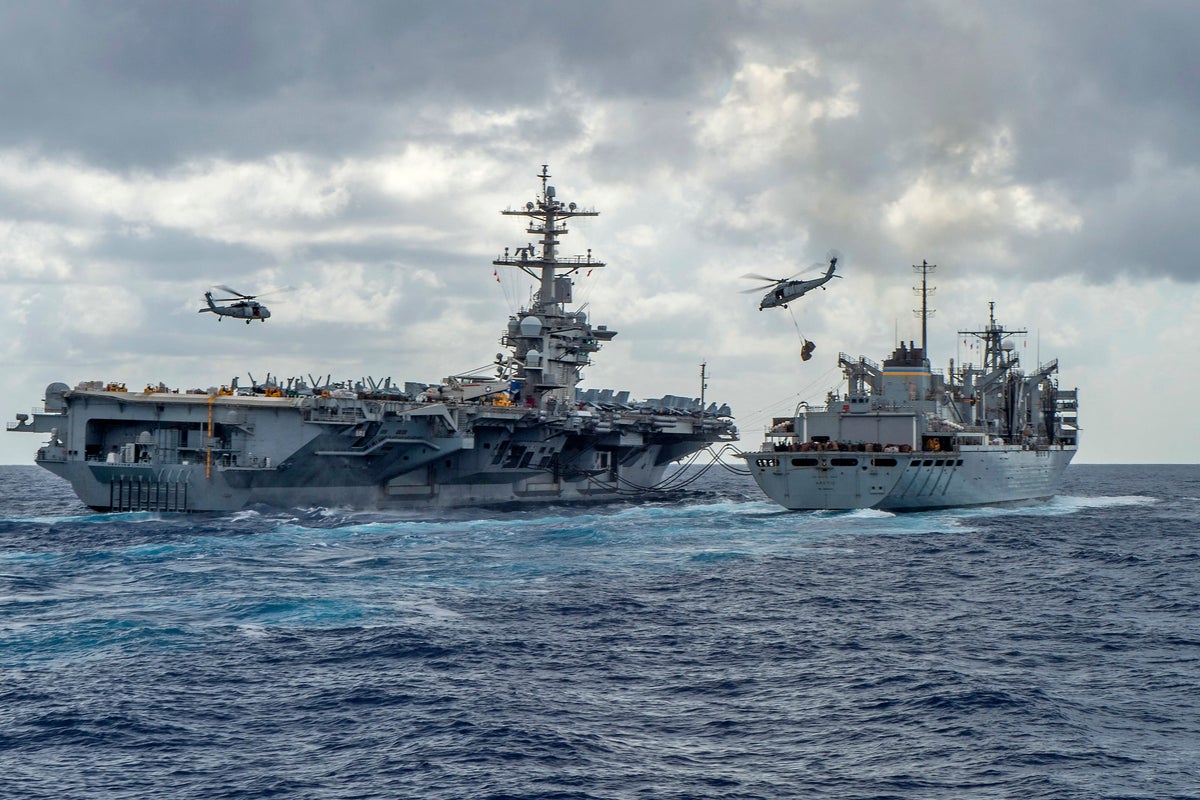
The steel hull of a nuclear-powered aircraft carrier offers no sanctuary from the slow rot of systemic neglect. When sailors deploy for months on end, they trade personal autonomy for national security. They expect hardship. They expect long hours, separation from family, and the omnipresent hum of a floating city carved out of heavy armor. What they do not expect, and what their families are no longer willing to tolerate, is an environment where basic human habitability takes a back seat to operational metrics.
The public outcry sparked by military spouses speaking out about conditions aboard the USS Abraham Lincoln laid bare a widening chasm between the flag-level rhetoric of readiness and the grim reality of daily life below deck. A dismissed complaint is never just a dismissed complaint. It is a brick removed from the foundation of military retention. When a sailor's spouse takes to public platforms to label a multi-billion-dollar warship a floating metal prison, the leadership failure goes beyond moldy food and broken plumbing. It points to a cultural detachment at the highest echelons of command.
The Anatomy of a Floating Crisis
Operational tempo in the modern surface fleet has reached a breaking point. Carriers like the USS Abraham Lincoln operate under relentless deployment extensions, high-stress schedules, and deferred maintenance cycles that accumulate invisible debt. That debt is paid by the crew in sleep deprivation and exposure to substandard living conditions.
Raw sewage overflows, non-functioning ventilation systems, and extreme temperature fluctuations inside berthing compartments transform routine deployments into endurance tests. These are not luxury grievances. Poor air circulation and persistent humidity breed mold that attacks respiratory health. Contaminated potable water systems force crews to rely on bottled supplies that routinely run short. When physical infrastructure degrades to this level, cognitive performance suffers. Fatigue sets in. Safety margins on a flight deck measuring a few hundred feet shrink to zero.
Politicians and senior defense officials often respond to these disclosures with generic acknowledgments of hardship, followed by assurances that investigations are underway. Yet, the systemic drivers remain untouched. Shipyards face massive backlogs. Maintenance availabilities are compressed to meet arbitrary deployment windows. Sailors absorb the shock of these administrative failures while living in spaces where personal privacy is nonexistent and basic hygiene becomes a daily logistical challenge.
Beyond the Rhetoric of Resilience
Military culture historically prizes resilience above all else. Endure and overcome is the unwritten creed etched into every recruit during basic training. But institutional resilience has been weaponized as an excuse for chronic underinvestment in quality-of-life infrastructure.
Commanders frequently frame complaints as a lack of toughness. This attitude misses the fundamental economic and social reality of the modern all-volunteer force. Today's sailors and their families possess unprecedented tools for communicating directly with the public, bypassing traditional chains of command that historically muffled dissent. When an admiral or a commander-in-chief brushes off reports of appalling conditions as minor inconveniences, they misread the tolerance threshold of a generation that views service through a transactional and dignity-based lens.
Retention numbers tell the story. Mid-career technicians, nuclear operators, and aviation mechanics are voting with their feet. They complete their initial service obligations and walk away into a civilian labor market that rewards technical competence without demanding months of sleeping next to overflowing sanitation pipes. The military industrial complex can build advanced stealth fighters and electromagnetic catapults, but it currently struggles to provide functioning air conditioning and clean drinking water to the personnel operating them.
The Cost of Deferred Maintenance
Naval engineering relies on preventative maintenance schedules for a reason. Ignore a valve today, and you replace a main reduction gear tomorrow. The same principle applies to human infrastructure.
When dry-dock periods are delayed or cut short to keep a carrier strike group globally responsive, internal systems degrade exponentially. Berthing areas designed decades ago for shorter deployments now house crews under grueling conditions that exceed original design parameters. Modernization efforts routinely prioritize lethal capabilities over crew comfort, operating under the flawed assumption that sailors are infinitely adaptable machines.
Families bear the psychological brunt of this neglect. While a sailor is underway, a spouse at home absorbs the stress of distant, chaotic communications regarding toxic living conditions. The anxiety is not just about the dangers of maritime operations, but about the slow erosion of their partner's health due to preventable environmental hazards onboard. This dynamic creates a dual-front war for military families: surviving the deployment while fighting the institution for basic accountability.
Fixing the Broken Chain
Reforming fleet living conditions requires more than a temporary influx of congressional oversight or a hastily organized town hall meeting. It demands a fundamental realignment of budget priorities within the Department of Defense.
Accountability must travel upward. If a commercial cruise line operated a vessel with sewage leaks and toxic mold in passenger quarters, federal regulators would shut it down immediately. The United States Navy cannot exempt itself from basic standards of occupational health simply because an asset is underway in international waters.
Real solutions start with protecting whistleblowers and empowering enlisted leadership to halt operations when living conditions cross the line from uncomfortable to hazardous. Maintenance periods must be treated as sacred operational requirements rather than flexible variables to be compressed for political expediency. Until leadership recognizes that a sailor's living space is a core component of national security rather than an administrative afterthought, the metal prisons will remain afloat, and the families left behind will keep sounding the alarm.