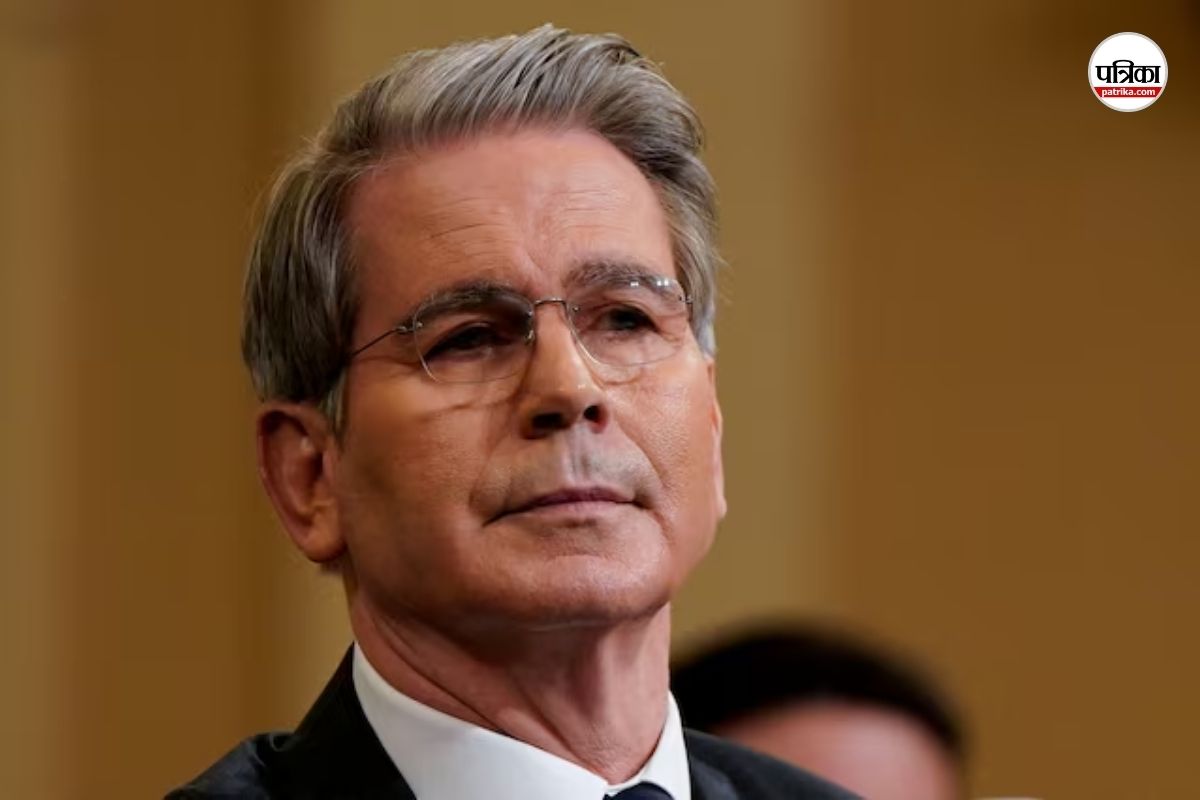
Sanctions rarely kill a state overnight. Instead, they warp its architecture, forcing a government to invent shadow economies, barter networks, and gray-market workarounds that prove remarkably resilient against outside coercion. Washington continues to project absolute economic authority across global banking channels. Yet inside Tehran, the top leadership operates with a hardened institutional calculus built on decades of survival under extreme isolation. Recent commentary from Western figures like Scott Bessent regarding the crippling impact of financial restrictions misses a fundamental reality. Tehran is not merely suffering under the weight of trade barriers. The regime has adapted, reorganized, and turned isolation into a permanent governance strategy.
Decades of embargoes created an underground architecture that defies standard macroeconomic analysis. When traditional petroleum exports face hard stops, secondary shipping routes, midnight ship-to-ship transfers, and opaque corporate shells step in to fill the gap. Observers looking at official GDP metrics often mistake contraction for collapse. They fail to see the massive parallel economy functioning entirely outside Western visibility.
The Anatomy of Sanctions Evasion
Financial strangulation depends on one primary mechanism. Control the plumbing of international transactions, and you control the target nation's access to hard currency. The global dominance of the dollar gives Washington unmatched leverage. Iranian authorities understand this vulnerability better than anyone else. Over the past ten years, they systematically decoupled their core state budget from standard SWIFT networks wherever possible.
Bilateral trade agreements with regional and global powers bypass Western currencies entirely. Transactions settle in local currency swaps, gold, or direct commodity exchanges. When crude oil moves from Iranian ports to refineries in Asia, the paper trail vanishes behind a rotating cast of shell companies registered in tax havens.
- Shadow Fleets: Aging oil tankers routinely turn off their transponders in the Persian Gulf to mask their cargo origins.
- Currency Swaps: Central bank clearing houses utilize bilateral arrangements with friendly states to buy essential imports without touching dollar reserves.
- Hawala Networks: Informal value transfer systems move billions of dollars across borders outside traditional banking oversight.
These mechanisms do not replace a fully integrated modern economy. They do, however, provide a sufficient floor to prevent total system failure. The leadership absorbs the shock, passes the true cost down to the civilian population, and insulates the security apparatus from fiscal ruin.
Where Washington Miscalculates
Foreign policy hawks often mistake compliance for capitulation. When a foreign minister issues defiant statements or defensive press releases, analysts in Western capitals interpret the rhetoric as a sign of panic. History suggests a different reading. Authoritarian systems under siege routinely weaponize external pressure to consolidate internal control.
Economic hardship provides the perfect pretext for cracking down on domestic dissent. Every shortage, currency devaluation, and inflation spike gets blamed squarely on foreign aggression. Security forces utilize emergency powers introduced to combat trade restrictions as permanent tools of internal surveillance.
"Sanctions do not alter the strategic ambitions of a determined regime; they merely alter the domestic cost of pursuing them, shifting the burden entirely onto the working class while hardening the resolve of the ruling elite."
Consider how the elite distributes resources during lean periods. Essential goods like wheat and medicine theoretically receive exemptions under humanitarian frameworks. In practice, the bureaucratic friction engineered by compliance departments creates massive bottlenecks. The state steps in as the sole provider of these scarce goods, tightening its grip on civilian loyalty through ration cards and targeted subsidies.
The Structural Limits of Maximum Pressure
Financial warfare operates on diminishing returns. Once a target nation has been entirely cut off from the global financial system, adding another round of punitive measures has virtually zero marginal impact. You cannot sever a connection that was cut a decade ago.
Washington routinely announces new designations against minor shipping firms, obscure front companies, and mid-level bureaucrats. These announcements generate headlines in Western media outlets, creating an illusion of continuous momentum. On the ground in Tehran, officials merely shrug, change the nameplate on a shell company, and continue operations.
[Western Treasury Department] ---> [New Designation Announced] ---> [Shell Company Closes]
                                                                          |
[Operations Resume Under New Name] <--- [New Front Registered] <----------+
This cycle reveals the core paradox of modern economic statecraft. It demands constant visible action to satisfy domestic political audiences, yet the practical efficacy of each new restriction approaches zero over time.
The Regional Pivot
Tehran's survival strategy relies heavily on geographic positioning and regional integration. Rather than waiting for sanctions relief from Western negotiating tables, the administration pivoted eastward. Long-term strategic pacts secure energy supply chains and diplomatic backing at the United Nations Security Council.
This pivot alters the balance of power in the Middle East. When local actors realize that Western sanctions have a ceiling of effectiveness, their diplomatic posture shifts accordingly. Neighboring countries choose pragmatic economic engagement over strict adherence to distant embargoes. Smuggling corridors across borders remain open because local economies depend on cheap fuel and consumer goods flowing from the sanctioned state.
The argument that financial pressure is forcing a sudden policy reversal ignores the structural resilience of these illicit supply chains. No amount of secondary enforcement can completely police thousands of miles of porous borders and congested maritime choke points.
The Human Cost Behind the Statistics
Macroeconomic indicators hide the brutal human reality on the ground. Inflation rates exceeding forty percent destroy the purchasing power of the middle class. Families who once enjoyed stability find themselves sliding into poverty, forced to spend the majority of their income on basic foodstuffs and rent.
Yet, this humanitarian crisis rarely translates into political change. When survival consumes every waking hour, political mobilization becomes an unaffordable luxury. Protests erupt periodically, driven by sudden spikes in fuel prices or water shortages, but they face swift, overwhelming suppression by security forces well-practiced in crowd control.
The leadership watches these domestic tremors with cold detachment. As long as the military, the intelligence apparatus, and the clerical elite remain well-funded through the shadow economy, popular discontent poses no existential threat to the regime's survival.
Statements claiming that top leaders are trembling in fear misread the psychology of revolutionary states. These institutions were forged in the crucible of war and isolation. They view economic warfare as a permanent state of being rather than a temporary crisis. Until Western policymakers accept that traditional leverage holds little sway over actors who have mastered the art of living outside the system, declarations of impending victory will remain hollow echoes in an unchanging geopolitical landscape.