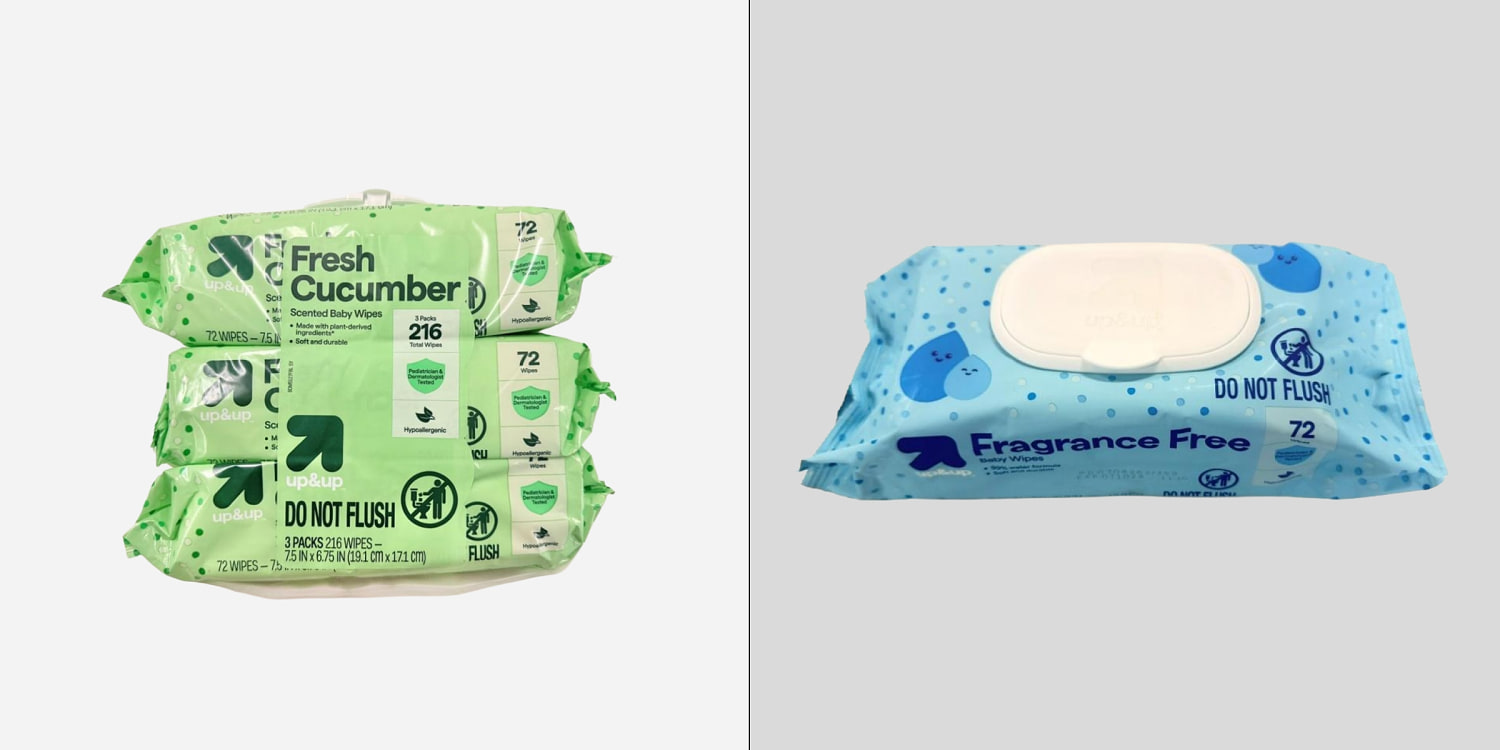
Millions of parents across the United States recently discovered that staple household products sitting on their changing tables were tied to a sweeping safety alert. Target announced a voluntary recall covering specific batches of Up & Up Fragrance Free and Fresh Cucumber Scented baby wipes due to severe bacterial contamination risks. Federal regulators identified strains of Burkholderia cepacia complex (Bcc) and Burkholderia gladioli in product samples. While corporate notices focus on return instructions and refund policies, the deeper operational failure within the supply chain reveals a much more troubling vulnerability in how everyday hygiene products land in nurseries.
The recall affects multiple pack sizes, including 20-count, 72-count, 216-count bundles, and massive 800-count and 1200-count boxes sold nationwide. Affected fragrance-free units carry manufacturing dates spanning from November 7, 2025, to May 5, 2026, while cucumber-scented lots trace back to late December 2025. Consumers who find these codes in their pantries or diaper bags are urged to stop usage immediately. Yet, handing back a pack of wipes for a retail refund fails to address why the contamination occurred in the first place, or how failing quality controls allowed tainted goods to circulate for months.
The Invisible Threat Hiding in Wet Wipes
Moist consumer goods present an inherent manufacturing nightmare. Unlike dry goods, wet wipes require complex liquid formulations that maintain high moisture levels without turning into a breeding ground for microorganisms. Preservatives are mandatory. When those chemical preservatives fail, or when manufacturing water systems are compromised, opportunistic pathogens multiply rapidly in the stagnant, nutrient-rich environment of a sealed plastic pouch.
Burkholderia cepacia complex is not a casual surface germ. It is a resilient group of bacteria capable of surviving in harsh environments, including antiseptic solutions. For healthy adults, exposure via unbroken skin might cause minor localized irritation. For infants, newborns, or anyone with a compromised immune system, the stakes are exponentially higher. Inhalation or contact with mucous membranes can allow the bacteria to cross into the bloodstream, triggering life-threatening conditions such as sepsis or severe pneumonia.
Consumers often assume that mass-market baby products undergo sterile pharmaceutical-grade manufacturing processes. They do not. Most commercial wipes are classified as cosmetics or general consumer goods under regulatory frameworks, meaning pre-market batch testing for every single production run is rarely mandated by federal law. Manufacturers rely on standard microbial limits testing, which can miss localized pockets of contamination during quality assurance checks. When a production line experiences a breakdown in water purification or preservative dosing, thousands of contaminated units escape the factory floor before anyone notices discoloration or foul odors.
The Timeline of Ignored Warnings
Corporate crisis communications frequently frame recalls as sudden, proactive measures taken out of an abundance of caution. A closer look at the trajectory of this specific event shows a different story. Long before federal agencies published official alerts, retail customer service logs and online parenting forums filled with red flags. Buyers reported bizarre product discoloration, unusual sour odors, and sudden skin rashes or eye irritation following routine diaper changes.
In consumer product safety investigations, the gap between the first customer complaint and the eventual public recall serves as a critical metric of corporate responsiveness. When dozens of buyers report identical physical defects over a period of weeks, automated quality monitoring systems should trigger internal holds. Instead, distribution channels continued moving inventory. The wipes remained on shelves, sat in hospital gift bags, and populated subscription box deliveries until laboratory testing forced regulators to step in.
This delay highlights a structural flaw in modern retail supply chains. Major retailers rely heavily on white-label manufacturing partners, outsourcing production to third-party facilities overseas or across domestic borders. Sapro Temizlik Urunleri, the primary manufacturer behind the recalled Up & Up lines, operates large-scale manufacturing facilities that supply numerous global brands. When manufacturing oversight is outsourced to foreign or remote entities, the feedback loop between consumer complaints and factory line adjustments breaks down. By the time a retailer's quality assurance team connects disparate customer service tickets to a single manufacturing defect, months of contaminated inventory have already cleared customs, cleared warehouses, and reached home nurseries.
Navigating Product Liability and Accountability
Families affected by contaminated products frequently discover that obtaining financial compensation for medical bills or injuries involves navigating a bureaucratic labyrinth. Under strict product liability doctrines, manufacturers and retailers can be held accountable for releasing unreasonably dangerous items into the stream of commerce, regardless of whether they intended to cause harm. Proving that a specific infant's respiratory infection or skin breakdown directly stems from a contaminated wipe requires rigorous documentation, including saved product packaging with matching lot codes, veterinary-style photographic evidence of the product's condition, and comprehensive pediatric medical records.
Retailers typically limit their liability exposure through voluntary recall programs that offer full refunds upon the return of the physical item or proof of purchase. For a parent whose child spent days in a pediatric intensive care unit fighting a bacterial blood infection, a refund for a multi-pack of wipes represents a negligible remedy. The legal framework surrounding consumer goods rarely accounts for the emotional distress and secondary economic burdens placed on families who unknowingly trusted a household staple.
Furthermore, international supply chains complicate legal recourse. When a defective product originates from an overseas manufacturing plant, litigating against the actual producer requires navigating foreign jurisdictions, international service of process, and complex corporate indemnity agreements. Retailers shield themselves behind contractual clauses that shift liability back to the supplier, while suppliers often lack U.S.-based assets that can be easily attached in a civil judgment. The consumer is left standing at the customer service counter, trading a dangerous chemical hazard for a modest store credit.
Securing Your Home Against Hidden Hazards
Protecting a household from manufacturing failures requires moving past passive trust in brand names and regulatory safety nets. Standard household vigilance starts with systematic tracking of active safety alerts. Most consumers only check recall databases after a major news broadcast catches their attention, leaving weeks of vulnerability when smaller warnings slip past mainstream media coverage.
Checking existing inventory involves more than scanning the front label. Every box, pouch, and bundle of personal care products features specific manufacturing codes, batch numbers, and universal product codes (UPCs). Maintaining a log of these identifiers for high-use items, especially those utilized for infants or elderly family members, ensures quick cross-referencing when unexpected safety notices drop.
When a product displays unusual traits such as unexpected color shifts, grainy texture changes, or strange chemical odors, immediate discontinuation should take precedence over consumer thrift. The common instinct to use up an item because it was expensive or inconvenient to replace introduces an unacceptable margin of risk.
Modern manufacturing is optimized for speed, scale, and cost reduction, not absolute biological safety. Supply chains stretch across continents, utilizing chemical compounds and manufacturing water systems that occasionally harbor dangerous opportunistic pathogens. Staying safe in a marketplace saturated with outsourced consumer goods demands permanent skepticism, routine inspection of everyday items, and the immediate rejection of any product that deviates from its expected baseline quality. Check your storage bins, verify your lot numbers against current federal databases, and treat routine household items with the careful scrutiny they actually require.