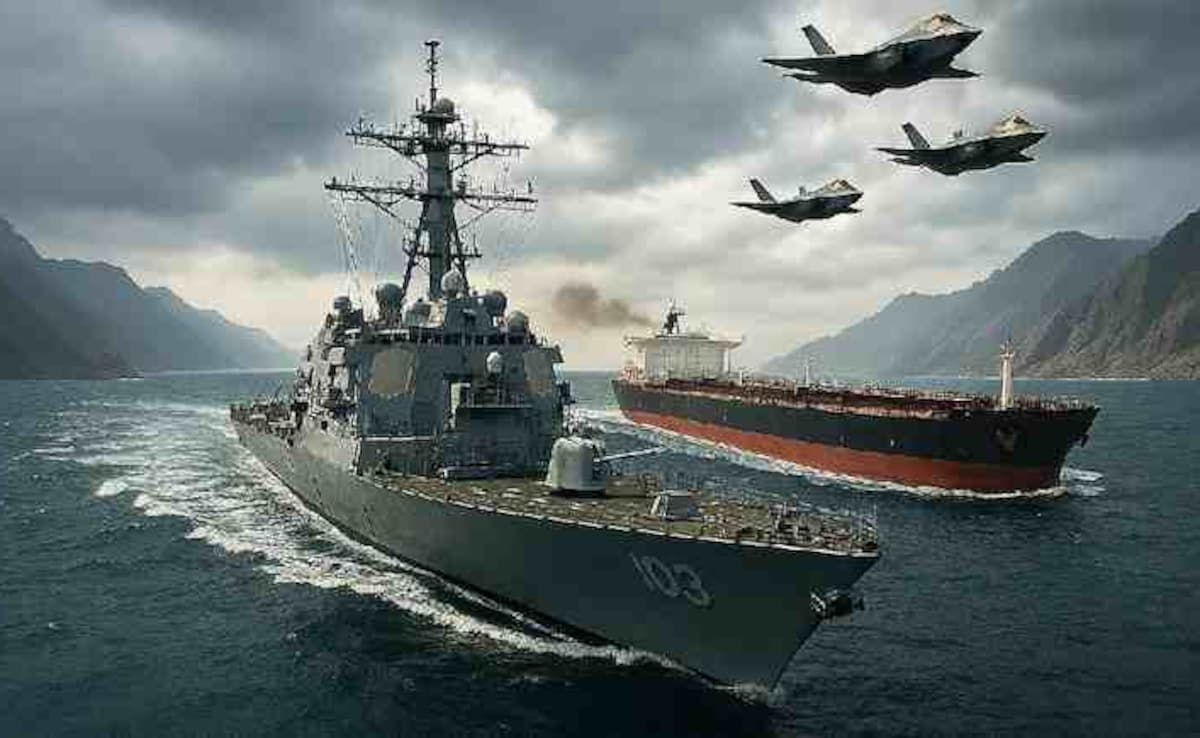
The Pentagon’s assessment sounds definitive on paper. Admiral Brad Cooper, commander of U.S. Central Command, stood before cameras this weekend to declare that Iran’s ability to threaten the Strait of Hormuz is officially "degraded." He pointed to the smoking ruins of a hardened underground facility along the Iranian coastline, leveled by 5,000-pound bunker busters, as proof that the teeth have been pulled from the wolf. But behind the briefings and the high-resolution satellite imagery, a much grimmer reality is taking hold. The "degradation" of conventional Iranian assets—radars, missile batteries, and command centers—is not the same thing as securing a waterway that carries 20% of the world's oil.
If the goal was to dismantle a traditional navy, the mission is a success. If the goal is to prevent a global economic seizure, we are failing.
The current conflict, which escalated sharply after joint U.S. and Israeli strikes on February 28, 2024, has turned the Persian Gulf into a maritime graveyard. While CENTCOM celebrates the destruction of over 100 Iranian vessels and dozens of intelligence relays, the Strait of Hormuz remains a "de facto" closed zone. Tanker traffic is down 90%. Brent crude is screaming toward $100 a barrel. The U.S. military is essentially playing a high-stakes game of Whac-A-Mole against an adversary that has spent four decades preparing for exactly this type of asymmetric strangulation.
The Illusion of Degraded Capability
The military term "degraded" is a carefully chosen linguistic shield. It implies a reduction in strength, which is factually true, but it obscures the shift in tactics. When you destroy a fixed missile silo, the threat doesn’t vanish; it fragments.
Iran has pivoted from large-scale naval engagements to "smart control" of the strait. This involves a decentralized web of low-tech, high-impact tools that are nearly impossible to eliminate through traditional air campaigns.
- The Minefield Problem: Reports from the Institute for the Study of War indicate that while the U.S. destroyed 16 minelayers earlier this month, the IRGC continues to deploy small, nondescript craft capable of dropping three mines each. These mines don't need to sink a fleet to win; they just need to exist. The mere suspicion of a single drifting contact is enough to send insurance premiums into the stratosphere and keep commercial tankers anchored in the Gulf of Oman.
- The Drone Paradox: In a move that signals a massive shift in modern warfare, over 200 Ukrainian advisors are currently on the ground at American bases in the region. They aren't there to learn; they are there to teach. The U.S. is finding that its multi-million-dollar interceptors are being exhausted by $20,000 Shahed drones. We are trading gold for lead, and the math is starting to break.
- Civilian Shielding: CENTCOM recently issued a desperate warning to Iranian civilians to avoid port facilities. Why? Because the IRGC has moved its remaining missile launchers into commercial hubs. By doing so, they have turned every crane and warehouse into a human-shielded battery.
The Economic Ghost Fleet
While the U.S. Navy attempts to "zero in" on threats, the market is responding to the lack of certainty. The International Maritime Organization reports over 3,000 vessels are currently stranded in the Middle East. This isn't just a military standoff; it is a logistical cardiac arrest.
The White House has attempted to mitigate the damage by temporarily lifting sanctions on some Iranian oil already at sea and ordering the U.S. Development Finance Corporation to provide political risk insurance for maritime trade. It is a band-aid on a gunshot wound. No amount of government-backed insurance can convince a captain to sail a $200 million Suezmax tanker through a zone where GPS jamming is actively redirecting AIS signals toward Iranian territory to trigger automated sanctions alerts and navigational errors.
This "digital ghosting" is a layer of the conflict the Pentagon rarely mentions in its victory laps. By warping the local electromagnetic environment, Iran is making the strait technically unnavigable for automated systems. It is a form of electronic blockade that requires no gunpowder but achieves the same result as a physical barrier.
The Limits of Kinetic Power
We have hit more than 15,000 targets in Iran since the operation began. We have eliminated senior leadership, including the former Supreme Leader. Yet, the IRGC Navy commander Alireza Tangsiri continues to issue warnings that any vessel transiting without permission will be "set ablaze."
The American doctrine of overwhelming force assumes an enemy that values its infrastructure more than its regional leverage. It assumes that if you hit a regime hard enough, they will eventually prioritize survival over disruption. But the Iranian establishment has signaled that it views the closure of Hormuz as its ultimate, and perhaps final, strategic lever. They are not trying to win a war; they are trying to make the cost of American "victory" so high that the global economy collapses before the regime does.
The Navy is now deploying its most advanced Mine Countermeasures (MCM) "kill web," utilizing MH-60S helicopters with ALMDS lasers and AQS-20C sonar cylinders. It is a technical marvel. It is also a slow, methodical process that cannot keep pace with a decentralized enemy dumping crude explosives into the water from the back of a fishing dhow.
A War of Attrition in the Shallows
The brutal truth is that you cannot "degrade" a geography. The Strait of Hormuz is only 21 miles wide at its narrowest point. In that space, sophisticated sensors and billion-dollar destroyers are at a disadvantage against the sheer clutter of the littoral environment.
The U.S. military is currently in a state of "mission creep," transitioning from a strike campaign to a permanent, high-intensity escort and clearance operation. This requires a level of sustained naval presence that is already straining a fleet stretched thin by global commitments. Every day the strait remains "degraded" but not "open" is a day the Iranian strategy of exhaustion gains ground.
The Pentagon's "degraded" assessment is a snapshot of yesterday's targets, not a forecast of tomorrow's safety. Until the "smart control" of the IRGC is broken—not just their hardware, but their ability to influence the insurance and shipping markets through chaos—the Strait of Hormuz remains a no-go zone. The bombs have fallen, the bunkers are shattered, and yet the oil isn't moving.
Would you like me to analyze the specific electronic warfare tactics being used to jam AIS signals in the Persian Gulf?