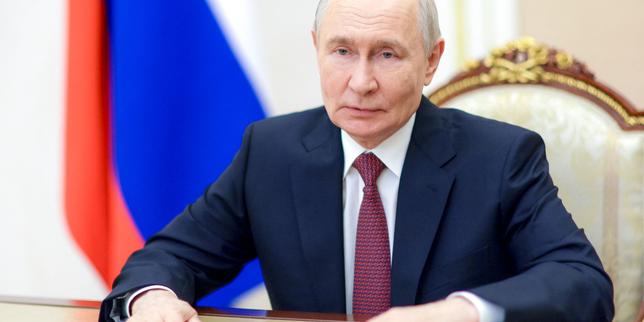
Vladimir Putin stood before the United Russia party congress this weekend and delivered a familiar promise to ensure the absolute security of the nation and the inviolability of its borders. He did so against a backdrop of unprecedented tactical embarrassment. Even as the Russian President spoke, smoke plumes from the Slavyansk and Yaroslavl oil refineries rose into the sky, the latest casualties in a relentless, hundreds-of-drones-deep strategic bombing campaign by Kyiv. The fundamental consensus that has sustained the Russian domestic front for over four years has fractured.
For nearly half a decade, the Kremlin maintained a strict, unspoken wartime social contract with its population, particularly within the economic hubs of Moscow and St. Petersburg. The terms were simple. Citizens would passively tolerate the invasion of Ukraine and the systematic erosion of personal freedoms, and in return, the state would guarantee that daily life remained entirely unmolested by the horrors of the front line. That contract is dead.
The Myth of the Air Defense Umbrella
The sheer volume of Ukrainian long-range strikes has overwhelmed the geographic assumptions of Russian military planning. When Ukraine launched its 40-day strategic influence campaign this month, the objective shifted from localized border skirmishes to the systematic degradation of deep-theater economic infrastructure. The strike on the Yaroslavl refinery, located some 700 kilometers from the Ukrainian border, proves that distance no longer equals defense.
The mechanism behind this failure is mathematical. Russian air defense doctrine historically relied on layered systems like the S-400 and Pantsir-S1 to protect high-value military installations and major political centers. They were never designed to cover thousands of civilian fuel depots, electrical substations, and regional rail lines scattered across millions of square kilometers. Ukraine is exploiting this structural vulnerability by launching mass-coordinated salvos of inexpensive, low-altitude loitering munitions.
By forcing Russia to choose between protecting front-line command centers or domestic infrastructure, Kyiv has effectively decentralized the war. The Russian Ministry of Defense routinely claims high interception rates, boasting of over a hundred downed drones in a single 24-hour cycle. Yet, the remaining fraction that penetrates the net is sufficient to paralyze entire regional economies. Debris alone, falling onto volatile refining equipment, triggers catastrophic fires that take days to extinguish.
The Economical Strangulation of Crimea
Nowhere is the failure of the Kremlin's security promise more acute than in occupied Crimea. Once celebrated as the crown jewel of Putin’s geopolitical legacy, the peninsula has been forced into an official state of emergency.
The strategy deployed by Ukrainian special forces is one of systematic isolation. By targeting the logistics networks that feed the peninsula, including the recent destruction of a vital rail bridge over the North Crimean Canal near Rozdolne, Kyiv is cutting the arterial veins of Russian military supply lines. The consequences are spilling directly into civilian life.
- Energy Blackouts: Multiple drone strikes against the Kerch thermal power plant and regional distribution stations in Simferopol have triggered rolling blackouts, forcing authorities to dim street lighting and curtail public transport.
- Economic Paralysis: The local government has ordered the unprecedented closure of all children's summer camps, a massive blow to an economy entirely reliant on seasonal tourism. Large shops and cafes are subjected to mandatory 8:00 PM curfews.
- Resource Rationing: Fuel shortages have become acute enough that the state now permits civilian drivers to carry up to 200 liters of fuel in canisters across the Kerch Bridge just to sustain basic mobility.
The Kerch Bridge itself remains standing, but it is functioning less as a triumphant symbol of integration and more as a bottlenecked escape hatch for panicked vacationers and residents facing massive lines at drying fuel pumps.
The Refinement Chokepoint
The Kremlin’s response to these infrastructure losses exposes the depth of the crisis. Deputy Prime Minister Alexander Novak recently signaled that the government is actively considering a total suspension of diesel fuel exports to protect domestic motorists. This follows existing bans on jet fuel and gasoline shipments.
This is not merely a logistical headache; it is a direct blow to Russia’s primary economic engine. Refineries cannot simply turn off their distillation columns without incurring massive long-term technical damage. Postponing scheduled maintenance, as Novak announced, is a desperate, short-term band-aid that increases the risk of industrial accidents down the line.
As Western sanctions restrict Russia's access to highly specialized components, repairing automated control systems and specialized crackers damaged by drone strikes becomes a slow, sanctions-busting ordeal. The war machine is consuming its own economic foundation to keep the pumps running at home.
The Parliamentary Stakes
The domestic narrative of stability is facing its most critical test ahead of the State Duma elections scheduled for this September. Putin's insistence that the elections will proceed in strict compliance with the law is an attempt to project normalcy where none exists.
The state security apparatus can suppress overt political dissent and jail anti-war activists, but it cannot hide the black smoke hanging over Krasnodar or the sudden lack of electricity in Sevastopol. By frame-shifting the conflict into an issue of basic municipal competence, the Ukrainian campaign bypasses the state's information monopoly. When a citizen cannot fill their car or turn on their lights, the official declarations of total victory at the front line lose their potency.
The Kremlin's strategy is now entirely reliant on a rhetorical pivot, framing these infrastructure strikes as Western-backed acts of terrorism. It is an admission that the border is no longer inviolable. The war has breached the perimeter of everyday Russian life, and no amount of political assurance can undo the reality of an unsafe home front.