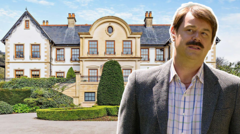
The real-world estate that served as the backdrop for Danny Dyer’s unforgettable poolside swagger in the Disney plus hit series Rivals has hit the open market. Foxfield, an ultra-luxurious, four-storey mansion tucked away in South Wales, is seeking offers over £8 million. On screen, it was christened Bella Vista, the brash, newly acquired trophy home of self-made millionaire Freddie Jones, played by Dyer, and his wife Val. While standard real estate listings treat such properties as mere brick-and-mortar investments, this specific listing exposes a deeper, highly calculating trend within the luxury property sector. High-end homeowners are increasingly using prestige television streaming contracts to massively inflate asset values before listing them for sale.
The Anatomy of an Eight Million Pound Set
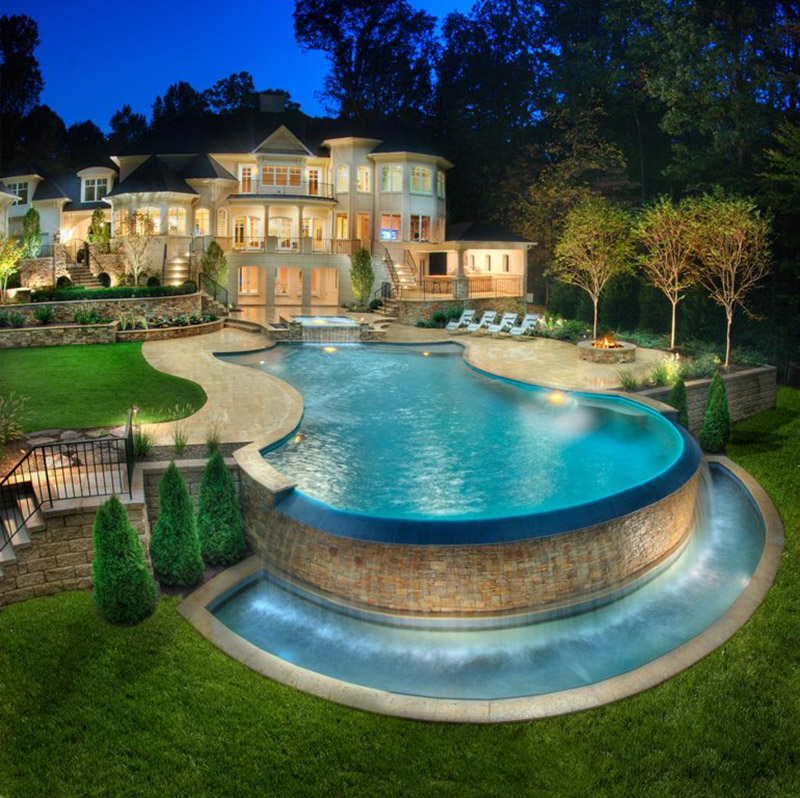
Foxfield is not the ancient Cotswolds estate the TV series suggests. It is a modern construction built in 1999, designed specifically to replicate classical grandeur while providing contemporary comforts. Spanning 24 acres of manicured grounds, the property includes a private lake popular for wild swimming, multiple ornamental ponds, and a handcrafted American white oak staircase that spans three floors.
For the production of the 1980s period drama, the mansion’s interior layout provided an ideal playground. The top floor features an intimate private social space complete with a dedicated bar, which allowed directors to capture the claustrophobic, high-stakes social climbing central to the narrative. The principal bedroom suite is designed with dual dressing rooms and an expansive four-piece ensuite bathroom. In total, the property features seven ensuite bedrooms, eleven bathrooms, two separate home offices, a dedicated yoga studio, a gym, and an underground basement garage.
+-------------------------------------------------------------+
|                     FOXFIELD ESTATE PROFILE                 |
+----------------------------+--------------------------------+
| Market Value               | Offers over £8,000,000         |
+----------------------------+--------------------------------+
| On-Screen Identity         | Bella Vista (Freddie Jones)    |
+----------------------------+--------------------------------+
| Acreage & Grounds          | 24 acres with a private lake   |
+----------------------------+--------------------------------+
| Interior Specifications    | 4 storeys, 7 bedrooms, 11 baths|
+----------------------------+--------------------------------+
The Production Premium on Premium Property
The decision to open up a multi-million pound private residence to a massive television crew is rarely just about pocketing a temporary location fee. It is a calculated branding exercise. According to production insiders, the owners of Foxfield actively sought out the production team after viewing early planning for the television adaptation. They recognized that attaching a critically acclaimed, star-studded television series to a modern mansion provides an intangible asset class known in elite estate agency circles as the narrative premium.
When Welsh Hollywood icon Catherine Zeta-Jones previously visited the house to play the piano at a private party, it established local high-society credibility. But when an international streaming platform broadcasts the property to millions of viewers globally, the estate shifts from a regional anomaly to a piece of contemporary pop culture history. This visibility helps justify an £8 million price tag for a property built just before the turn of the millennium in South Wales, a region where luxury real estate prices rarely match the dizzying heights of the London commuter belt or the true Cotswolds.
The Hidden Risks of Buying a TV Landmark
Purchasing a home that has been thoroughly immortalized on a global streaming platform presents distinct operational challenges that rarely appear in an estate agent's glossy brochure. High-end properties that achieve cult television status frequently attract intense public interest. Future owners face the inevitable reality of fans tracking down the real-world location via forums and online mapping tools, transforming a private sanctuary into an informal tourist destination.
Furthermore, the property's ongoing utility as a filming location remains a major variable. While a subsequent season of a television series can offer highly lucrative location fees, it also requires granting vast production crews full access to the grounds, altering interiors, and disrupting the local area for months at a time. If a new buyer chooses to opt out of future filming contracts, they risk stripping the property of the very pop-culture relevance that helped establish its premium valuation in the first place.
The sale of Foxfield represents more than a simple changing of the guard for a luxurious country house. It serves as a clear case study in how modern television production has been weaponized by clever property developers to maximize capital gains on contemporary estates.