Public figures rarely survive decades of hyper-scrutiny without an anchor, and for Marco Rubio, that anchor has long been his marriage to Jeanette Dousdebes. When high-profile politicians offer carefully curated soundbites praising their spouses, the public is right to look past the sentiment and examine the mechanics. Behind every public tribute lies a complex personal and political partnership that has weathered decades of electoral campaigns, legislative battles, and the relentless pressure of the Washington spotlight.
The story of Marco and Jeanette Rubio is not merely a romance; it is a foundational institution that shaped the career trajectory of one of America's most prominent political figures. To understand how modern political dynasties operate, one must look closely at the division of labor within the household, the strategic utility of keeping a low profile, and the heavy toll exacted by public life.
The Architecture of a Miami Partnership
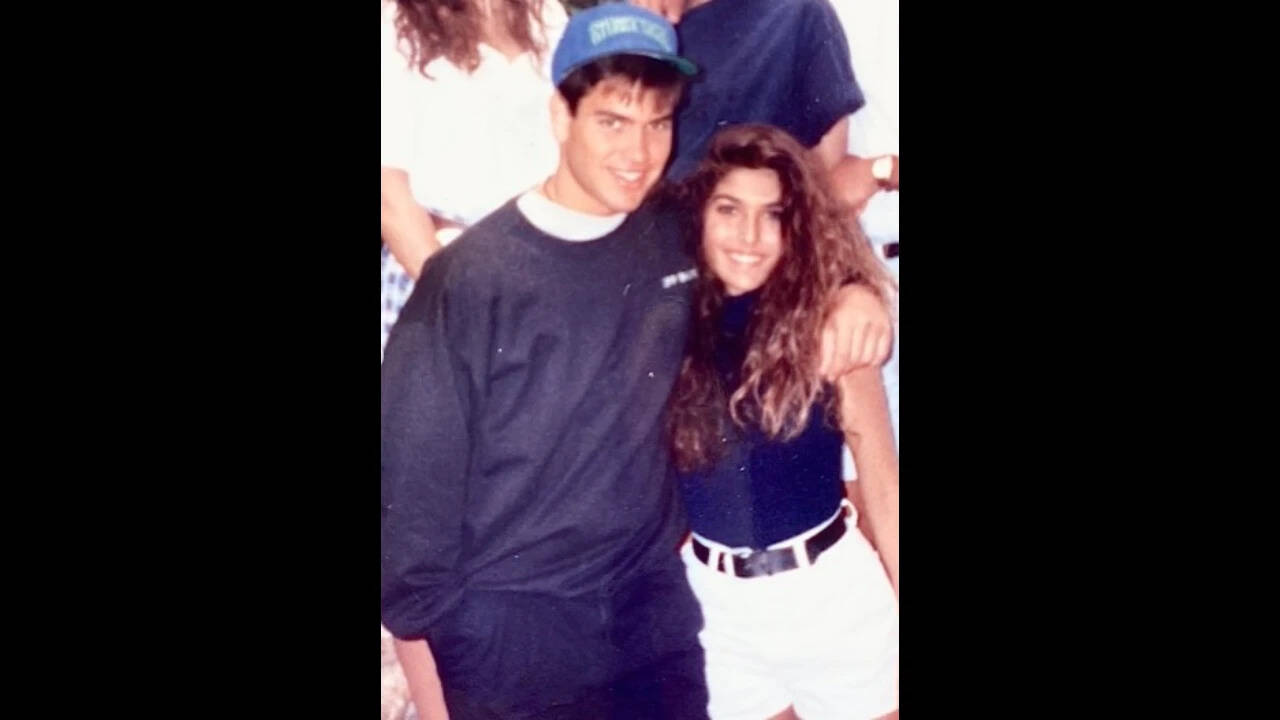
Long before national cameras tracked his every movement, Rubio was navigating the local political circuits of South Florida. Meeting in the early 1990s through neighborhood circles in West Miami, the couple shared roots in the tight-knit immigrant communities of South Florida. Jeanette, whose parents emigrated from Colombia, grew up balancing the demands of a household shaped by a working single mother. That early environment fostered an intense preference for privacy and domestic stability—qualities that would frequently clash with the extroverted, performative demands of elected office.
Before fully committing to the role of a political spouse, Jeanette worked a variety of jobs, including a stint as a bank teller and a brief period as a Miami Dolphins cheerleader. Former teammates and acquaintances have frequently noted that she was an introvert at heart, ill-suited for the superficial flash of professional sports sidelines or the performative theatricality of modern campaigning. When Rubio climbed through the ranks of the Florida House of Representatives and eventually onto the national stage, Jeanette consciously chose a path divergent from traditional political wives. She rarely delivered campaign speeches, deflected media attention, and insulated their four children from the glare of the press.
This strategic absence became a defining asset. In an era where political families are routinely picked apart for every public misstep, maintaining a strict boundary around family life functions as an effective protective shield.
The Cost and Utility of Private Influence
Political analysts often debate the extent to which spouses influence policy and ambition. In the case of the Rubios, insiders have long pointed out that Jeanette acts as a vital grounding mechanism, frequently pulling her husband back from the abstract clouds of political theory into the concrete realities of family obligations.
Yet, public partnerships in politics are rarely without friction. Early in his legislative career, attempts to integrate family members directly into campaign logistics—such as managing political action committees during his run for speaker of the Florida House—yielded administrative chaos and public missteps that Rubio himself later described candidly as an oversight born of inexperience. That early stumble taught the couple a hard lesson: separating the machinery of politics from the sanctuary of the home was essential for long-term survival.
Instead of operating as a traditional political surrogate on the stump, Jeanette's influence migrated toward localized philanthropy and advocacy, including work with organizations addressing human trafficking and youth support in South Florida. By aligning her public footprint with specific, non-partisan charitable causes rather than electoral promotion, she carved out an autonomous identity that insulated her from the direct crossfire of partisan warfare.
The Washington Crucible
As Rubio transitioned into higher national executive responsibilities, the pressures on their domestic structure multiplied exponentially. The transition from a legislative representative to a key architect of foreign policy places unprecedented demands on personal time. Couples who have spent decades establishing routines in suburban Florida suddenly find themselves forced to recalibrate their existence around security details, international travel schedules, and constant media observation.
Through all of this, public declarations of devotion serve a dual purpose. They humanize leaders who are often perceived as cold or calculating, while simultaneously signaling stability to political allies and base voters who value traditional family structures. However, the endurance of such a marriage relies less on public declarations and more on the private compromises made far away from the television cameras. The deliberate choice to keep children out of the daily news cycle, the maintenance of spiritual routines like household Bible studies, and the preservation of geographic ties to Miami rather than total assimilation into Washington social circuits represent active resistance against the corrosive nature of power.
The reality of high-stakes political marriage is defined by continuous adaptation. Sentimental quotes delivered to the press are merely the surface manifestation of a deeply entrenched alliance forged over thirty years of shared ambition, public scrutiny, and private negotiation. The durability of that alliance remains one of the most reliable constants in an otherwise volatile political landscape.
The Woman Behind Marco Rubio: Meet Jeanette
This video explores the personal background and public life of Jeanette Rubio, providing additional context on her family roots and role alongside the prominent politician.
http://googleusercontent.com/youtube_content/1