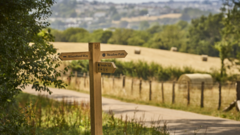
The National Trust recently threw open the gates to Saltram East Country Park, adding 32 hectares of previously restricted agricultural land to the historic Devon estate. This expansion essentially doubles the publicly accessible footprint of the Plymouth landmark, introducing a 2.5-kilometer multi-use trail, sweeping viewpoints, and newly sown wildflower meadows designed to boost local biodiversity. Yet beneath the celebratory ribbon-cuttings and optimistic press releases lies a complex balancing act between public recreation and ecological preservation. Managing millions of annual visitors while trying to protect vulnerable wildlife habitats requires far more than just laying down gravel paths and planting hay meadows.
The Pressure on Protected Spaces
Conservation rarely happens in a vacuum. When a historic charity opens tens of hectares of pristine green space directly adjacent to a rapidly growing urban area, foot traffic inevitably surges. Saltram already draws roughly one million visits every single year. Pushing that boundary outward into Colesdown Hill helps diffuse population pressure, but it also invites new forms of wear and tear onto land that was previously left undisturbed.
Infrastructure must evolve to handle the influx. A multi-use trail sounds straightforward on paper, but engineering a route that accommodates fast-moving cyclists, dog walkers, pushchairs, and wheelchair users without fragmenting local ecosystems demands architectural precision. Designers utilized wide, smooth surfaces with gentle gradients to keep transit channeled safely along designated corridors. If visitors stray from these marked paths to seek quiet or better views, the fragile topsoil and developing ground-nesting bird habitats suffer immediate consequences.
Engineering Biodiversity Net Gain
Land management has shifted from passive preservation to active intervention. The newly converted acreage at Saltram East serves as a testing ground for formal Biodiversity Net Gain frameworks, aiming for a measurable ten percent ecological uplift over the coming decades.
- Habitat Restoration: Converting former crop fields into species-rich hay meadows requires stripping nutrients from the soil to allow native wildflowers to outcompete aggressive weeds.
- Species Tracking: Conservationists monitor sensitive indicator species, such as skylarks, whose ground nests are notoriously vulnerable to human disturbance and unmanaged pets.
- Seasonal Grazing: Managed livestock rotations between September and March replace traditional mechanical mowing, mimicking natural grazing patterns to keep scrub encroachment in check.
These methods sound academic, but their execution is gritty and expensive. Establishing a functional ecosystem from commercial farmland takes years of continuous oversight, stubborn patience, and protection against accidental ecological disruption from the very public it seeks to serve.
Navigating the Financial Reality
Expansion carries a heavy price tag. Funding for the Saltram East project relied on a multi-layered financial strategy, combining roughly one million pounds from the National Trust's internal reserves with external grants, including substantial backing from Sport England via National Lottery funds.
Capital investments build the physical trails and boardwalks, but maintenance budgets dictate long-term survival. Charitable organizations face immense fiscal constraints when scaling their operational footprint. Every meter of new fencing, every repaired boardwalk, and every signpost replacement demands sustained funding long after the initial opening day fanfare fades away. Relying on public funding streams and charity memberships means operational models must constantly adapt to shifting economic realities.
The Human Element
Green spaces do not manage themselves, nor do they exist purely for aesthetic appreciation. The demographic shift in Plymouth means thousands of new homes sit within a short radius of the estate. These urban residents need functional, accessible nature that relieves mental fatigue and encourages physical health.
However, introducing a high-capacity recreation zone right next to sensitive wildlife habitats forces a confrontation between human entitlement and ecological limits. Balancing the demand for open-air leisure with the silent requirements of red-listed conservation species means the National Trust cannot simply be a passive landlord. They must act as active wardens, constantly arbitrating where human feet are permitted to tread and where nature must be left strictly alone. The true measure of this 32-hectare expansion will not be found in the opening day visitor counts, but in whether those skylarks are still nesting in the meadows thirty years from now.