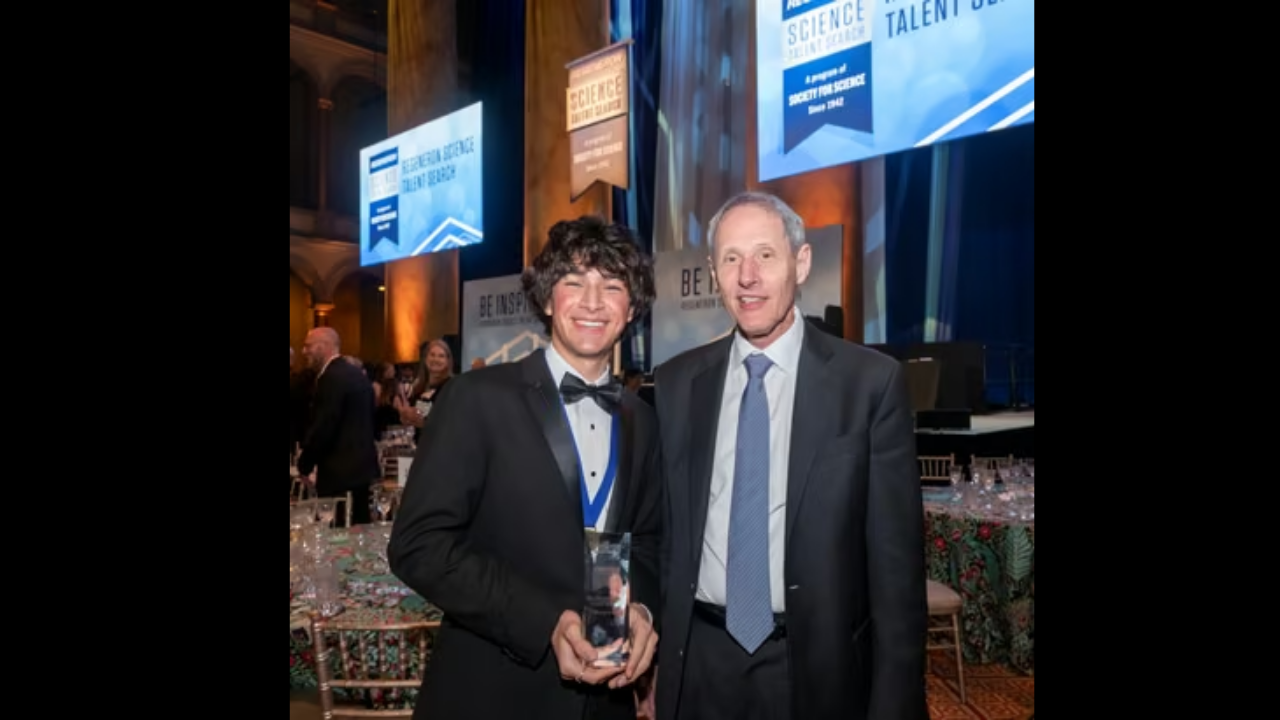
When NASA retirees look back at their digital archives, they rarely expect a high school student to find a million and a half ghosts hiding in plain sight. Yet that is precisely what happened when seventeen-year-old Matteo Paz pointed a custom machine learning model at a decade of forgotten infrared readings.
The astronomical community loves a prodigy story. This specific case, however, exposes a glaring operational bottleneck within modern big science. Space agencies are drowning in petabytes of telemetry while traditional human analysis methods crawl at a snail's pace.
The Mountain of Ignored Light
Consider the Near-Earth Object Wide-field Infrared Survey Explorer, better known as NEOWISE. Decommissioned after years of scanning the cosmos, the telescope left behind a staggering footprint. Nearly two hundred billion individual measurements sat archived in institutional databases.
Most astrophysicists treated the primary mission parameters as a closed book. The telescope was built to flag asteroids and near-Earth hazards, not to catalogue distant variable stars or black hole accretion disks. Every secondary flicker, every strange infrared pulse buried in the telemetry noise, was left unexamined. Manual sorting of such a vast dataset would have taken generations of graduate students working around the clock.
Enter the power of modern automated processing. Working alongside mentorship at Caltech and IPAC, Paz bypassed the traditional manual extraction pipeline entirely. He constructed a specialized neural network architecture called VARnet, designed explicitly to process massive temporal data streams on local graphics processing units.
Decoding the Signal
The engineering challenge went far beyond basic computer science. Astronomical archives are notoriously messy. Instrumental noise, thermal fluctuations, and orbital artifacts often mimic the exact signatures scientists hope to discover.
To separate actual cosmic signals from background static, the algorithm combined wavelet decomposition with advanced Fourier transforms. This mathematical configuration allowed the system to break down hundreds of billions of data points into digestible segments without losing the subtle timing markers of distant, pulsating phenomena.
When the pipeline finished running across the complete archive, it flagged roughly 1.9 million sources displaying measurable brightness variations. Cross-referencing these targets against existing institutional catalogues revealed an astonishing truth. Roughly 1.5 million of those flagged objects had no previous record in human history.
The resulting inventory, known as the VarWISE catalogue, instantly transformed a static historical archive into a goldmine for astrophysics research. Astronomers now possess direct coordinate targets for potential supernovae, exotic binary systems, and distant quasars that slipped past earlier generations of software.
The Broader Institutional Failure
The real headline here is not that a teenager won a prestigious science prize and a quarter-million-dollar check. The uncomfortable reality is that academic institutions often lack the engineering bandwidth to mine their own historical data effectively.
Major space programs spend billions launching hardware into orbit, gathering information at rates that vastly outpace human analytical capacity. When the primary mission concludes, the raw telemetry frequently languishes in cold storage. Bureaucratic inertia prevents established research groups from dedicating core funding to speculative data mining operations.
It required an independent high school researcher with open-source tools and fresh computational perspective to demonstrate what was missing. Academic bottlenecks keep vital discoveries locked behind closed software ecosystems and rigid grant structures.
Beyond the Stars
The underlying architecture of VARnet is not restricted to astronomy. Any industry drowning in sequential time-series information faces the exact same structural dilemma. Financial markets, atmospheric pollution monitors, and power grid telemetry generate continuous waves of numerical data that human analysts can only skim on the surface.
When young minds combine accessible computing power with institutional datasets, the barriers protecting old information structures begin to crumble. Space exploration no longer requires exclusive access to multi-million-dollar supercomputers. Sometimes, all it takes is a curious programmer willing to look closer at the noise.