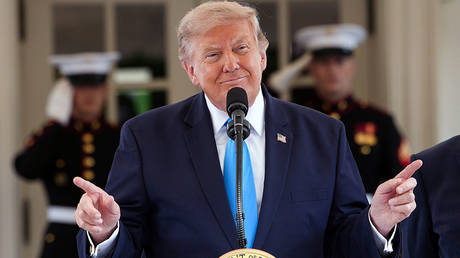
US President Donald Trump announced the cancellation of a massive, imminent military strike against Iran, citing urgent appeals from regional allies and tentative progress toward a comprehensive framework agreement. The scheduled assault, which military planners prepared to launch at a scale unseen in decades, was halted at the eleventh hour as backchannel diplomacy raced against active military escalations. Behind this sudden reversal lies a complex web of economic survival, whispered warnings from Gulf capitals, and the chilling realization that modern energy infrastructure cannot withstand total war without triggering a global financial collapse.
The official narrative centers on a dramatic presidential proclamation broadcast across social media. The White House asserted that regional leaders, including high-ranking officials from key Gulf monarchies, petitioned Washington to hold off on the bombing campaign. According to these communications, the parameters of a nascent deal had materialized. This proposed framework supposedly guarantees the unconditional opening of the Strait of Hormuz and a permanent constraint on Iran's nuclear development program. Yet, reducing this crisis to a sudden diplomatic breakthrough ignores the raw, brute-force calculus that forced the hand of Western and Middle Eastern commanders alike.
The Target List That Stunned Washington
To understand why the attack was aborted, one must look at what Tehran placed on the table just hours before the scheduled launch. Intelligence reports indicated that the United States and Israel were preparing a catastrophic bombing campaign directed squarely at Iran's core energy production facilities. In response, Iranian security networks leaked a comprehensive and devastating retaliation blueprint.
This retaliatory matrix did not target distant military bases. Instead, it designated the crown jewels of Middle Eastern oil and gas extraction. On the list were Saudi Arabia's sprawling Abqaiq processing facilities and the massive Ghawar oil field. It included the North Field and Ras Laffan industrial complex in Qatar, essential arteries for global liquefied natural gas supplies. Vital installations in the United Arab Emirates, Kuwait, and Bahrain, alongside major Israeli offshore gas fields such as Leviathan, were explicitly marked for total destruction.
Had the American strikes commenced, the Iranian response would have instantly vaporized a substantial fraction of the world's daily petroleum supply. Global markets would have opened to unprecedented panic, sending crude prices into an astronomical spiral that would crush fragile post-inflationary economies across Europe and the Americas.
The Gulf Panic
Regional capitals felt the approaching shockwave long before any jets cleared the tarmac. Saudi Crown Prince Mohammed bin Salman and other Gulf leaders scrambled to open secure communication channels with Washington, expressing stark terror over the projected fallout. For years, these nations have diversified their economies, betting heavily on regional stability to attract foreign investment and tourism. A scorched-earth conflict destroying their primary revenue generators would have set back regional development by generations.
Kuwait's air defense interceptions of incoming hostile drones served as a stark, local reminder that the theater of war was not contained behind distant borders. The state department security alerts warning expatriates and citizens across the region underscored a grim reality. The deterrence umbrella provided by Washington had glaring holes, and the Gulf states knew they stood directly in the crosshairs of Iranian asymmetric capabilities. Their plea to the White House was simple, urgent, and devoid of posturing: stop the clock before the entire economic architecture of the Persian Gulf burns to ash.
Fragile Parameters and the Road Ahead
Despite the suspension of hostilities, the longevity of this diplomatic pause remains highly suspect. Past frameworks have dissolved under the weight of deep-seated ideological mistrust and irreconcilable technical demands regarding uranium enrichment levels and maritime sovereignty. Tehran continues to press for total sanctions relief, while Western negotiators demand structural concessions that Iranian hardliners view as an infringement on national sovereignty.
The military machine has merely paused, not demobilized. Aerial refueling tankers continue to amass at forward operating bases in the eastern Mediterranean and the wider region, maintaining a continuous posture of readiness. The strategic calculus governing the region dictates that peace relies not on shared trust, but on the terrifying mutual recognition that the next escalation could break the global economy beyond repair. The cancellation of the strike is less a triumph of permanent peace than a temporary reprieve bought by the fear of mutual ruin