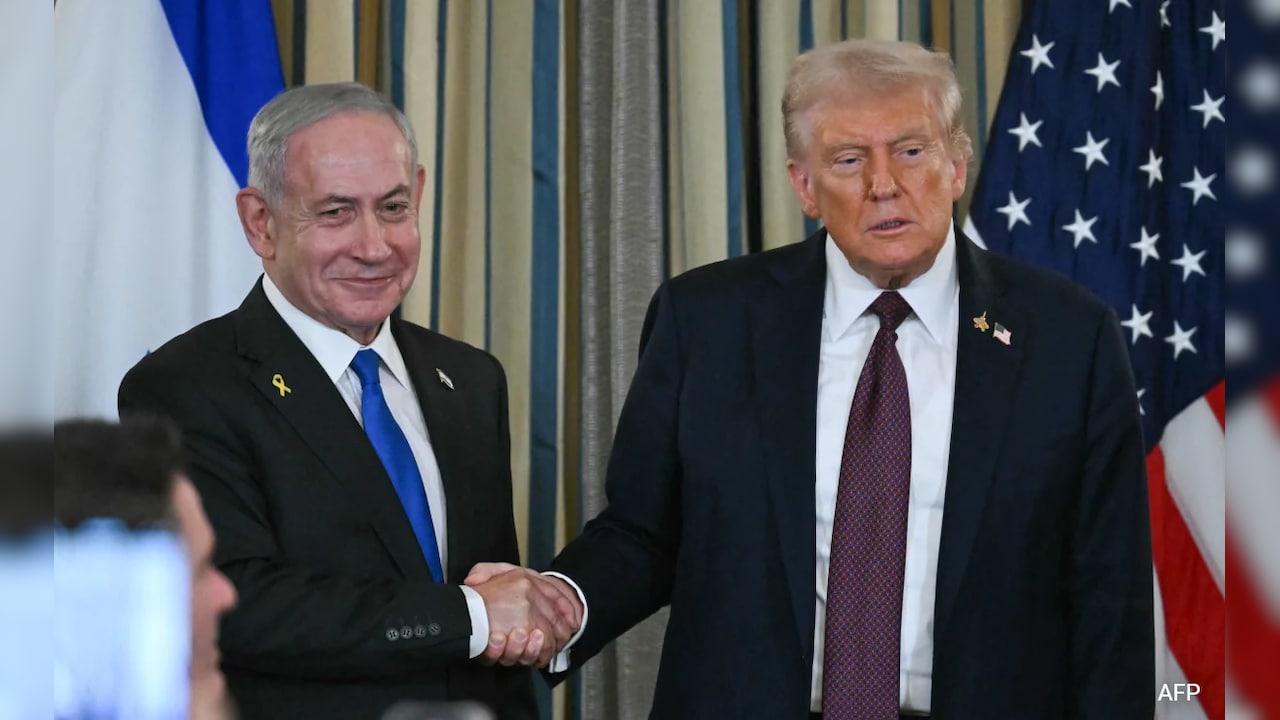
Israeli Prime Minister Benjamin Netanyahu is trapped. The signed memorandum of understanding between Washington and Tehran has shattered Jerusalem's strategic leverage, leaving the Israeli leader politically exposed at home while his ultimate patron, Donald Trump, aggressively pivots toward regional de-escalation. By unilaterally brokering a truce to end the war, reopen the Strait of Hormuz, and freeze nuclear enrichment, the White House has effectively sidelined Israel from the regional security architecture. Netanyahu must now choose between an unpopular, unilateral military campaign in Lebanon or submission to a Washington-dictated peace that leaves Iran's regional proxy networks largely intact.
The illusion of a unified US-Israeli war machine dissolved over a single weekend. When the conflict erupted, the public rhetoric from both leaders promised nothing short of a total transformation of the Middle East, with hints of forcing an unconditional surrender from Tehran. Instead, the reality of a protracted conflict, soaring global oil prices, and domestic political friction in the United States forced the White House to find an exit. Trump chose the exit.
The Friction in the Oval Office
The personal chemistry that once defined the Trump-Netanyahu alliance has been replaced by cold transaction. Behind the scenes, the American president grew increasingly furious with Israeli military operations in Beirut. Washington viewed these strikes not as vital security measures, but as reckless disruptions threatening to derail the delicate negotiations being finalized in Geneva and Rome.
Trump did not hide his agitation, publicly warning that Netanyahu needed to be more responsible regarding Lebanon. The administration’s calculation shifted from an ideological crusade against the Islamic Republic to a pragmatic stabilization effort. The primary objective became the restoration of global shipping lanes and the suppression of energy-driven inflation at home. Israel's broader ambition to fundamentally dismantle the Iranian regime was treated as an expensive luxury Washington could no longer afford.
The public tongue-lashing delivered by Trump at the G7 summit in France signaled a fundamental shift in the bilateral dynamic. The American president reminded the world that without US backing, Israel's strategic survival would be in jeopardy, asserting his ownership over the terms of regional peace. The message was clear: America's global economic priorities override Israel's localized security doctrines.
The Strategy of the Sealed Room
While Israeli defense officials were locked in high-level security meetings in Jerusalem, the draft agreement was already being digitally signed across continents. The isolation was absolute. Netanyahu was forced to admit to reporters that his government did not possess the full details of the document slated for the formal signing ceremony in Switzerland.
This was not a breakdown in communication; it was a deliberate exclusion. By cutting Jerusalem out of the final diplomatic loop, Washington prevented Israel from exercising a veto over the terms of the 60-day ceasefire extension. The United States secured the reopening of the Strait of Hormuz and a temporary halt to uranium enrichment, but left the long-term status of Iran’s ballistic missile arsenal and its regional proxy funding outside the immediate framework.
"He is a servant playing at rebellion," noted centrist Israeli commentator Nahum Barnea, capturing the prevailing sense of diminished stature in Tel Aviv. "This rebellion won't go very far."
Netanyahu’s domestic rivals moved swiftly to capitalize on the diplomatic vacuum. The opposition described the deal as a historic breakdown of Israeli foreign policy, accusing the prime minister of misjudging Trump’s appetite for a prolonged war. The tactical successes achieved by the Israeli Air Force during the initial phases of the conflict have been politically neutralized by a single diplomatic stroke from Washington.
The Battle for the Security Zones
In an attempt to salvage his domestic standing ahead of the upcoming elections, Netanyahu has adopted a defiant public posture. He asserted that the joint military campaign had successfully prevented nuclear annihilation, vowing that Israeli troops would remain entrenched in southern Lebanon for as long as necessary to protect northern towns.
The Problem of the Parallel Front
- The Hezbollah Dilemma: Israel's invasion of southern Lebanon was meant to permanently decouple the northern border threat from the broader Iranian orbit.
- The Proxy Shield: Tehran has consistently demanded that any reduction in US-Iran hostilities must include a complete cessation of Israeli operations against Hezbollah.
- The American Veto: Continued unilateral strikes by Israel risk alienating the Trump administration entirely, threatening the flow of essential munitions and air defense interceptors.
The defense establishment in Jerusalem faces a harrowing calculation. Without explicit American logistical backing and diplomatic cover, an open-ended occupation of southern Lebanon is unsustainable. Yet, a premature withdrawal without neutralizing Hezbollah’s remaining rocket infrastructure would be viewed domestically as an unacceptable capitulation.
The Shift in Regional Alliances
The geopolitical reality of 2026 bears little resemblance to the absolute victories envisioned at the start of the campaign. Iran’s regime proved resilient enough to absorb severe military infrastructure damage while maintaining a chokehold on global energy markets. By utilizing the Strait of Hormuz as economic leverage, Tehran forced Washington to the negotiating table on terms that ensure the regime's survival.
Furthermore, Washington’s willingness to entertain unconventional arrangements—such as suggesting that Syria’s updated leadership configuration could take over the management of Hezbollah—illustrates how far the US is willing to look beyond traditional Israeli preferences. The White House is actively searching for alternative regional managers to outsource containment, reducing its direct military exposure and, by extension, reducing Israel’s leverage as America’s primary regional proxy.
Netanyahu now commands a fractured coalition and a skeptical public. The strategic depth he claims to have established through security zones in Gaza, Lebanon, and Syria is under immense strain from a Washington administration eager to enforce a broader regional settlement. The veteran politician, who built a career on his unique ability to manage and influence American presidents, has run out of leverage against a White House that values a stabilized global oil market far above the total victory doctrines of Jerusalem.