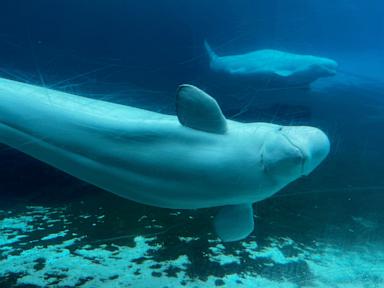
The Canadian government has quietly endorsed an unprecedented, emergency rescue operation to evacuate thirty beluga whales and four dolphins from the shuttered Marineland theme park in Niagara Falls, Ontario. Under a high-stakes plan finalized this week, the remaining cetaceans will be carved up and distributed across five marine parks in the United States and Spain. Federal Fisheries Minister Joanne Thompson confirmed that the Department of Fisheries and Oceans (DFO) has issued the first wave of critical export permits.
This is not a triumphant moment for marine conservation. It is a desperate, multi-million-dollar triage operation designed to halt a looming mass euthanasia event.
Behind the bureaucratic optimism lies a darker corporate and political reality. For nearly two years, the estate of Marineland’s late founders has held these animals as the ultimate leverage in a high-stakes real estate standoff. The concrete tanks sit on a massive, highly valuable tract of land near Horseshoe Falls. A lucrative, eight-figure property development deal is frozen in place, unable to close until the tanks are emptied. The story of how Canada arrived at this point exposes the deep structural flaws of progressive animal welfare legislation that lacks an exit strategy.
The Euthanasia Ultimatum and the Failed Millions from China
To understand why Ottawa suddenly moved mountains to issue international trade permits, one must look at the financial collapse happening behind Marineland's locked gates. The park closed its doors for good in late 2024. Since then, it has generated zero revenue while burning through cash to maintain the complex life-support systems required for thirty belugas.
Internal park sources confirm that Marineland is on the brink of total insolvency, expecting to run completely out of operational funds within months.
Before turning to the West, Marineland tried to cash out. The park spent years orchestrating a quiet, $5 million deal to sell the entire beluga colony to Chimelong Ocean Kingdom, a massive amusement park in China. Moving the whales would have cost another $5 million, a sum the buyers were willing to absorb. That deal died when the Canadian government blocked the export, citing a violation of the country’s landmark 2019 "Free Willy" legislation, which bans the captive breeding and trade of cetaceans for entertainment.
Faced with a blocked cash sale and a bleeding balance sheet, the estate played its final card. It issued an ultimatum to Ottawa: grant export permits to alternative facilities or the park would begin mass euthanasia of the entire whale population, claiming an inability to pay for their upkeep.
The threat worked. Rather than face the global public relations catastrophe of executing thirty healthy belugas on the doorstep of Niagara Falls, the federal government capitulated. The current rescue plan bypasses the Chinese market entirely; instead of a multi-million-dollar windfall, Marineland is giving the whales to an American-led consortium for free.
The Logistical Nightmare of an Unprecedented Airborne Evacuation
The sheer scale of the approved relocation plan has no historical parallel. Transporting a single five-ton marine mammal is a logistical tightrope. Moving thirty belugas and four dolphins simultaneously across international borders requires a military-grade transport strategy.
According to internal transport blueprints, the operation will require an international task force composed of staff from Marineland and five receiving institutions.
- Shedd Aquarium (Chicago, Illinois)
- Georgia Aquarium (Atlanta, Georgia)
- SeaWorld (San Antonio, Texas and San Diego, California)
- Oceanogràfic València (València, Spain)
Each whale must be hoisted via crane into a specialized, water-filled transport container designed to suspend the animal's weight and prevent organ crush during transit. A fleet of flatbed trucks, backed by provincial police escorts, will ferry the animals to a major cargo airport.
From there, the whales face grueling long-haul flights. The inclusion of Oceanogràfic València in Spain is particularly telling. The Spanish institution was brought into the consortium specifically because of its recent experience executing a high-risk extraction. In June 2024, València collaborated with SeaWorld and the Georgia Aquarium to evacuate two beluga whales from a heavily bombed aquarium in Kharkiv, Ukraine, trucking them twelve hours to Moldova before flying them to Spain.
The Marineland extraction mimics this wartime playbook. However, the Canadian operation is fifteen times larger.
The Legacy of the Concrete Tanks
The rush to empty the park ignores a grim historical ledger. Since 2019, twenty whales—nineteen belugas and Kiska, Canada’s last captive orca—have died within Marineland's walls. Provincial animal cruelty investigators have repeatedly flagged water quality issues, and the park was recently convicted under Ontario’s animal cruelty laws regarding its treatment of land mammals on the property.
Marineland Cetacean Demographics (June 2026)
+-------------------+-------------------------+
| Species           | Remaining Population    |
+-------------------+-------------------------+
| Beluga Whales     | 30                      |
| Bottlenose Dolphins| 4                       |
| Orcas             | 0 (Last died 2023)      |
+-------------------+-------------------------+
Moving these animals to accredited U.S. and European facilities undoubtedly improves their immediate quality of life. The receiving aquariums are all members of the Association of Zoos and Aquariums (AZA), boasting world-class veterinary staff and superior water filtration systems.
Yet, animal welfare advocates argue this rescue is a compromised victory. Organizations like the Whale Sanctuary Project had lobbied for the creation of open-water coastal sanctuaries, where the whales could live out their lives in natural sea pens. By transferring the animals to U.S. marine parks and SeaWorld locations, Canada is effectively outsourcing its captive whale problem to jurisdictions where public performances and commercial display remain legal.
There is also the terrifying precedent of the 2021 transfer. The last time Marineland moved belugas to the United States—sending five whales to Mystic Aquarium in Connecticut—three of them died within eighteen months due to pre-existing health complications exacerbated by the stress of transport.
Who Pays for the Niagara Land Rush
The final, unresolved battleground of the Marineland crisis is the checkbook. Moving thirty-four marine mammals across the Atlantic and throughout the U.S. mainland will easily run into an eight-figure sum.
A senior federal source indicated that funding in the range of tens of millions of dollars has been discussed within Ottawa to facilitate the move. Yet, Fisheries Minister Thompson’s office publicly maintains that the government has not officially decided whether to use taxpayer dollars to fund the relocation.
The public hesitation stems from political optics. If the federal government subsidizes the move, it is effectively using public funds to clean up the liabilities of a private estate, clearing the path for a massive real estate windfall on the Niagara property. If the government refuses to pay, the cash-strapped estate may stall, dragging out the relocation past the winter months when the whales' health could decline further.
Final clearance hinges on upcoming medical examinations by Canadian veterinarians. The animals must be certified as stable enough to endure the immense physiological stress of dry-container travel and cabin pressure changes. If a single whale fails the health screening, the entire cross-border regulatory apparatus grinds to a halt.
Canada’s era of captive marine entertainment is ending not with a progressive triumph, but with a frantic, subsidized evacuation that shifts the burden of a decades-old corporate mess onto foreign soil.


