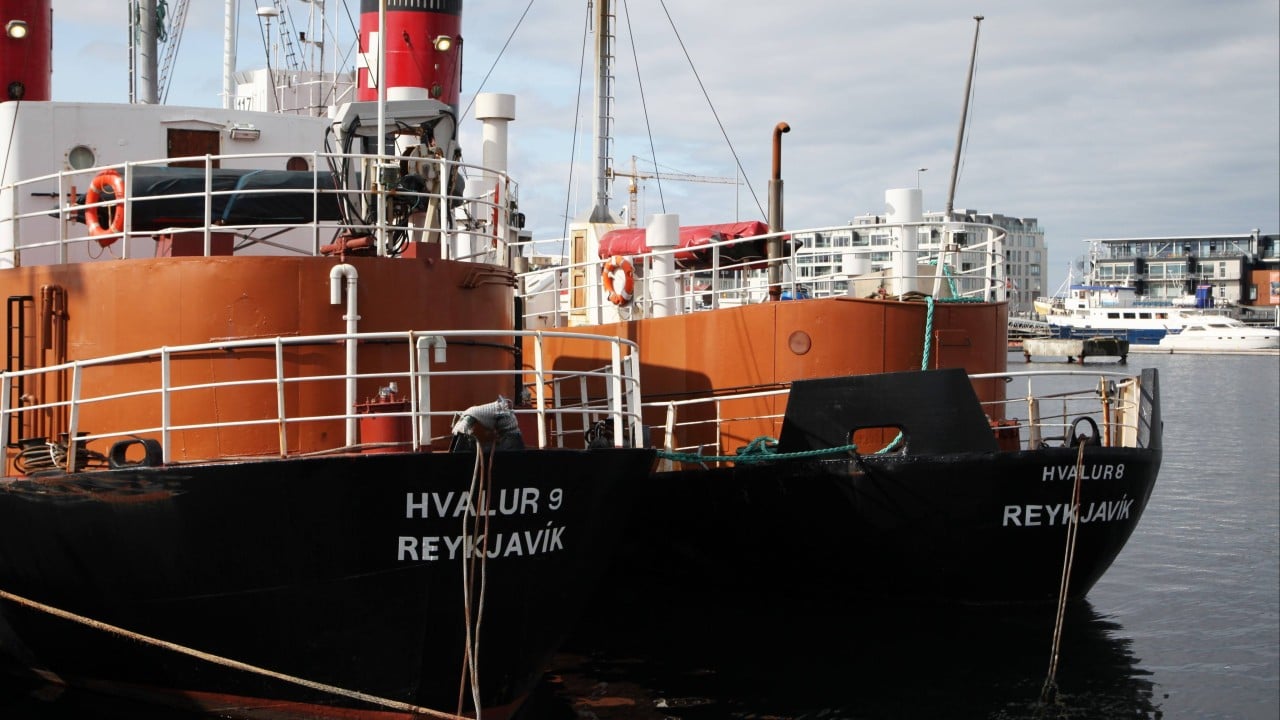
Under the heavy cover of a late-Thursday night sky, the whaling vessels Hvalur 8 and Hvalur 9 quietly unmoored from their docks and slipped out of Reykjavík Harbour. Their departure abruptly ended a consecutive two-year pause on commercial whaling in Icelandic waters. The ships headed out toward the North Atlantic hunting grounds, carrying a government-sanctioned quota allowing the slaughter of up to 150 fin whales and 168 minke whales for the summer season. This resumption of the hunt exposes a deep and bitter divide inside the Icelandic government, a collapsing international market, and a legal trap that has left state officials publicly admitting they are powerless to stop an industry they openly oppose.
For months, politicians and international conservation bodies dropped hints that commercial whaling in Europe had breathed its last breath. The reality that unfolded on the docks of Reykjavík proved those predictions wrong.
The resumption came despite explicit promises from the current administration to introduce a total ban on the practice later this winter. Activists attempted a desperate last-minute intervention. A lone protester climbed the mast of Hvalur 9 while it was docked, refusing to descend for hours and delaying the operation until police finally intervened at the vessel’s final destination in Hvalfjörður. The dramatic standoff did nothing to alter the cold reality of the situation. The harpoon ships are at sea, and the legal framework protecting them remains untouched.
To understand why these ships are moving, one has to examine a multi-layered failure of bureaucratic oversight, political maneuvering, and corporate stubbornness. The story is not just about environmental protection or animal welfare. It is a case study in how a single determined billionaire can exploit a fractured legal system to keep a dying industry on life support against the clear wishes of the public and the state itself.
The Legal Trap Binds the Government
The current Minister of Industries, Hanna Katrín Friðriksson, finds herself in an extraordinarily compromised position. She has repeatedly stated on the public record that commercial whaling is no longer in the public interest. She has confirmed that her ministry is actively preparing legislation to ban the practice entirely, a bill scheduled to hit the floor of the parliament this coming autumn. Yet, when the time came to stop the ships from sailing this June, her office did nothing.
The reason for this paralysis goes back to a parting gift from the previous administration. In early 2024, former Prime Minister Bjarni Benediktsson’s government granted a sweeping five-year commercial whaling license to Hvalur hf., the sole company operating in the fin whale sector. The permit runs through 2029.
Iceland Commercial Whaling Licenses
--------------------------------------------------
Current Status: Valid through 2029
Issued By: Former Prime Minister Bjarni Benediktsson (2024)
Annual Maximum Catch Allowed: 209 Fin Whales
2026 Research Institute Cap: 150 Fin Whales, 168 Minke Whales
Legal experts inside the government warned Friðriksson that revoking the license without a newly passed statutory law would trigger an immediate, multi-million-dollar breach-of-contract lawsuit from Hvalur hf. The state could not guarantee a win in court. The minister openly admitted to local reporters that the situation was far from ideal, but maintained that any government intervention must rest on a bulletproof legal foundation to avoid crippling financial liabilities for taxpayers.
This bureaucratic gridlock highlights a systemic failure. The state wants the industry dead, the public wants the industry dead, but a long-term administrative permit acts as an armor plating for commercial exploitation. Previous ministers attempted to use stalling tactics to achieve their goals. In 2024, then-Minister Bjarkey Olsen Gunnarsdóttir delayed approving the specific seasonal hunting rules until after the summer season had already begun, effectively running down the clock and forcing the company to cancel its operations for the year. In 2025, the company chose not to sail on its own accord, citing unfavorable economic conditions. This year, the whalers learned from past delays and secured their permissions early, leaving the ministry with no administrative levers left to pull.
The Empty Myth of a Traditional Market
The domestic defense of whaling in Iceland has long relied on a manufactured cultural narrative. Proponents claim that whaling is a vital element of the nation’s maritime identity, an unbroken link to the survival strategies of early islanders. This claim wilts under close inspection.
Fewer than two percent of modern Icelanders report eating whale meat regularly. The domestic market is so insignificant that almost the entirety of the catch must be frozen, packed, and shipped across the globe. For decades, the survival of Hvalur hf. depended entirely on a single foreign buyer: Japan.
That life-support system has now failed.
The economic rationale for the hunt has disintegrated due to developments in Japan itself. In 2024, Japanese seafood conglomerates launched a massive, state-of-the-art whale processing factory ship named the Kangei Maru. This multi-million-dollar vessel allowed Japan to dramatically scale up its own domestic whaling operations within its territorial waters and exclusive economic zone. Japan effectively became self-sufficient in whale meat.
Japanese Domestic Whale Meat Production vs. Icelandic Imports
=====================================================================
2024: Japan launches Kangei Maru factory mothership
2025: Icelandic export prices drop below sustainable margins
2026: Japanese demand for foreign fin whale meat falls by roughly 99%
=====================================================================
With Japanese domestic supply soaring, the market for imported Icelandic fin whale meat imploded. Prices plummeted to historic lows. Kristján Loftsson, the chief executive and primary shareholder of Hvalur hf., admitted during the 2025 season that the Japanese market conditions were completely unfavorable, noting that prices had dropped so low that fishing was no longer justifiable.
This raises an obvious, troubling question. Why would a commercial enterprise incur the massive overhead costs of fueling, maintaining, and staffing two industrial harpoon vessels to hunt an endangered species when there is no viable market for the end product?
Industry insiders suggest the motivations are political rather than financial. Loftsson, a polarising figure who has spent decades fighting international conservation groups, views whaling as a matter of national sovereignty. By sending the ships out, he forces a confrontation with a government that is trying to phase out his life's work. The whales are caught in the crossfire of an ideological vanity project funded by a billionaire who can afford to absorb the financial losses.
The Brutal Science of the Exploding Harpoon
The international outcry surrounding the hunt is anchored in rigorous data collected by Iceland's own state agencies. In 2022, the Ministry of Food, Agriculture, and Fisheries mandated that independent veterinarians and trained observers place cameras on whaling boats to document the reality of the kills. The resulting footage shocked the Icelandic public and destroyed the industry's narrative of a swift, humane harvest.
The compilation of that data, published in an official report by the Icelandic Food and Veterinary Authority, revealed a systematic failure to meet basic animal welfare standards.
- Delayed Mortality: Over 41% of the whales targeted did not die immediately upon being struck by the primary harpoon.
- Extended Suffering: The median time to death for animals that survived the initial strike was 11.5 minutes.
- The Worst Case Cases: Multiple whales lingered for over an hour. One documented fin whale survived for two hours in agony before succumbing to its injuries.
- Repeated Trauma: More than a quarter of the captured whales had to be shot a second time with an exploding penthrite harpoon because the first failed to destroy the brain or central nervous system.
The physical mechanics of hunting a great whale make humaneness an impossibility. A fin whale is the second-largest mammal on Earth, an animal that can reach lengths of eighty feet and weigh up to eighty tons. Whalers fire an explosive-tipped projectile from a vessel tossing on the open sea at a moving target submerged in water. Under these conditions, hitting a specific, tiny lethal zone behind the blowhole is a statistical rarity. Instead, the harpoons detonate in the flanks, the spine, or the belly of the animal, causing massive internal trauma, blood loss, and prolonged terror.
Iceland’s own Council on Animal Welfare reviewed these findings and reached an unambiguous conclusion. The current methods used in commercial whaling are entirely incompatible with the nation's statutory animal welfare laws. It is a striking legal paradox: a farmer who treated a sheep with this level of prolonged violence would face immediate criminal prosecution, yet an industrial whaling operation is granted a multi-year pass by the state.
Geopolitics and the Shadow of Europe
The decision to let the fleet sail carries severe international consequences for Iceland, extending far beyond the realm of conservation ethics. The timing of the hunt is particularly toxic for the country's broader geopolitical ambitions. In August, Iceland is scheduled to hold a highly anticipated national referendum on whether to restart formal membership negotiations with the European Union.
The European Union maintains a strict, unyielding opposition to commercial whaling within its waters and among its member states. It views the practice as a direct violation of international environmental norms. By allowing the harpoon ships to return to sea just weeks before a critical vote on European integration, the whaling industry has successfully injected a volatile cultural issue into the debate.
The Geopolitical Friction Points
-----------------------------------------------------------------------
European Union: Strict anti-whaling laws conflict with Iceland's 2025
                Ocean Partnership Framework and upcoming August referendum.
United States:  Active diplomatic sanctions under the Pelly Amendment
                remain in place due to Iceland's commercial whale trade.
-----------------------------------------------------------------------
For the conservative factions within Iceland who fiercely oppose EU membership, whaling has become a proxy battleground for national independence. They frame any attempt to curb the hunt as a surrender to foreign diktats. Observers believe that Loftsson’s decision to launch the ships this summer was calculated to inflame this exact nationalistic sentiment, deliberately sabotaging the prospects of closer ties with Europe.
Simultaneously, the hunt keeps Iceland in the crosshairs of the United States government. Washington has maintained formal diplomatic sanctions against Iceland under the Pelly Amendment since 2014, a direct response to the country's commercial whaling activities and its international trade in whale meat. These sanctions have frozen high-level environmental collaborations and served as a persistent stain on Iceland's diplomatic reputation.
The financial cost of this reputational damage is borne directly by Iceland's tourism sector. Whale watching has grown into a major economic engine for coastal communities, generating millions of dollars annually and drawing hundreds of thousands of visitors who want to see living marine mammals. The tourism bureau has long warned that the international news coverage of a bloody whale carcass being hauled up the slipway at Hvalfjörður directly undermines the country’s carefully curated image as a pristine green destination.
The whale watching companies are left in the absurd position of taking tourists out to photograph the exact same pods of whales that the harpoon boats are tracking a few miles away.
The summer season will now play out on the water. The Marine and Freshwater Research Institute has issued its advice, trimming the catch recommendation to 150 fin whales to reflect the vulnerable status of the species on the global red list. This minor adjustment does nothing to alter the fundamental trajectory of the conflict. The vessels are fueled, the explosive harpoons are loaded, and the state has chosen to hide behind legal technicalities rather than enforce its own animal welfare mandates.
The government has chosen a path of passive delay, betting that the clock will simply run out on Hvalur hf. when its license expires in three years. For the fin whales migrating through the North Atlantic over the next few months, that bureaucratic timeline offers no protection.