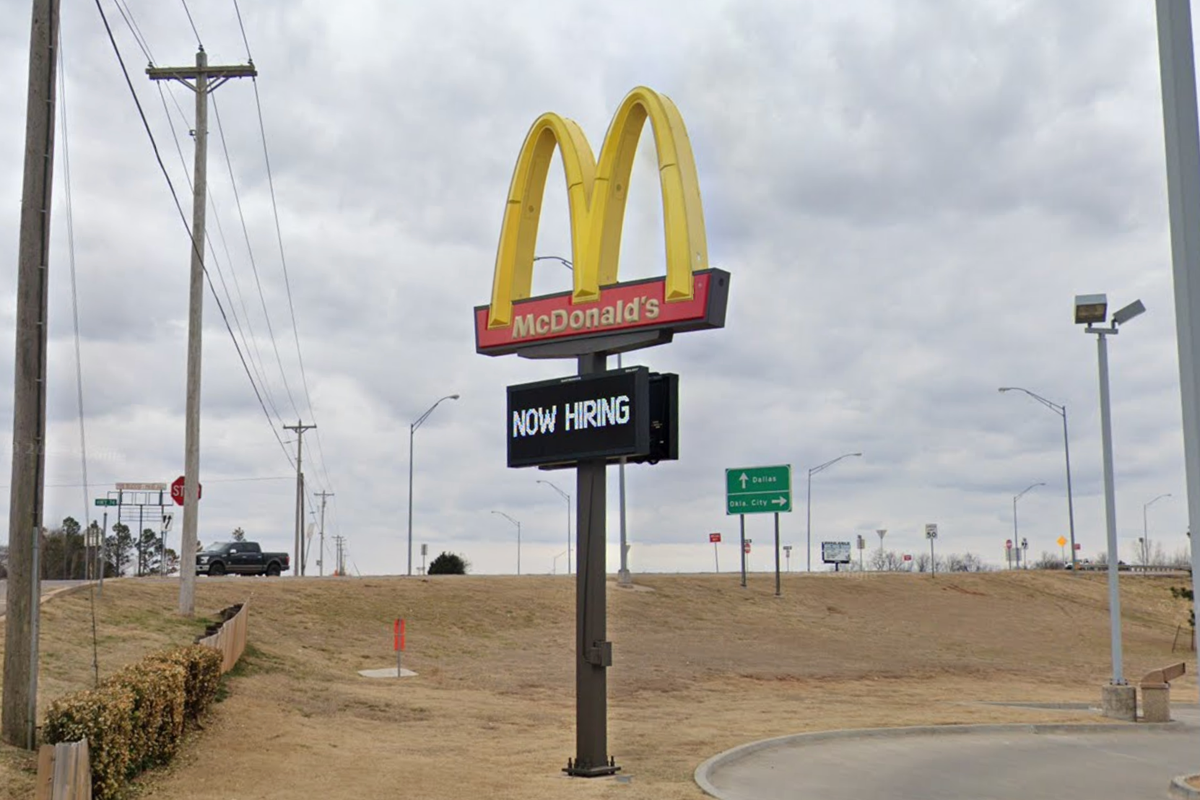
A standard corporate defense mechanism is unraveling in real time. For decades, fast-food giants shielded their balance sheets from frontline operational failures by hiding behind the corporate structure of the franchise model. When an employee suffered abuse, corporate lawyers pointed directly to the independent franchise owner's tax ID number, effectively washing their hands of liability. That shield is cracking under the weight of escalating workplace violence and a wave of aggressive new litigation.
A multi-million dollar lawsuit filed by a teenage kitchen worker exposes the systematic failure of this hands-off operational structure. The lawsuit alleges that a local franchisee hired an individual with an active, unexamined history of violent crime, placed them on the line, and subsequently ignored explicit reports of severe workplace harassment. The situation escalated until the minor was subjected to a hostile environment alongside a colleague who was later arrested and charged with murder.
This case is not an isolated operational glitch. It is the predictable result of a franchise ecosystem designed to maximize corporate royalty fees while outsourcing the legal, financial, and moral responsibility of basic human resources.
The Zero Cost Background Check Myth
Corporate headquarters dictate almost every detail of a franchise location, from the precise temperature of the fryers to the exact script used at the drive-thru window. Yet, when it comes to verifying the criminal history of the person operating those fryers alongside local high school students, the corporate office suddenly claims total powerlessness.
Most franchise agreements explicitly state that the independent operator holds sole responsibility for hiring, firing, and wage compliance. To maintain razor-thin profit margins, local operators routinely cut corners on pre-employment screening. A basic, nationwide criminal background check costs an employer between fifteen and thirty dollars. In a high-turnover industry where a single location might hire one hundred crew members a year, that minor expense is frequently viewed by managers as an unnecessary drain on cash flow.
Instead of comprehensive screening, operations rely on basic applications and brief, informal interviews. This creates an environment where individuals with histories of violent behavior can easily transition from one kitchen line to another without scrutiny.
The defense mounted by these operators usually rests on the concept of business necessity and the difficulty of recruiting in a tight labor market. They argue that demanding strict screening procedures would choke the hiring pipeline for entry-level positions. This financial justification collapses the moment an incident occurs. Paying thirty dollars to flag a violent record is vastly cheaper than defending a multi-million dollar negligent hiring lawsuit in federal court.
The Flawed Logic of Corporate Insulated Liability
The core of the issue lies in the legal doctrine of vicarious liability and how fast-food corporations deliberately exploit it. Under traditional franchise law, the corporate entity avoids liability for store-level misconduct by proving they do not exercise day-to-day control over the staff.
[Corporate Headquarters]
       │
       ▼ (Strict Operational & Brand Controls)
[Independent Franchisee]
       │
       ▼ (Negligent Hiring & Weak Screening)
[Store Level Operations] ──► Hostile Environment / Incidents
This structural separation creates a dangerous misalignment of incentives. Corporate headquarters enforce strict brand uniformity because it protects their intellectual property and stock value. They do not enforce uniform background checks or mandatory management intervention policies because doing so might establish "joint employment." If corporate headquarters mandates specific hiring criteria, they risk losing their liability shield in court.
Plaintive attorneys are now targeting this exact vulnerability. They argue that if a brand can monitor a franchisee’s inventory down to the ounce via integrated point-of-sale software, it possesses the technical and operational capacity to oversee basic workplace safety metrics. The argument that a corporation has no control over a store's internal culture is becoming harder to defend when corporate inspectors regularly audit those same stores for minor aesthetic compliance.
The True Cost of Frontline Labor Turnover
The fast-food sector operates on an annual employee turnover rate that frequently hovers between 130% and 150%. This constant churn creates a chaotic onboarding environment where store managers are perpetually desperate for warm bodies to fill shifts.
- The Squeeze: Mid-level managers are incentivized entirely on speed-of-service metrics and labor-cost percentages.
- The Consequence: Basic safety protocols, such as calling references or waiting for a background check to clear, are bypassed to keep the kitchen open.
- The Reality: Minor employees, often working their very first jobs, are placed into high-stress environments under the direct supervision of unvetted adults.
When a teenager reports harassment to a store manager under this system, the internal response is rarely a formal investigation. More often, the manager treats the complaint as a personal conflict that threatens to disrupt the shift schedule. In many documented legal complaints, the victim is the one whose hours are cut or whose shifts are moved, a practice that constitutes illegal retaliation under federal law.
Rethinking the Risk Assessment
The ongoing litigation demonstrates that the financial risk calculation for fast-food operators has fundamentally changed. The old model assumed that out-of-court settlements for workplace harassment were simply a minor cost of doing business—an line item less expensive than implementing comprehensive HR infrastructure across thousands of decentralized locations.
That calculation is obsolete. Juries are increasingly unsympathetic to multi-billion dollar brands claiming ignorance of systemic problems within their retail footprints. When an organization fails to vet its workforce and a minor is harmed alongside an individual with a violent criminal background, the damages awarded are no longer just compensatory. They become punitive.
Fixing this systemic vulnerability requires a complete rejection of the current hands-off compliance model. Brands must establish uniform, corporate-funded screening protocols as a mandatory condition of holding a franchise license. If a corporation can mandate the exact software used to take an order, it can mandate the use of a centralized, secure third-party background check system.
Protecting the workforce requires moving past the legal fiction that corporate brands have no say in how their franchise partners treat human beings on the clock. Until the industry integrates human safety into its core operational metrics with the same urgency it applies to profit margins, these catastrophic failures will continue to play out in front of juries.
Franchise Liability and Corporate Risk Mitigation Analysis
This video analysis details the legal and operational ramifications when franchise operations fail to manage store-level staff security and managerial oversight.