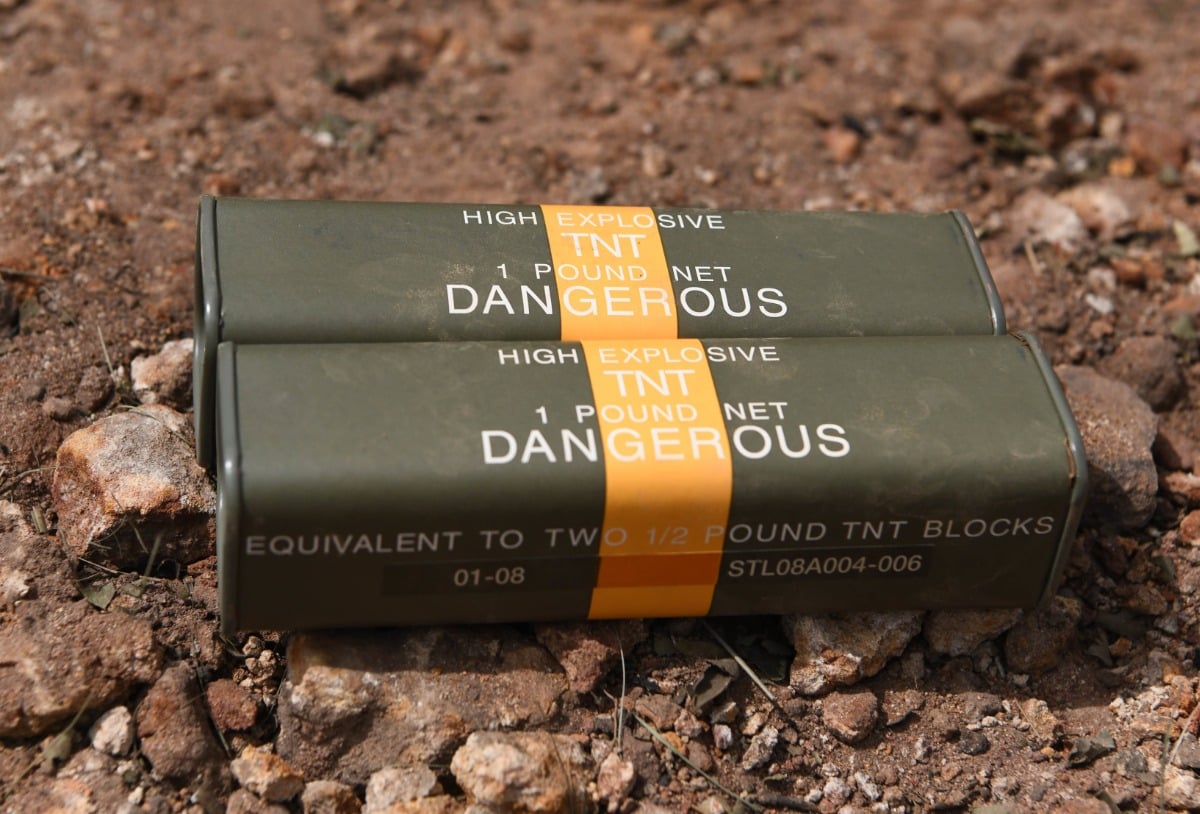
The United States military has spent nearly four decades fighting modern wars while harboring a critical vulnerability at the very foundation of its arsenal. Every 155mm artillery shell, every aerial bomb, and every infantry grenade relies on trinitrotoluene, better known as TNT. Yet, since 1986, the world’s most dominant military power has not produced a single pound of TNT on its own soil. Instead, Washington relied entirely on a fragile network of foreign suppliers to fill its bombs. That massive exposure finally forced the Pentagon's hand, prompting a $435 million contract to build a domestic TNT plant in Graham, Kentucky.
This massive expenditure reveals a deeper crisis. The war in Ukraine exposed an uncomfortable reality, proving that America's defense industrial base was not prepared for a prolonged, conventional war of attrition.
The Dangerous Logic of Outsourcing Lethality
For decades, the Pentagon operated under the assumption that precision-guided munitions had made massive artillery barrages obsolete. The future of war was supposed to be surgical, digital, and fast. Under this logic, maintaining heavy, pollution-heavy chemical manufacturing plants inside the United States seemed like an unnecessary expense.
The closure of domestic TNT production in 1986 was treated as a bureaucratic consolidation rather than a strategic retreat. It was cheaper to buy the chemical compound from allies in Europe and Asia. For a time, during the counter-insurgency campaigns in Iraq and Afghanistan, this lean supply chain worked well enough. The U.S. military consumed ammunition at a fraction of the rate seen in major state-on-state conflicts.
Then came the artillery war in Eastern Europe.
Ukrainian forces began burning through 155mm shells at rates that shocked Western planners, sometimes firing thousands of rounds per day. The Pentagon quickly realized that its stockpiles were draining far faster than commercial contractors could replenish them. The core bottleneck was not just a lack of steel casings or manufacturing facilities; it was a severe shortage of the raw chemical components needed to make the shells explode.
By outsourcing the production of its primary military explosive, the U.S. had surrendered control over its own manufacturing timelines. Shipping hazardous chemical materials across oceans during a global security crisis is logistically difficult and dangerous. If a major maritime choke point were closed tomorrow, or if a foreign supplier suddenly prioritized its own domestic defense needs, American ammunition lines would stall.
The Kentucky Gamble
To fix this vulnerability, the U.S. Army awarded a $435 million contract to Repkon USA-Defense to build a state-of-the-art TNT production facility in Muhlenberg County, Kentucky. This site choice is both strategic and political. Muhlenberg County has deep roots in the coal mining industry, offering a workforce that understands heavy machinery, chemical processing, and industrial operations.
The facility is expected to bring around 250 construction jobs and 50 permanent positions to western Kentucky. But building a chemical plant capable of handling highly volatile compounds is a slow, difficult process. The Army aims to have the factory up and running within four years, targeting completion by late 2028.
Four years is a long time when global stockpiles are already depleted.
U.S. Artillery Supply Chain Bottlenecks
┌────────────────────────┐
│  Raw Chemical Inputs   │ <── The Current Critical Vulnerability
└───────────┬────────────┘
            ▼
┌────────────────────────┐
│   TNT Processing Plant │ <── Kentucky Facility (Online 2028)
└───────────┬────────────┘
            ▼
┌────────────────────────┐
│ Shell Casing / Loading │ <── Scranton / Radford Army Plants
└───────────┬────────────┘
            ▼
┌────────────────────────┐
│   Finished 155mm Shell │
└────────────────────────┘
The contract was issued as a sole-source, undefinitized contract action. This is a bureaucratic mechanism that allows the contractor to start work immediately before all final terms and costs are locked in. The Army used this approach because it is in a hurry, bypassing the typical years of competitive bidding to speed up construction.
Environmental Regulations vs. Military Urgency
Reshoring heavy chemical manufacturing presents a major challenge: dealing with the environmental impact. The traditional process of making 2,4,6-trinitrotoluene involves treating toluene with concentrated nitric and sulfuric acids. This process produces toxic byproducts, historically referred to as red water, which are notoriously difficult and expensive to treat.
The environmental burden of these chemicals is the main reason why domestic production shut down in the 1980s. Strict regulations under the Environmental Protection Agency made operating these plants inside the United States incredibly expensive compared to overseas options.
"Victory on the battlefield begins in our production facilities," remarked Maj. Gen. John T. Reim during the project's announcement.
However, before construction can start in earnest, the Army and Repkon must navigate complex environmental assessments to comply with federal, state, and local laws. Building a clean, modern chemical plant that satisfies modern environmental standards while matching the massive output of overseas rivals is a delicate balancing act. If the facility hits regulatory delays or encounters local pushback over waste disposal, the 2028 timeline will quickly slip.
The True Scale of the Industrial Rebuild
Fixing the TNT shortage is only one step in a much larger, multi-billion-dollar effort to rebuild the American defense industrial base. The Army has set an ambitious goal to produce 100,000 155mm artillery shells per month. Reaching that goal requires upgrading every step of the manufacturing process.
The defense supply chain is only as strong as its weakest link. Over the years, the Pentagon has identified multiple single points of failure across its programs, including:
- Propellants: The specialized gunpowder used to launch shells over long distances.
- Fuses: The complex electronic and mechanical devices that dictate exactly when a shell explodes.
- Specialized Steel: High-grade alloys required to withstand the immense pressure of artillery barrels.
The $435 million Kentucky plant resolves the TNT bottleneck, but it leaves other vulnerabilities unaddressed. For instance, the United States still relies heavily on foreign sources for antimony, a mineral critical for producing ammunition, infrared sensors, and precision optics. China controls a massive share of the global antimony supply, creating a risk that Beijing could choke off key raw materials needed for American defense manufacturing.
A High-Stakes Race Against Time
The United States spent decades prioritizing high-tech software and stealth capabilities while neglecting the basic, unglamorous realities of industrial manufacturing. The $435 million investment in Kentucky is an admission that software cannot replace mass on the battlefield.
Reshoring these foundational capabilities is an expensive and time-consuming process. The U.S. military is discovering that while a factory can be shut down with the stroke of a pen, rebuilding it from scratch takes years of sustained funding, regulatory clearance, and political will. The true test of this industrial pivot will not be the announcements or groundbreaking ceremonies, but whether these factories can actually deliver materials at scale before the next major conflict arrives.



:max_bytes(150000):strip_icc()/how-many-types-of-dwarfism-are-there-2860725-v1-8dae2c531b4b47d9ae36ae404d3308a0.png)