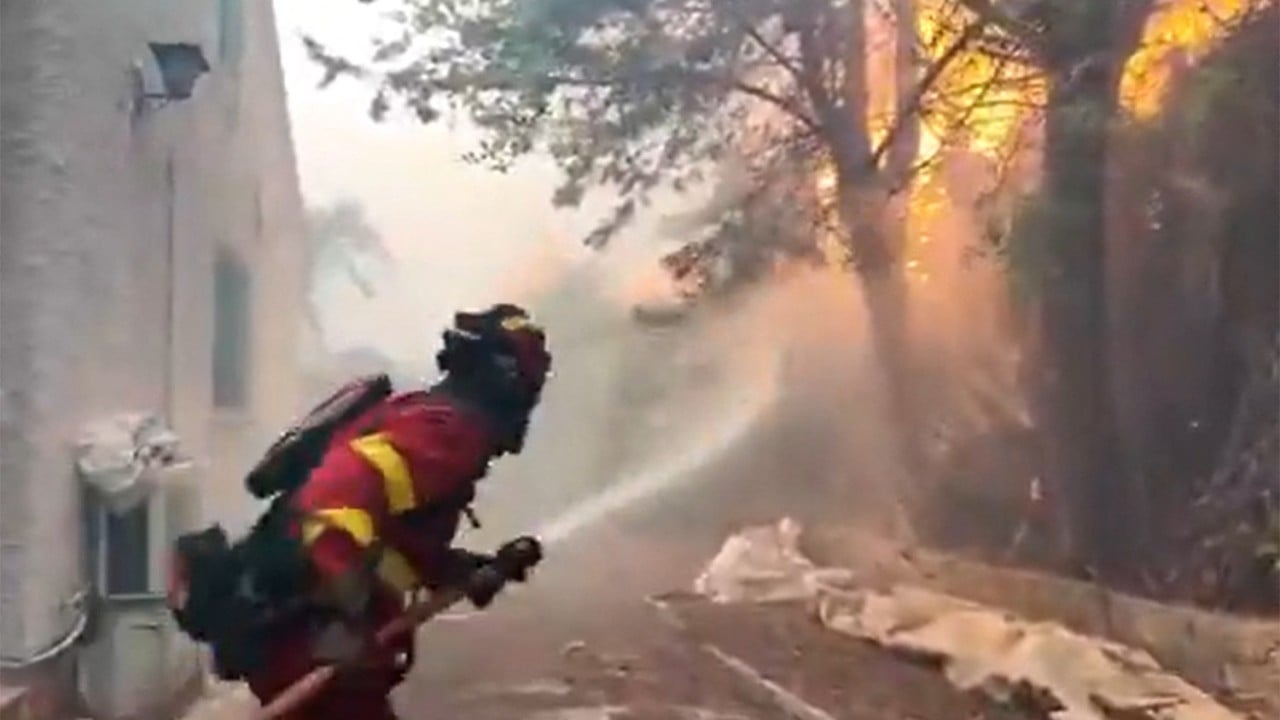
Mass evacuations across Southern Europe have become an annual summer ritual. When wildfires swept across Spain and France, forcing tens of thousands of residents and tourists to flee overnight, headlines framed the chaos as an unpredictable natural disaster. That narrative is comfortable, but it misses the point. The massive blazes ripping through Mediterranean forests are not just environmental accidents; they are the predictable result of decades of mismanaged land policy, rural abandonment, and outdated fire suppression tactics that actually make future blazes more destructive.
Emergency crews in regions like Gironde in France and Western Castile and León in Spain routinely face infernos so intense they create their own weather systems. Firefighters find themselves outmatched not by a lack of bravery, but by an overwhelming accumulation of dry brush and unmaintained pine plantations. For generations, traditional agriculture kept the European countryside clear. Goats grazed down the underbrush, smallholders cleared dead wood for heating, and mosaic farming patterns created natural firebreaks across the hillsides.
As younger generations migrated to urban centers, vast stretches of farmland were abandoned. Nature reclaimed these spaces, but not in a balanced way. Highly flammable brush, scrub, and dense eucalyptus or pine monocultures replaced managed terraces. When a heatwave hits, these abandoned zones turn into giant tinderboxes waiting for a single spark.
The Suppression Paradox
When emergency services suppress every minor grass fire immediately, they inadvertently store up energy for future catastrophes. Forestry experts call this the fire suppression paradox. By putting out every small flare-up near roads and villages, fire management agencies prevent the natural clearing of fuel loads. Dead vegetation accumulates on the forest floor year after year.
When an ignition eventually occurs during extreme dry weather, the resulting blaze burns too hot for ground crews to contain. Water bombers dropping tons of water from above look impressive on evening news broadcasts, but air strikes rarely extinguish a crown fire raging through mature trees. They merely slow the edges while ground forces retreat.
To break this cycle, European forestry agencies must adopt controlled winter burns and encourage managed livestock grazing. Controlled burns intentionally clear out leaf litter and dead branches during cool, damp months. Yet local politicians frequently block these measures due to public fear of smoke or misplaced environmental concerns, leaving forests vulnerable when summer temperatures spike.
Economic Turmoil Beyond the Evacuation Zones
The financial impact of these evacuations extends far beyond burnt timber and destroyed homes. Regional economies that depend heavily on summer tourism take severe hits that linger for years. Vacationers panic, cancel bookings across entire provinces, and leave local business owners struggling to stay solvent.
| Impact Area | Immediate Consequence | Long-Term Structural Effect |
|---|---|---|
| Tourism & Hospitality | Mass cancellations and emergency refunds | Permanent decline in regional travel reputation |
| Infrastructure | Damaged power lines and melted asphalt | Escalating municipal repair and insurance costs |
| Agriculture | Destroyed livestock pasture and orchards | Acceleration of rural land abandonment |
Rebuilding infrastructure in topographically difficult terrain drains regional coffers. Road networks buckle under the weight of heavy emergency vehicles and intense heat. Power grids short out as smoke particles ionize the air around high-voltage lines, triggering blackouts precisely when residents need air conditioning and water pumps the most.
Rethinking Spatial Planning and Rural Policy
Preventing catastrophic wildfires requires changing how Southern Europe manages its geography. Building residential developments directly against dense, unmanaged woodland creates a dangerous wildland-urban interface. Municipalities must enforce strict defense zones around villages, requiring property owners to clear vegetation within 30 to 50 meters of structures.
+-------------------------------------------------------------------+
|                   WILDLAND-URBAN INTERFACE ZONES                   |
+-------------------------------------------------------------------+
|  ZONE 1: 0-10 Meters      | Complete clearing of flammable brush  |
|  ZONE 2: 10-30 Meters     | Thinning tree crowns, removing ladder |
|                           | fuels like tall shrubs                |
|  ZONE 3: 30-50+ Meters    | Managed forest buffer with wide       |
|                           | access roads for emergency vehicles   |
+-------------------------------------------------------------------+
Governments also need to incentivize rural settlement rather than treating land abandonment as an inevitable trend. Subsidizing pastoral farming and traditional forestry creates economic viability for residents who actively maintain the landscape. Without human intervention on the ground, no amount of advanced firefighting technology will stop the next seasonal crisis.
Europe cannot fight its way out of this crisis using firefighters and aircraft alone. Until policy shifts from reactive emergency response to proactive land management, the cycle of panic, displacement, and destruction will repeat every single summer.


