The national Democratic establishment woke up to a transformed political reality. In a series of stunning primary upsets across New York City, a coordinated slate of insurgent democratic socialists systematically unseated entrenched incumbents and handpicked organizational heirs, reshaping the state’s congressional delegation. The clean sweep represents a massive consolidation of power for New York City Mayor Zohran Mamdani, whose political operation engineered the victories. By targeting high-profile figures like Representative Dan Goldman and Representative Adriano Espaillat, the insurgent faction proved that its victory in the 2025 mayoral race was not an isolated event, but the baseline of a new urban political consensus.
For decades, the path to federal office in New York passed through traditional gatekeepers, including powerful county committees, major labor unions, and legacy progressive clubs. That infrastructure collapsed. The results on Tuesday night proved that a disciplined ground game, fueled by deep-seated voter frustration over international policy and domestic economic stagnation, can bypass the institutional party entirely. Washington leadership downplayed the threat until the returns started coming in. Now, the national party must contend with a bloc of incoming lawmakers explicitly committed to dismantling its platform from within. Meanwhile, you can read related events here: The Sentencing of Mahrang Baloch Sparks a Dangerous New Phase in Pakistan Borderland Crisis.
The Toppling of the Institutional Giants
The most significant tectonic shift occurred in the 13th Congressional District, where public defense investigator Darializa Avila Chevalier unseated five-term incumbent Adriano Espaillat. Espaillat was no ordinary backbencher. As the chair of the Congressional Hispanic Caucus and the first formerly undocumented immigrant elected to Congress, his hold on Upper Manhattan and parts of the Bronx was widely considered unbreakable. He commanded vast fundraising networks and enjoyed deep ties to the historic working-class Latino communities of Washington Heights and Inwood.
Avila Chevalier, a 32-year-old doctoral student who cut her teeth organizing on college campuses, ran a campaign that treated Espaillat’s institutional strength as a liability. She hammered the incumbent for accepting substantial campaign contributions from outside political action committees, particularly the American Israel Public Affairs Committee. In a district grappling with skyrocketing rents and displacement, the contrast between a well-funded incumbent and an aggressive outsider resonated with voters who felt abandoned by the political machine. The ground operation focused heavily on younger, newer residents while peeling away traditional working-class voters who were weary of stagnant local leadership. To explore the bigger picture, we recommend the excellent analysis by TIME.
A few miles south, the clash in the 10th Congressional District followed a different, yet equally volatile, ideological fault line. Former city Comptroller Brad Lander easily defeated two-term Representative Dan Goldman. Goldman, an independently wealthy former prosecutor who gained national prominence during the first impeachment trial of Donald Trump, could not overcome intense local opposition to his foreign policy positions. The district, which spans lower Manhattan and brownstone Brooklyn, contains a highly politically active Jewish population that split deeply over the ongoing war in Gaza.
Lander, who is also Jewish, ran an aggressive campaign that criticized Goldman for failing to take a harsher stance against the Israeli government’s military actions. By framing the race around accountability and anti-war principles, Lander tapped into a fierce grassroots mobilization. The margin of victory surprised even seasoned observers. It demonstrated that in deep-blue urban enclaves, traditional liberal credentials are no longer enough to protect an incumbent from a coordinated challenge from the left.
The Battle for the Legacy Districts
The ideological civil war extended into open seats where the party establishment attempted to manage successions. In the 7th Congressional District, covering parts of Brooklyn and Queens, veteran Representative Nydia Velázquez chose not to seek reelection, endorsing Brooklyn Borough President Antonio Reynoso to succeed her. Reynoso possessed an impeccable progressive resume by traditional standards, having spent years fighting for tenant rights and criminal justice reform.
Yet the Mamdani political apparatus rejected the handpicked succession, backing State Assembly Member Claire Valdez instead. Valdez and her allies argued that Reynoso represented an older iteration of progressive politics that was too willing to compromise with real estate interests and party bosses. The campaign became a proxy fight over the definition of true representation in a district that activists have long considered a stronghold for democratic socialism. Valdez’s victory over an established borough president showed that the insurgent movement is no longer content with winning open radical seats. It is actively looking to replace older progressives with uncompromising leftists.
While the insurgent slate captured the headlines, the establishment managed a solitary defensive victory in Manhattan’s 12th Congressional District. In the race to succeed retiring Representative Jerry Nadler, Micah Lasher emerged victorious from a crowded field that included anti-Trump activist George Conway and tech-focused Assembly Member Alex Bores. Lasher, a veteran government strategist backed by the party's central leadership, ran an explicitly pragmatic campaign. The district’s electorate, which skews older and wealthier than neighboring constituencies, opted for institutional stability, proving that the insurgent strategy has clear geographic and demographic limits.
The New Kingmaker of Urban Politics
At the center of this transformation stands Zohran Mamdani. His ascent to the mayor’s office in 2025 sent shockwaves through national politics, but Tuesday’s primary victories cemented his status as a national kingmaker. Mamdani did not merely endorse these candidates. He deployed his personal field operation, shared data infrastructure, and spent significant political capital to drag them across the finish line.
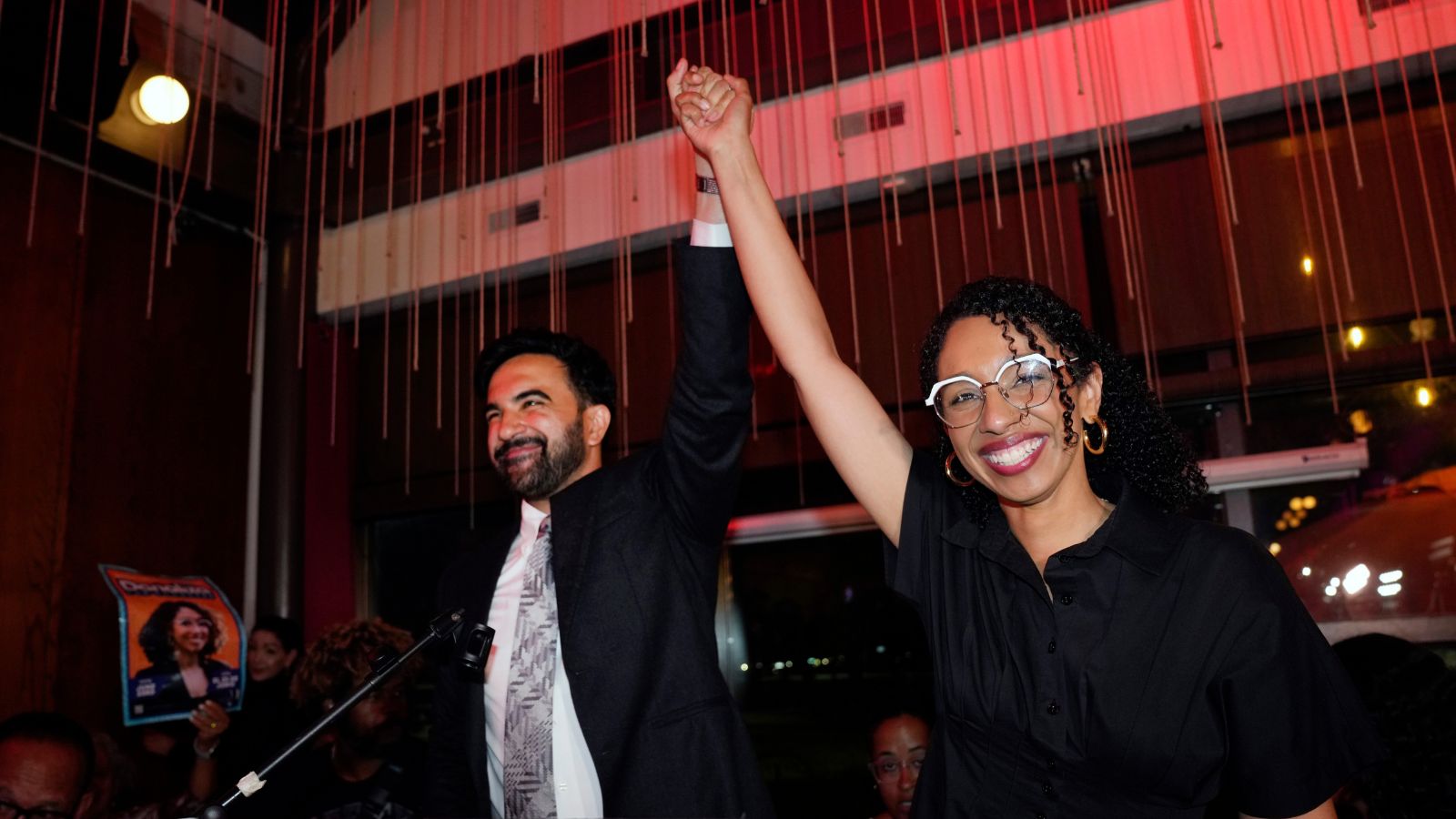
During a joint victory rally in Brooklyn, Mamdani told an enthusiastic crowd that the old politics that created current systemic crises cannot be the politics that resolve them. His strategy relies on an aggressive form of coalition-building that unites underpaid service workers, radicalized college graduates, and tenant advocacy groups. By nationalizing local primaries around issues like housing justice, wealth taxation, and opposition to foreign military aid, Mamdani has created a repeatable blueprint for defeating institutional Democrats.
Washington leadership has attempted to minimize the damage. House Minority Leader Hakeem Jeffries noted that a handful of primary outcomes in a single state would not alter the fundamental identity of the house Democratic caucus. This public dismissal masks deep anxieties. The influx of new, media-savvy democratic socialists into Congress ensures that leadership will face constant internal pressure on high-profile legislative votes, committee assignments, and party platform debates.
The Mechanical Realities of the Leftward Shift
The success of the insurgent movement cannot be attributed solely to ideological fervor. It is a matter of superior mechanics. The Working Families Party and the Democratic Socialists of America have spent nearly a decade building a permanent campaign infrastructure in New York. They do not disband after November. Instead, they transition into issue-based organizing, keeping voters engaged on local topics like rent control and public transit funding.
When primary season arrives, this infrastructure converts back into a electoral machine. While traditional campaigns rely on expensive television advertising and generalized direct mail, the insurgent campaigns utilize targeted, face-to-face voter contact. They identify low-propensity voters who feel ignored by the major parties and bring them into the primary process. In low-turnout summer primaries, this high-intensity field work outweighs millions of dollars in establishment spending.
Furthermore, the widespread adoption of ranked-choice voting in city elections has conditioned New York voters to think tactically about alliances. Lander and Mamdani previously utilized a cross-endorsement strategy during the mayoral race to consolidate the progressive vote. That habit of strategic cooperation carried over into the federal primaries, allowing different factions of the left to unite behind single candidates rather than splitting the anti-establishment vote.
Implications for the National Party
The victories in New York will reverberate far beyond the borders of the Empire State. Coming on the heels of similar left-wing victories in municipal and state primaries across the country, the New York results signal that the progressive wing of the party is successfully rebuilding its momentum after several years of legislative gridlock in Washington.
The incoming lawmakers have already outlined an aggressive legislative agenda. All three victorious candidates campaigned on platforms that include abolishing Immigration and Customs Enforcement, implementing steep taxes on high-net-worth individuals, and halting military assistance to countries violating international human rights standards. These positions put them in direct conflict with the moderate frontline Democrats who represent the swing districts necessary to hold a congressional majority.
National strategists fear that the high-profile rhetoric of the new New York delegation will be weaponized by conservative campaigns in competitive suburbs. For Mamdani and his allies, that concern is irrelevant. Their objective is not to protect vulnerable moderates, but to fundamentally alter the ideological center of gravity within the Democratic party. They argue that a bold, populist platform is the only way to inspire working-class turnout nationwide.
The traditional party machine failed to adapt to a changing electorate that demands systemic economic changes and an immediate reassessment of American foreign policy. By the time national leaders realized that their incumbents were in jeopardy, the ground had already shifted beneath them. The primary results are an unmistakable indication that the old guard no longer commands the absolute loyalty of its base, and the battle for the future of the party is fully underway.