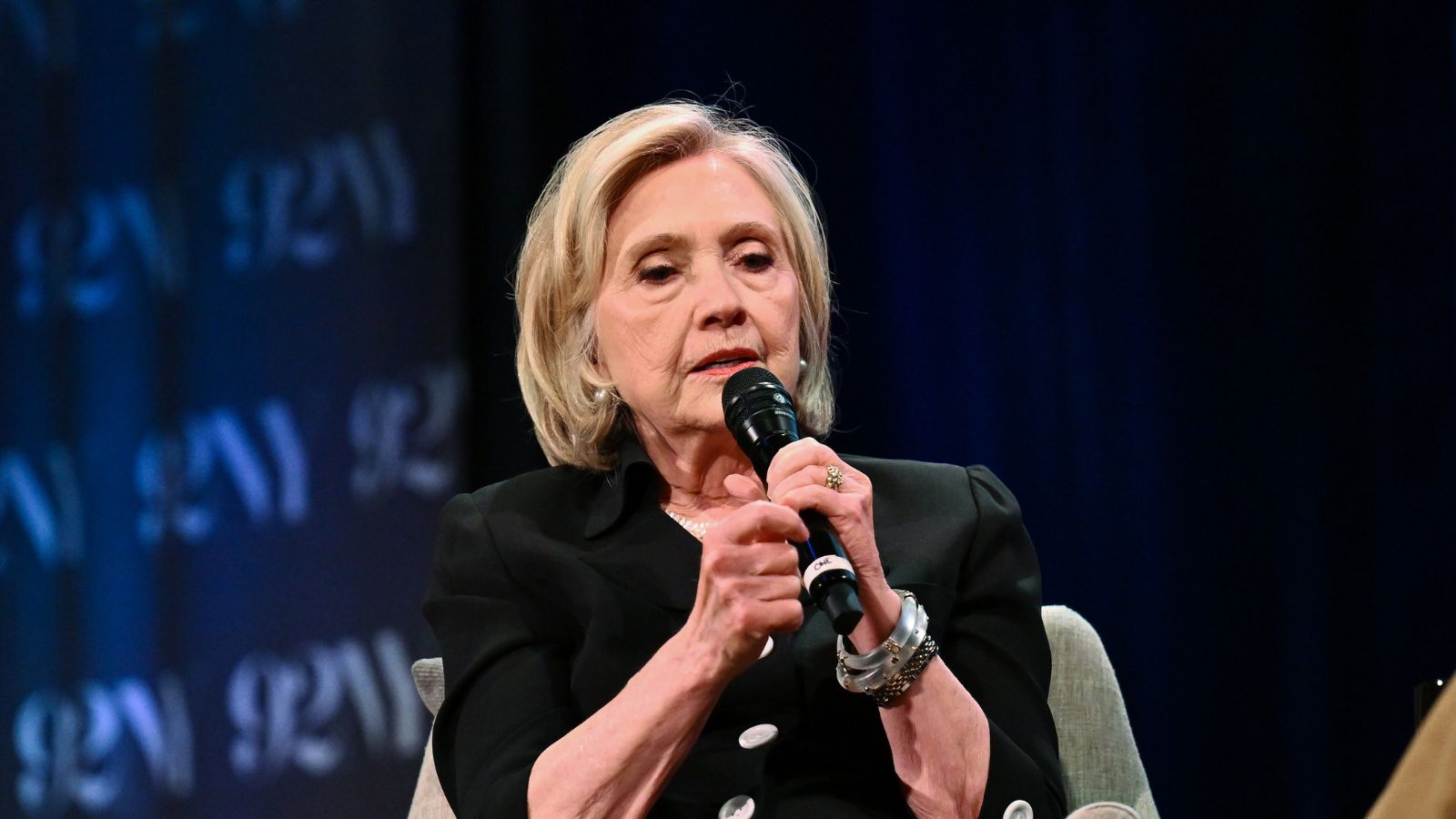
Hillary Clinton publicly declared that Joe Biden’s decision to run for reelection in 2024 was a terrible mistake for himself, his legacy, and the country. Speaking at the 92nd Street Y in Manhattan, Clinton argued that Biden had originally planned to step aside by the late summer of 2023 but changed course, a miscalculation that she believes ultimately cost Democrats the White House. According to Clinton, an open, competitive primary held a year earlier would have produced a nominee capable of defeating Donald Trump.
This public post-mortem exposes the deep structural fractures and executive isolation that defined the late-stage Biden presidency.
The Illusion of the Bridge Presidency
When Joe Biden ran for office in 2020, he pitched himself to the American electorate and his own party as a transitional figure. He was the safe choice, a seasoned statesman who would restore normalcy, defeat an erratic incumbent, and pass the torch to a younger generation of Democratic leaders. Party insiders accepted this arrangement under the unspoken assumption that his presidency would be a single-term course correction.
The transition never happened. Instead, the mechanism of incumbent protection took over the Democratic National Committee and the West Wing staff. Clinton’s recent remarks confirm what political analysts observed from the outside, which is that Biden had toyed with the idea of sticking to the original transition plan before his inner circle opted for a second term.
By the time the reelection campaign was formally launched, the window for a competitive primary had been deliberately shut. State parties adjusted rules, primary debates were bypassed, and potential challengers were signaled to stay on the sidelines to preserve party unity. This institutional consolidation created a strategic vulnerability. It left the party without an alternative narrative or a tested backup candidate when voter anxieties regarding Biden's age intensified throughout early 2024.
The Cost of Foreclosing an Open Primary
A primary election serves a functional purpose beyond choosing a nominee. It functions as a stress test. Candidates are forced to refine their messaging, build national operations, and demonstrate their appeal under intense public scrutiny.
By bypassing this process in late 2023, the Democratic Party insulated itself from its own base. Clinton’s assertion that any governor, senator, or vice president emerging from a true primary contest would have defeated Trump highlights the perceived cost of that insularity.
Without a primary, the party could not address the shifting economic anxieties and cultural concerns of working-class voters in key battleground states. The eventual, hurried substitution of the nominee in August 2024 left the party with an truncated campaign window. The new ticket had to introduce itself, build a platform, and counter opposition messaging without the benefit of the months of media exposure and voter contact that a primary season naturally provides.
Legacy Preservation and the West Wing Echo Chamber
The decision to seek a second term reflects a broader historical pattern of executive isolation. Modern presidencies are surrounded by highly protective staffs whose political survival is tied directly to the principal’s continued tenure. As a result, dissenting viewpoints rarely penetrate the inner sanctum.
Biden’s legislative record during his first two years was substantial, encompassing major infrastructure, green energy, and manufacturing initiatives. However, the decision to run again shifted the public focus from those achievements to questions of stamina and longevity. The very legacy Biden sought to protect became the central vulnerability of the campaign.
Clinton’s public critique, while delivered with the benefit of hindsight, reflects a growing consensus among party elders who watched the 2024 cycle unfold with quiet apprehension. The strategy relied on the gamble that the electorate's aversion to the opposition would outweigh their concerns about the incumbent's age. That gamble failed, and the fallout has triggered a fundamental reassessment of how national campaigns are managed.
The lesson of the 2024 cycle lies in the danger of institutional risk aversion. When a political party prioritizes executive continuity over competitive validation, it risks losing touch with the political reality on the ground. Avoiding a messy primary process may offer short-term stability, but it frequently leaves a party unprepared for the realities of a general election.