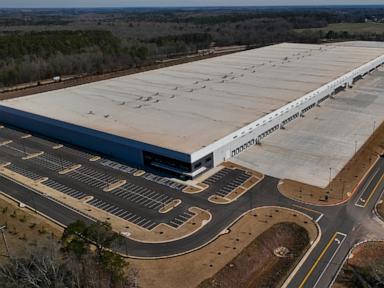
The federal government is quietly moving to offload millions of square feet of commercial warehouse space originally acquired to expand immigrant detention capabilities. Driven by shifting immigration patterns, intense budget scrutiny, and judicial interventions, federal oversight agencies have authorized the disposal of multiple large-scale facilities across several states. These properties, many secured through long-term leases or hasty acquisitions during peak enforcement periods, have sat empty or severely underutilized, racking up millions of dollars in maintenance and security costs. The decision to divest highlights the immense financial risk of using fixed real estate strategies to manage highly volatile, policy-dependent operational needs.
The Financial Bleed of Empty Assets
Government procurement often moves slowly, but political pressures move fast. When immigration enforcement agencies anticipated a massive surge in detention requirements over the past several years, procurement officers scrambled to secure large industrial properties. Warehouses were viewed as ideal templates. They offered vast square footage, open floor plans that could be rapidly retrofitted, and locations near major transportation corridors.
The strategy backfired. Changing border policies, expanded parole programs, and a series of federal court rulings scaled back the mass detention framework. The government was left holding the bag. Taxpayers have been funding empty, climate-controlled shells that require 24-hour security, structural maintenance, and utility hookups just to prevent degradation.
Financial records indicate that maintaining these dormant facilities costs millions annually per site. In the commercial real estate world, an empty building is a depreciating liability. For the federal government, it is a political lightning rod. The decision to offload these assets is not a proactive optimization strategy; it is an act of fiscal damage control.
The Complications of Unloading Specialized Real Estate
Selling or subleasing a federally owned or leased warehouse is not as simple as putting a sign in the yard. The General Services Administration faces significant hurdles in returning these properties to the private market or transferring them to local municipalities.
First, many of these facilities underwent initial retrofitting. Internal partitions, reinforced security fencing, upgraded HVAC systems for high-occupancy air turnover, and specialized communication infrastructure were installed. To a commercial logistics buyer or a manufacturing company, these modifications are detritus. A commercial buyer wants wide-open distribution space, high dock doors, and clear heights. They do not want the remnants of a scuttled institutional facility.
+-------------------------------------------------------+
|             Federal Warehouse Disinvestment           |
+-------------------------------------------------------+
|                                                       |
|  [Hasty Acquisition] -> [Policy Shift] -> [Vacancy]    |
|                                                       |
|  Current Hurdles to Offloading:                       |
|  1. Specialized Security Retrofits                    |
|  2. Strict GSA Disposal Procedures                     |
|  3. Local Economic Backlash                           |
|                                                       |
+-------------------------------------------------------+
Second, the disposal process itself is choked by bureaucracy. Federal law requires that surplus property be offered first to other federal agencies, then to state and local governments, and finally to non-profit organizations, before it can ever hit the public auction block. This statutory chain of custody takes months, sometimes years. All the while, the operational budget continues to bleed.
The Problem with Long Term Leases
A significant portion of the warehouse portfolio consists of leased spaces rather than government-owned property. This creates a tougher financial knot to untie.
Private landlords hold ironclad contracts. If the government signed a ten-year lease with a private real estate investment trust, the government remains liable for those rent payments regardless of whether a single person ever steps inside the building. Subleasing federally held space to private tenants involves navigating complex federal procurement regulations that most commercial brokers prefer to avoid. In many cases, the government may be forced to pay massive buyout penalties just to walk away from these empty halls.
Local Communities Face the Economic Aftershocks
The acquisition of these warehouses originally triggered localized economic speculation. When rumors spread that a federal facility was coming to a mid-sized town, local contractors, catering services, security firms, and utility providers anticipated long-term, recession-proof federal contracts.
Now, those expectations are shattered. Municipalities that adjusted their zoning laws or invested in infrastructure upgrades to accommodate these facilities are left with vacant industrial zones that generate zero economic activity.
- Lost Tax Revenue: While federally owned property is exempt from local property taxes, the economic activity generated by operation would have boosted local sales taxes and secondary employment.
- Zoning Stagnation: Massive, vacant structures discourage other private developers from investing in adjacent plots, creating localized industrial dead zones.
- Infrastructure Strain: Some towns upgraded water, sewer, or road networks to support high-occupancy facilities, debts they must still service without the anticipated economic influx.
There is also a deep sense of whiplash among local leadership. Decisions made in Washington offices often ignore the reality on the ground in rural or suburban industrial parks, leaving local mayors to explain why a massive facility sits dark behind chain-link fences.
Structural Volatility Inherent in Enforcement Infrastructure
The core failure of the warehouse acquisition program lies in a fundamental mismatch of timelines. Commercial real estate operates on a macro-timeline of decades. Securing a site, clearing environmental reviews, signing leases, and completing renovations takes years.
In contrast, immigration policy operates on a micro-timeline dictated by judicial decisions, executive orders, and shifting geopolitical realities. A single injunction from a federal judge can instantly halt an entire enforcement framework, rendering thousands of bed spaces obsolete overnight.
Real Estate Timeline:   [--- Acquisition ---] [--- Renovation ---] [--- Operation ---] (Years)
Policy Timeline:        [--- Order ---][--- Injunction ---][--- Shift ---]           (Months)
Trying to manage a highly fluid situation with rigid, brick-and-mortar infrastructure is a losing proposition. Private industry learned long ago that asset-light models offer the flexibility needed to survive volatile markets. The federal government, constrained by rigid procurement laws and political pressures, remains anchored to physical infrastructure that cannot adapt to the speed of modern policymaking.
The Broader Shift Toward Alternative Supervision
The move to liquidate these properties coincides with an operational pivot toward alternative enforcement mechanisms. Physical detention is extraordinarily expensive. Maintaining a person in a secure facility requires food service, medical staff, custodial personnel, and constant supervision.
As the government unloads these physical liabilities, funding is quietly migrating toward electronic monitoring, case management programs, and biometric tracking. These digital tracking solutions scale up or down instantly. They require no long-term leases, no HVAC upgrades, and no structural maintenance. The liquidation of the warehouse portfolio is the tangible, concrete evidence of this broader systemic shift away from large-scale physical containment infrastructure toward a decentralized, tech-driven oversight model.
The private market is watching these disposals closely. Savvy industrial real estate investors are positioning themselves to acquire these properties at a steep discount during the public auction phase, calculating the exact cost required to strip away the government's abortive retrofits and return the buildings to their original purpose as logistics and distribution hubs. The government's multi-million-dollar mistake will ultimately become a bargain-bin acquisition for private logistics networks.