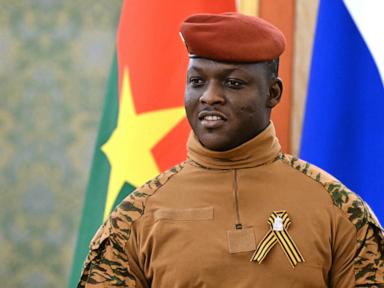
On June 26, 2026, Burkina Faso officially broke all diplomatic relations with France, terminating decades of formal bilateral ties and ordering an immediate institutional shutdown. The military government, led by Captain Ibrahim Traoré, accused Paris of harboring neo-colonial ambitions and actively supporting subversive networks and terrorist groups within the Sahel region. Paris immediately fired back, labeling the decision hostile and entirely unfounded. This complete diplomatic blackout marks the absolute collapse of French foreign policy in West Africa, transforming a long-festering geopolitical divorce into a permanent fracture.
The break is not a sudden whim. It is the calculated culmination of a multi-year strategy to systematically dismantle the remaining scaffolding of French influence in the country.
The Sudden Rupture in Ouagadougou
The announcement flashed across Burkinabe state television on a Friday evening, catching western diplomats off guard despite months of escalating hostility. Communications Minister Gilbert Ouedraogo delivered the statement with cold bureaucratic precision. He stated that a thorough evaluation proved the essential conditions for diplomacy—specifically mutual respect, reciprocal trust, and national sovereignty—no longer existed between the two nations.
The state did not mince words. The official decree explicitly alleged that French agencies were engaging in persistent activism against Burkinabe state interests. More damagingly, the junta claimed that France was providing logistical or intelligence cover to the very Islamist extremist groups that have terrorized the local population for a decade.
No concrete evidence accompanied the broadcast. None was deemed necessary for a domestic audience already primed by years of state-sponsored anti-French rhetoric.
Paris reacted with visible alarm masked by diplomatic indignation. The French Foreign Ministry noted the worrying drift of the military leadership and promised that necessary reciprocal measures were under active review. For the French diplomatic corps, this is an unprecedented disaster. It forces the complete evacuation of embassy personnel and threatens the legal status of thousands of French expatriates living in the capital.
While the military government insisted that the break applies strictly to the state-to-state institutional framework rather than the human and cultural ties between the peoples, the practical reality on the ground is highly volatile. Security forces in Ouagadougou immediately increased patrols around Western commercial interests.
Decades of Simmering Resentment
To understand why the Burkinabe public largely cheered the announcement, one must look far beyond the immediate events of 2026. The roots of this animosity stretch back to the formal dawn of independence in 1960.
For sixty years, France maintained an invisible grip on its former colonies through a system critics long ago labeled Françafrique. This system relied on a triad of military bases, monetary control, and cozy relationships with corrupt local elites. In Burkina Faso, then called Upper Volta, true self-determination felt like an illusion.
The historical ghost hovering over this entire diplomatic split is Thomas Sankara. The charismatic, Marxist revolutionary leader took power in 1983 and immediately sought to strip away the remnants of French imperial control. He changed the country’s name to Burkina Faso, meaning the land of upright people. He refused foreign aid, pushed for agricultural self-sufficiency, and openly mocked French high society during state visits.
Sankara’s assassination in 1987 shattered that dream. His successor, Blaise Compaoré, reversed most of Sankara's policies and spent twenty-seven years acting as France’s premier point-man in the region. When a popular uprising finally toppled Compaoré in 2014, French special forces physically smuggled him out of the country to safety in Ivory Coast. The Burkinabe public never forgot that intervention. They saw it as definitive proof that Paris valued its political chess pieces far more than the democratic will of the Burkinabe people.
Captain Traoré has brilliant political instincts. He has systematically wrapped his military regime in the imagery and vocabulary of Thomas Sankara. By cutting ties with France completely, Traoré is executing what he frames as the final act of Sankara’s uncompleted revolution. The state television broadcasts frequently overlay quotes from Sankara with modern footage of military parades. It is a potent narrative that completely insulates the junta from domestic criticism regarding its own governance failures.
The Failed Security Architecture
The immediate catalyst for the collapse of the relationship was the abject failure of Western military intervention in the Sahel.
In 2015, jihadist insurgencies linked to al-Qaeda and the Islamic State group began spilling across the border from neighboring Mali. The violence spread with terrifying speed. Villages were burned, schools were forced to close, and central state authority vanished across vast swaths of the countryside.
France deployed thousands of troops under Operation Barkhane and established a permanent special forces base outside Ouagadougou under Operation Sabre. The mission was clear. They were meant to contain the threat and train the local military.
The strategy failed completely. Year after year, the number of terror attacks increased exponentially. To the average Burkinabe citizen, the situation looked deeply suspicious. They could not comprehend how the French military, equipped with advanced satellite surveillance, drones, and elite fighter jets, could fail to defeat groups of insurgents riding on motorcycles through an open desert.
Suspicion quickly hardened into a conviction that France was intentionally prolonging the conflict to justify its permanent military occupation and exploit regional mineral resources. When regular army officers grew tired of burying their colleagues, they took matters into their own hands. A pair of military coups in 2022 ultimately brought Captain Traoré to power.
Traoré’s first major move was ordering French troops out of the country in early 2023. He promised that a homegrown military strategy would quickly defeat the insurgency.
The security situation did not improve. It got significantly worse. Human rights monitoring organizations have documented a horrifying surge in bloodshed since the French departure, noting that government forces and state-aligned civilian militias have frequently resorted to extrajudicial massacres in desperate attempts to hold territory. Between January 2023 and August 2025, government forces allegedly killed twice as many civilians as the actual extremists.
By completely breaking diplomatic ties now, the junta achieves a vital political objective. It creates a massive distraction. Blaming a hidden French hand for the ongoing insurgent victories offers a convenient scapegoat for the junta's own battlefield failures.
The Russian Pivot and the New Sahel Alliance
Burkina Faso is not operating in a vacuum. This diplomatic break is part of a coordinated geopolitical realignment across the entire region.
Ouagadougou has tied its long-term survival to a new regional bloc known as the Alliance of Sahel States. This alliance unites the military regimes of Mali, Niger, and Burkina Faso. All three countries have experienced military coups, expelled French troops, and severed traditional Western security partnerships. Together, they have effectively turned their backs on the Economic Community of West African States, choosing instead to form a mutual defense pact that rejects Western oversight entirely.
The vacuum left by France has been aggressively filled by the Russian Federation.
Where French diplomats lectured the junta on human rights abuses and democratic transitions, Moscow offered a different deal. Russia provides weapons, attack helicopters, and mercenary forces via the Africa Corps without attaching any political conditions. These forces do not answer to international courts or worry about civilian casualties. They operate purely as a regime-protection force for Captain Traoré.
The economic price of this Russian embrace is steep. Moscow does not operate out of charity. In exchange for military hardware and security guarantees, the Burkinabe junta has begun reassigning lucrative mining concessions to Russian state-backed enterprises. Gold is Burkina Faso’s primary export, and controlling the mines means controlling the ultimate survival of the state apparatus.
The Western world looks at this transition with intense anxiety. They see a dangerous autocratic axis forming across the heart of Africa. For the local population, however, the shift is viewed as a pragmatic choice. They prefer a transactional partner who sells them weapons over a former colonial master who they believe treats them as second-class citizens within their own borders.
Economic Ties and the Unbroken Umbilical Cord
While the political and military frameworks have been utterly destroyed, a far more complex economic architecture remains intact. This reality makes a total separation nearly impossible.
The most controversial element of this lingering relationship is the currency. Burkina Faso continues to use the West African CFA franc, a currency created by France in 1945. For decades, the currency was pegged directly to the French franc, and later the euro, with the French treasury guaranteeing its convertibility.
This arrangement brought monetary stability and kept inflation low, preventing the hyperinflationary collapses seen in other post-colonial African states.
The political cost was immense. To maintain the guarantee, West African nations were historically required to deposit half of their foreign exchange reserves directly into an operational account controlled by the French Treasury. Critics have long argued that this mechanism constitutes an ongoing colonial tax, preventing African central banks from deploying their own capital to stimulate domestic economic growth.
The Traoré regime has repeatedly promised to abandon the CFA franc in favor of a new, sovereign regional currency shared by the Alliance of Sahel States.
Executing that change is an economic minefield. Creating a new currency from scratch in the middle of an active civil war risks triggering immediate capital flight, runaway inflation, and a total collapse of local purchasing power. The junta knows this. Despite the fiery anti-French rhetoric broadcast daily on state media, Burkinabe financial officials continue to attend regional central bank meetings tied to the CFA framework. They are trapped in an uncomfortable paradox, utilizing a financial tool controlled by the very nation they have officially declared an existential enemy.
The Human Toll behind the Diplomatic Posturing
Away from the grand announcements in television studios and ministries, ordinary citizens face the immediate fallout of this geopolitical warfare.
International aid agencies have seen their operations crippled. France was historically one of the largest financial donors to Burkina Faso's humanitarian budget, funding clean water projects, rural health clinics, and emergency food distribution networks. When the junta began expelling French aid groups and Western non-governmental organizations, those funding lines vanished.
The timing is catastrophic. Over two million Burkinabe citizens are currently internally displaced, forced from their ancestral farmlands by the relentless advance of jihadist groups. Food insecurity has reached critical levels in besieged northern towns like Djibo, where local populations rely entirely on heavily armed military convoys or erratic airdrops for basic survival supplies.
The diplomatic break also complicates the lives of the vast Burkinabe diaspora. Hundreds of thousands of families rely on educational exchanges, medical visas, and financial remittances tied to French institutions. With the embassy closed and consular services suspended, the bureaucratic pathway to Europe has completely disappeared.
Students who won scholarships to French universities are now stuck in limbo in Ouagadougou, their visas unobtainable and their academic futures frozen.
The military government insists this pain is merely the necessary cost of securing true national sovereignty. They argue that a nation cannot build a prosperous future while remaining dependent on the charity of its former oppressor. It is a high-stakes gamble. Traoré is betting that the population's nationalistic pride will outweigh their economic misery long enough for his new international alliances to deliver tangible results.
The true test of this policy will play out in the remote villages of the north and east, far from the government offices of the capital. If the military regime, backed by Russian arms, cannot secure the countryside and stop the slaughter of its citizens, no amount of anti-colonial theater will save it from the wrath of a desperate population. Cutting ties with Paris was the easy part. Managing the chaotic aftermath of total isolation is a far more dangerous challenge.
For an on-the-ground look at the escalating tensions and the geopolitical shifts playing out across the Sahel region, you can watch this detailed report on the diplomatic rupture which covers the formal statements from the Burkinabe government.