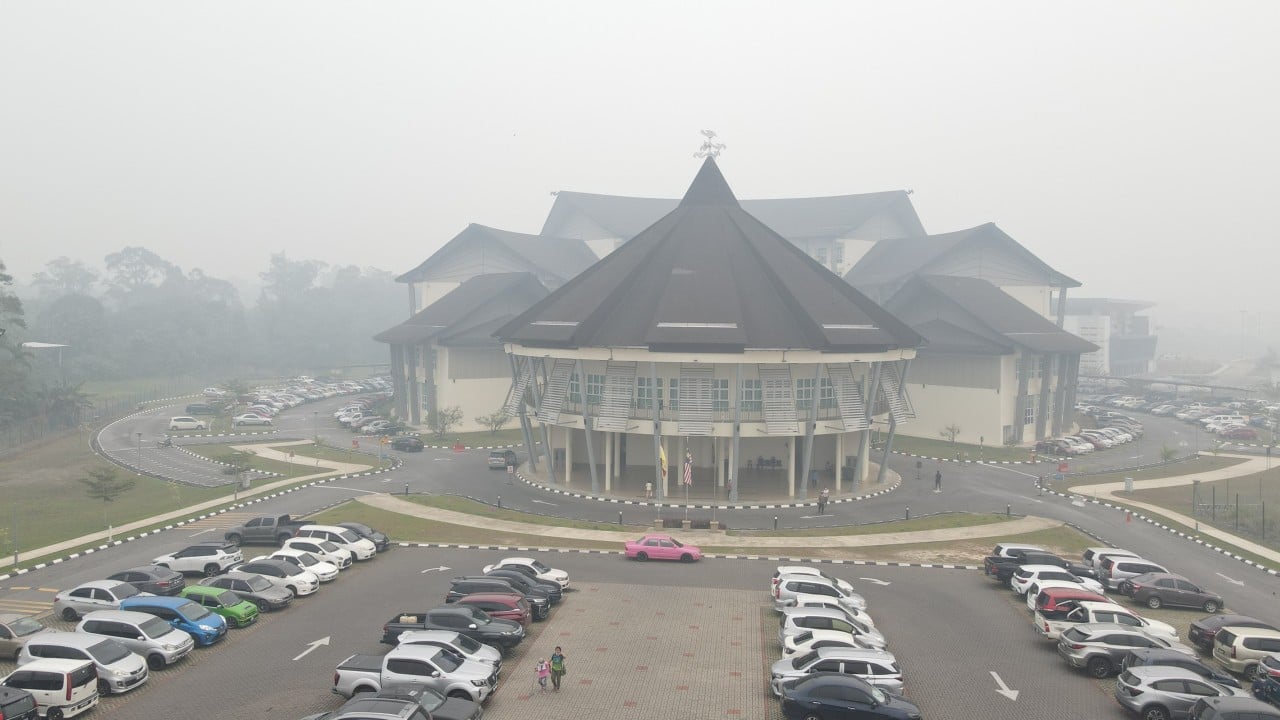
When the Air Pollutant Index in the agricultural town of Serian breached 521, Malaysia crossed a line that politicians and environmental agencies had spent years trying to ignore. An index reading above 300 is officially classified as hazardous. Passing 500 pushes an ecosystem into uncharted terror, forcing the federal government and King Sultan Ibrahim Iskandar to formally declare an emergency across the Sarawak division. Schools shut their doors, non-essential workplaces faced immediate shutdowns, and thousands of residents found themselves trapped behind walls of suffocating smoke blowing in from neighboring Indonesia.
This is not a sudden act of nature. It is the predictable outcome of decades of cross-border agricultural clearing, unchecked peatland degradation, and institutional failure across Southeast Asia.
The Anatomy of a Man-Made Disaster
The smoke choking Borneo does not originate from ordinary forest fires. It rises from the systematic burning of carbon-dense peatlands across Indonesian Borneo, primarily within Kalimantan. When these ancient, water-logged carbon sinks are drained for palm oil and pulp plantations, they transform into subterranean powder kegs.
Under prolonged dry conditions, these drained soils ignite easily and burn underground for weeks, defying surface firefighting efforts. Satellite monitoring data from Indonesia's Forestry Ministry detected hundreds of active hotspots nationwide, tracing a straight line of accountability back to commercial land preparation.
Local authorities in Indonesia arrested 112 individuals suspected of illegally setting fires to clear land cheaply, while administrative penalties hit five corporate concessions. Yet, these enforcement actions arrive far too late. By the time police handcuffs click into place, the smoke has already crossed the Malacca Strait and international boundaries, turning the skies of Sarawak and Kuching into a toxic yellow vault.
Why Regional Diplomacy Keeps Failing
Southeast Asia has lived with the seasonal haze for decades. Agreements exist on paper, including the Association of Southeast Asian Nations Agreement on Transboundary Haze Pollution, signed with grand promises of regional cooperation. In practice, enforcement remains entirely toothless.
Sovereignty shields domestic environmental negligence behind polite diplomatic language. When Malaysia chokes on Indonesian smoke, the diplomatic response typically involves quiet exchanges and offers of technical assistance, such as joint cloud-seeding operations or shared firefighting assets.
Cloud seeding requires moisture in the atmosphere to work. When prolonged drought strips the skies of clouds, dropping silver iodide into the air becomes an expensive exercise in futility.
The political calculus on the ground favors agribusiness profits over clean air. Smallholders and massive corporate plantations alike use fire because it remains the cheapest method to reset the land for the next planting cycle. Fines are treated as a routine cost of doing business, absorbed easily into the multi-billion-dollar palm oil supply chain. Until corporate boards face criminal liability that pierces corporate veils across national borders, the fires will return with every dry season.
The Cost of Breathing
Air pollution at an index of 521 transcends mere discomfort. At this concentration, particulate matter measuring less than 2.5 micrometers penetrates deep into human lung tissue and enters the bloodstream, carrying heavy metals and carcinogenic compounds directly to the cardiovascular system.
Emergency rooms across Sarawak reported sharp spikes in acute respiratory infections, asthma exacerbations, and cardiovascular distress. Vulnerable populations, including children, outdoor laborers, and the elderly, bear the brunt of an environmental crisis they did nothing to create.
Economic activity grinds to a halt. Construction sites empty, open-air markets close, and tourism flatlines as travelers cancel trips to Borneo. The financial drag of lost productivity, combined with soaring healthcare expenditures, dwarfs the short-term savings achieved by burning agricultural waste.
Breaking the Cycle
Emergency declarations and temporary work stoppages treat symptoms rather than the disease. True resolution demands a complete restructuring of agricultural financing and strict supply-chain transparency. Major international brands sourcing commodities from Borneo must enforce zero-burn policies with real-time satellite auditing, cutting off any supplier linked to peatland drainage or fire clearance.
Governments must stop treating transboundary pollution as an external weather event and start treating it as a violation of territorial sovereignty and public health. When smoke crosses a border and poisons a neighboring population, it functions as an environmental assault.
The emergency in Serian will eventually fade when the monsoon winds shift and seasonal rains finally arrive. The political smoke, however, will linger until the region decides whether clean air is a fundamental human right or a luxury traded away for commodity exports.