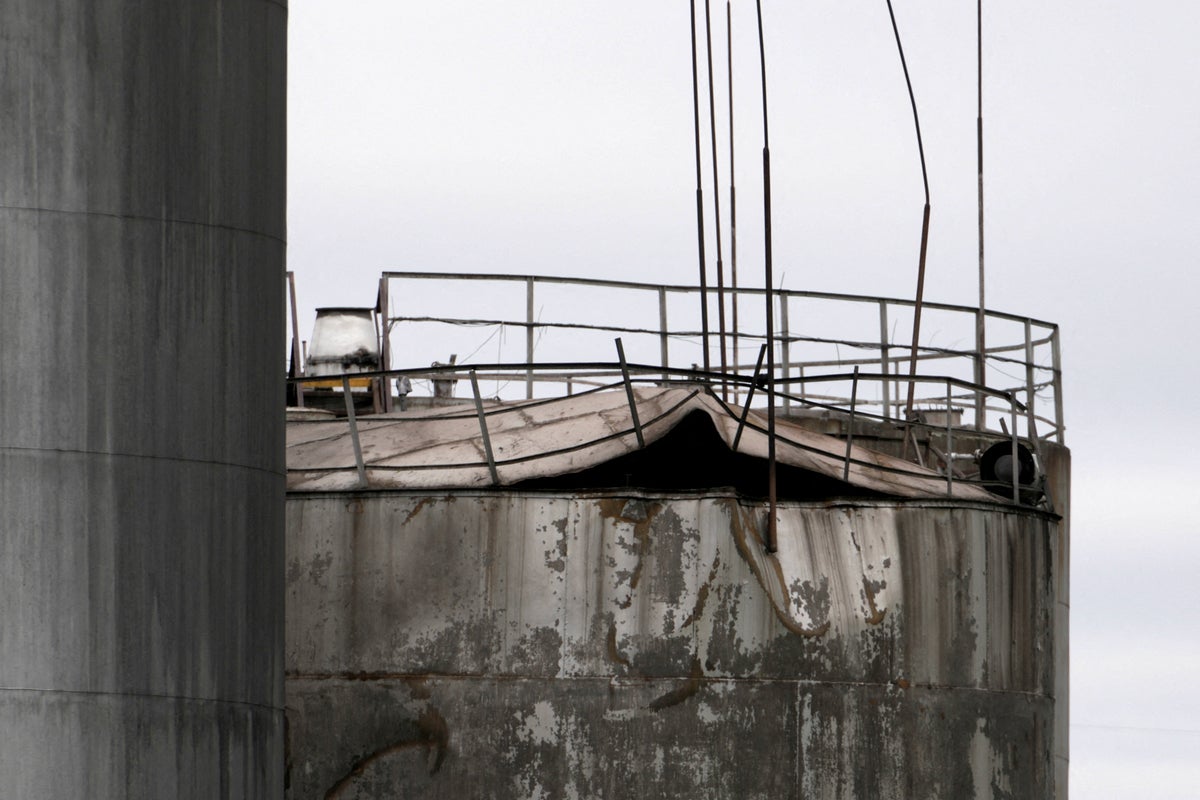
A wave of stray military drones crossing from Russia into NATO airspace has triggered unprecedented political instability and defense emergencies across the Baltic region, exposing critical gaps in European air defenses. The crisis reached a breaking point when an off-course Ukrainian long-range strike drone, blinded by Russian electronic jamming, crashed into a fuel storage facility in Rēzekne, Latvia. Within days, the strategic shockwave forced the resignation of Latvian Defense Minister Andris Sprūds, followed swiftly by the collapse of Prime Minister Evika Siliņa’s coalition government. As airspace alerts regularly paralyze Baltic cities, the frontier of the war in Ukraine has effectively expanded into the skies of northern Europe.
The Blind Flight Over Latgale
Military planners have long feared a scenario where the relentless air war over Ukraine spills into Western territory. That fear materialized in the worst possible way over eastern Latvia. The drone that struck the Rēzekne fuel depot was never supposed to be there. It was a Ukrainian long-range unmanned aerial vehicle (UAV), launched deep from Ukrainian territory, targeted at Russian oil export infrastructure on the Baltic Sea, specifically the massive shipping terminals at Ust-Luga or Primorsk.
The mechanism behind the failure is a direct result of the dense electronic warfare environment blanketed across the region. When long-range drones fly near the Russian border, they encounter massive Global Positioning System (GPS) spoofing and active jamming corridors managed by Russian military installations in Kaliningrad and the western military district. Missing its structural navigation feed, the drone drifted blindly. It crossed the Russian-Latvian border, flew silently over the Latgale region, and struck an empty storage tank.
The explosion was small. Nobody died. Yet, the physical insignificance of the crash stands in stark contrast to the devastating political blast radius.
The public assumed that the multi-million-dollar defense investments made since 2022 would safeguard the border. Instead, the drone crossed undetected, or at least unengaged, until it impacted the ground. Prime Minister Siliņa stated bluntly upon demanding her defense minister's resignation that the state could no longer ask citizens to trust an air defense network that remains dormant when required. The political capital of the ruling coalition dissolved instantly, forcing snap elections and leaving a frontline NATO member state under a caretaker government in the middle of a regional security crisis.
A Pattern of Skyway Contamination
The Latvian governmental collapse is not an isolated anomaly. It is the culmination of a systematic degradation of airspace sovereignty across the entire northern flank of NATO.
Recent Baltic Airspace Incursions (Spring 2026)
+------------+--------------------+------------------------+---------------------------------------+
| Date       | Country Affected   | Drone Origin/Type      | Direct Operational Impact              |
+------------+--------------------+------------------------+---------------------------------------+
| March 23   | Lithuania          | Ukrainian Strike UAV   | Crashed near Lake Varėna via Russia   |
| March 25   | Estonia / Latvia   | Ukrainian Strike UAVs  | Hit Auvere power station chimney      |
| Late March | Finland            | Ukrainian AN-196       | Scrambled F/A-18 jets in southeast    |
| May 7      | Latvia             | Ukrainian Strike UAV   | Exploded at Rēzekne fuel depot        |
| May 19-20  | Lithuania / Latvia | Multiple / Unidentified| Leaders to bunkers, air alerts in city|
+------------+--------------------+------------------------+---------------------------------------+
In late March, two drones tracking toward Russian ports veered off course. One smashed into a chimney at Estonia’s Auvere power station near the Narva border. Days later, Finland scrambled F/A-18 Hornet fighters to intercept an unguided Ukrainian AN-196 drone that drifted into its southeastern airspace.
By mid-May, the frequency of these incidents turned systemic panic into daily routine. On May 19, an unidentified drone tracking from Russian territory into Latvia triggered a massive regional air alert. Railway lines ground to a halt. High school examinations were abruptly canceled. Shops shuttered across multiple border municipalities.
The following morning, the panic reached Vilnius. Lithuanian President Gitanas Nausėda and his prime minister were rushed to underground bunkers as air raid sirens echoed through the capital. For several hours, millions of citizens on the eastern flank of the alliance were told to shelter indoors while French fighter jets, deployed under NATO’s Baltic Air Policing mission, hunted for low-flying silhouettes against the morning clouds.
The Air Defense Paradox
The core problem facing Baltic militaries is an structural mismatch between Western air defense philosophy and the realities of low-cost, long-range drone warfare. NATO air defense is built around the interception of high-speed ballistic missiles, cruise missiles, and manned fighter aircraft. Systems like the Patriot or even medium-range platforms are designed to track and destroy targets with significant radar cross-sections flying at predictable altitudes.
A carbon-fiber drone flying at 100 knots, hugging the tree line, and emitting almost no thermal signature presents an entirely different problem.
- Radar Blind Spots: Ground-based radars optimized for high-altitude tracking often struggle with ground clutter when looking for low-flying drones.
- The Cost Asymmetry: Firing an interceptor missile that costs millions of dollars to down a drone built for thirty thousand dollars is economically unsustainable.
- Rules of Engagement: Intercepting an aircraft over a populated NATO territory carries immense risk. Debris from a successful shootdown can cause more civilian casualties than a drone running out of fuel and gliding into an empty field.
Consider a hypothetical example. A tactical command center detects a low-speed radar anomaly ten kilometers inside the border. If the commanders order an immediate missile launch, they risk hitting a civilian light aircraft or scattering highly explosive missile debris over a village. If they hesitate to confirm the target visually via scrambled jets, the drone has already traversed fifty kilometers of airspace and hit its unintended mark. This split-second paralysis is exactly what occurred in Latvia, and it is what keeps commanders in Tallinn and Vilnius awake at night.
Moscow Exploits the Friction
The Kremlin has wasted no time weaponizing the chaos. Russian Foreign Intelligence Service (SVR) channels have launched a coordinated disinformation campaign, claiming that Ukrainian forces are intentionally operating drone bases directly from Latvian soil to launch deeper raids into the Russian rear.
Though Latvian officials vehemently deny these claims, the narrative serves a distinct strategic purpose. It provides Moscow with a pretext to justify its own aggressive electronic warfare measures, which are the root cause of the navigational drift in the first place. By turning the Baltic sky into an electronic dead zone, Russia forces Ukrainian hardware to fail unpredictably over NATO territory, effectively using Ukraine’s own weapons to terrify and destabilize its Western allies.
This strategy is working. The political polarization in the Baltics is rising. On one side, defense hardliners demand a kinetic response, arguing that any object entering NATO airspace from the east must be blown out of the sky instantly, regardless of its origin. On the other side, pragmatic factions worry about the immense escalation risks of shooting down hardware belonging to an ally, or accidentally striking a Russian asset just across the border line.
The Urgent Restructuring of Frontline Skies
The traditional reliance on rotational fighter detachments is no longer sufficient to guarantee sovereignty. Manned jets like French Mirages or Romanian F-16s are excellent at intercepting Russian spy planes over the Baltic Sea, but they are clumsy instruments for hunting lawnmower-sized drones drifting through inland valleys.
The fix requires an immediate, capital-intensive pivot toward dense networks of low-altitude, short-range air defense (SHORAD) systems. Baltic nations are moving quickly to procure acoustic sensors, optical tracking networks, and directed-energy weapons capable of neutralizing small targets without scattering heavy shrapnel over civilian infrastructure.
NATO must also establish explicit, standardized rules of engagement for stray assets. Frontline commanders cannot spend critical minutes checking political baselines while an unguided payload closes in on a major city or nuclear energy facility.
The Baltic airspace crisis has proven that national security can disintegrate long before a formal declaration of war is ever made. The sky is no longer a buffer zone. It is a porous, volatile frontier where an electronic pulse in Russia can bring down a government in Riga without firing a single shot.