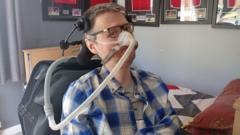
The global tourism sector loses billions every year by ignoring a simple market reality: millions of travelers with access needs want to spend money on holidays, but a minefield of inaccurate booking details, superficial compliance, and hostile infrastructure stops them at the door. Finding a truly accessible hotel room or vacation rental remains a game of chance. What the travel industry routinely advertises as fully accessible often boils down to a ramp at the main entrance paired with a bathroom doorway too narrow for a standard wheelchair.
When multi-billion-dollar booking platforms and boutique hotels treat accessibility as an afterthought, travelers pay the price in canceled trips, safety hazards, and public humiliation. Fixing this broken system requires moving past performative compliance and tackling the structural failures across corporate travel tech, hotel architecture, and customer service.
The Illusion of the Filter Button
Online travel agencies promise effortless booking. Select a city, filter by dates, check a box for accessible rooms, and book. In practice, that single check box acts as a black hole of miscommunication.
+--------------------------+-----------------------------------+------------------------------------+
| Feature                  | What the Listing Claims           | The Reality on the Ground          |
+--------------------------+-----------------------------------+------------------------------------+
| Entrance                 | Step-free access                  | Ramped threshold with a 3-inch lip |
| Roll-in Shower           | Accessible bathroom               | Standard tub with a grab bar       |
| Elevators                | Full property accessibility       | Elevator out of service or narrow  |
| Doorways                 | Wheelchair friendly               | Frame under 30 inches wide         |
+--------------------------+-----------------------------------+------------------------------------+
Most online booking engines aggregate property data using self-reported surveys filled out by property managers who have never used a mobility device. A hotel manager might classify a room as accessible because it sits on the ground floor. They overlook the two steps at the threshold or the heavy fire door that requires $15\text{ lbs}$ of continuous pull force to operate.
When guests arrive, the gap between digital marketing and physical reality turns critical. A traveler who booked a roll-in shower discovers a standard porcelain bathtub equipped with a single suction-cup grab bar. A guest using an electric power chair finds the bed frame bolted to the floor with zero clearance for a portable hoist.
The core issue lies in data architecture. Hotel booking engines rely on outdated inventory classification systems that collapse hundreds of distinct physical requirements into a single binary tag. Either a room is accessible, or it is not. This crude categorization fails to serve travelers with diverse physical, sensory, or neurological needs. A space that works for a manual wheelchair user might be completely unusable for someone traveling with a guide dog or an individual managing severe sensory overload.
Minimal Compliance over Actual Function
Building codes like the Americans with Disabilities Act in the United States or Part M in the United Kingdom established legally enforced minimum standards. Yet legal compliance rarely translates to practical design.
Architects and property developers often treat access features as emergency add-ons meant to satisfy local inspectors rather than integral design choices. Ramps are tacked onto the rear of buildings near loading docks, forcing disabled guests to enter past trash compactors and kitchen exhaust vents. Bathrooms are built to meet minimum square-footage requirements on paper, but poor fixture placement renders the interior transfer space completely useless.
Consider the geometry of a standard hotel bathroom transfer. For a lateral transfer from a wheelchair to a toilet, a guest typically requires a clear floor space of at least $60\text{ inches}$ in diameter and a toilet seat height set precisely between $17\text{ inches}$ and $19\text{ inches}$ above the finished floor.
$$\text{Target Height} = 18\text{ in} \quad (\pm 1\text{ in})$$
If a designer installs a commercial toilet paper dispenser directly over the grab bar, or places a vanity cabinet within that $60\text{ inch}$ radius, the room becomes non-functional despite satisfying the checklist on a construction blueprint.
   [ Standard Accessible Layout ]             [ Faulty Real-World Layout ]
+-----------------------------------+     +-----------------------------------+
|  +-----+                          |     |  +-----+                          |
|  | WC  |  <-- Clear Space -->     |     |  | WC  |  [Vanity Cabinet]       |
|  +-----+                          |     |  +-----+  Blocks Transfer         |
|                                   |     |                                   |
|        [ 60" Turning Radius ]     |     |        [ Restricted Space ]       |
|                                   |     |                                   |
+-----------------------------------+     +-----------------------------------+
Private holiday rentals hosted on peer-to-peer marketplaces present an even greater challenge. While major platforms introduced photo-verification drives for accessibility features, host compliance remains voluntary and uncalibrated. A host might upload a photo of a flat doorway, omitting the steep gradient of the gravel driveway leading up to it.
The Economic Case the Industry Ignores
Hotel executives routinely dismiss accessibility retrofits as expensive capital expenditures with low returns. This financial assessment misses the broader picture.
The global disability market represents over a billion people. When individuals with access needs travel, they rarely travel alone. They book multi-room reservations for families, partners, and personal assistants. They stay longer at destinations that offer reliable infrastructure, and they demonstrate intense brand loyalty once a operator earns their trust.
+-----------------------------------+-----------------------------------+
| Metric                            | Economic Impact                   |
+-----------------------------------+-----------------------------------+
| Global Market Size                | 1.3 billion people                |
| Travel Spending Pattern           | Higher average length of stay     |
| Group Travel Factor               | Multiplies direct room revenue    |
| Rebooking Rate                    | Significantly higher brand loyalty|
+-----------------------------------+-----------------------------------+
Instead of capturing this demand, hospitality brands routinely burn customer acquisition funds by treating access as a risk-mitigation task handled by legal departments rather than a revenue driver handled by product teams.
When a property fails an accessible stay, the financial losses extend beyond a refunded room rate. Airlines incur damage payouts for ruined mobility equipment during transit. Local tour operators lose out on excursion spend. Restaurants forfeit large group bookings because a single step at their front entrance excludes the entire party.
Customer Service Disconnects on the Ground
Physical infrastructure is only half the battle. Human error and lack of staff training frequently break the travel experience even when the built environment is sound.
Front desk staff often assign designated accessible rooms to non-disabled guests who request extra floor space or a larger bathroom. When the disabled traveler arrives late at night, staff offer a standard room with a promises that "it's almost the same."
Valets and bellhops routinely collapse and handle custom power wheelchairs without asking for instructions, breaking specialized joysticks or snapping custom carbon-fiber components that take months to replace. Cleaning staff move shower chairs out of roll-in stalls to store extra linen carts, or plug in heavy furniture items in front of emergency pull cords.
True hospitality requires operational knowledge:
- Room Reservation Locks: Removing accessible inventory from general upgrade pools so rooms are never given away to non-disabled guests.
- Equipment Verification: Auditing roll-in showers, seat heights, and door clearances before confirming reservations.
- Direct Communication Channels: Allowing guests to speak directly with property staff to verify specific measurements before booking.
- Equipment Care: Training staff on how to power down, store, and lift mobility equipment without causing damage.
Structural Fixes for the Travel Industry
Addressing this systemic issue requires moving beyond basic marketing campaigns and implementing concrete operational changes across the travel sector.
Mandate Dimension-Based Property Listings: Booking engines must replace simple check boxes with mandatory dimensional fields. Listings should state precise doorway widths, bed heights, and bathroom clearance measurements, backed by verified photos showing a tape measure against the fixtures.
Implement Hard Inventory Inventory Locks: Hotel management platforms must hard-lock accessible rooms in their reservation software. These rooms should remain unassignable to general guests until every other room in the property is booked, protecting reservations made by travelers who require those specific features.
Standardize Staff Training Protocols: Hospitality brands must integrate disability training into mandatory onboarding for every employee. Staff must understand how to operate pool lifts, properly secure equipment, and communicate clear, factual information about property features.
Incentivize Physical Retrofits: Municipalities and tourism boards should offer targeted tax credits to independent hoteliers who upgrade historic structures with step-free entrances, widened doorways, and roll-in wet rooms.
Until the travel industry treats accessibility as a core operational discipline rather than an optional marketing feature, millions of travelers will remain grounded by poor design and false promises.