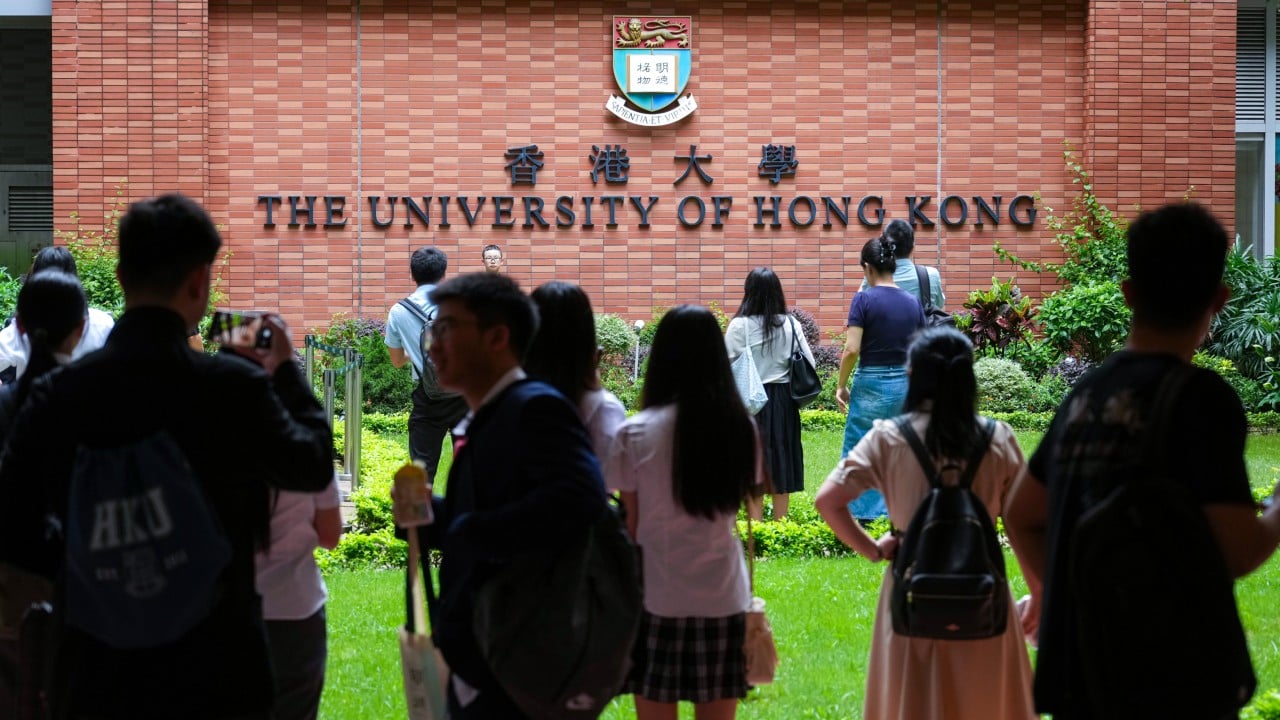
The recent surge of the University of Hong Kong (HKU) and the City University of Hong Kong (CityU) into the upper echelons of global league tables reflects a high-stakes transformation in international higher education. HKU climbed to 11th globally in recent QS World University Rankings, while CityU secured a firm position inside the top tier, driven heavily by exceptional performance in research citations per faculty. This upward trajectory is not merely a product of institutional luck or fluctuating statistical formulas. Instead, it is the direct outcome of an aggressive, state-backed capital injection and a calculated pivot toward globalized talent acquisition.
Beneath the celebratory press releases lies a complex operational machine. Higher education analytics often obscure the gritty realities of academic survival. Universities are increasingly judged on metrics that favor hyper-concentrated research output, international faculty ratios, and cross-border citation velocity. Institutions in Hong Kong have mastered this game by design, utilizing aggressive recruitment strategies to poach top-tier minds from Western universities facing domestic funding freezes and administrative bloat.
To understand how these institutions achieved this milestone, one must look at the mechanics of citation gravity. CityU, for instance, ranks second globally in citations per faculty, trailing only Harvard University in specific iterations of the metrics. This metric measures how often an academic paper is referenced by other researchers worldwide, serving as a proxy for the perceived impact of an institution's intellectual output. Achieving this requires more than writing good papers. It requires building laboratories with state-of-the-art infrastructure, offering compensation packages that rival or exceed North American and European equivalents, and fostering an environment where prolific researchers can bypass bureaucratic drag.
Yet, this relentless pursuit of ranking supremacy introduces structural vulnerabilities. When institutional key performance indicators lean heavily on quantitative metrics like citation counts and international student enrollment, internal priorities shift. Teaching-heavy departments often find themselves starved of resources compared to high-yield STEM laboratories that promise immediate spikes in publication volume. The administrative pressure to maintain these elite standings creates a pressure cooker environment for faculty and students alike.
Furthermore, the geopolitical backdrop complicates these academic triumphs. Hong Kong's universities occupy a unique and delicate intersection between Eastern and Western academic networks. While their funding models and policy directions align closely with national strategic initiatives, their institutional DNA remains deeply international. A significant percentage of their faculty and student bodies originate from outside the special administrative region, maintaining vital scholarly bridges that transcend geopolitical friction. If those bridges experience political erosion, the international faculty and student ratios that currently fuel these high rankings could face sudden compression.
Critics also point out that global league tables possess inherent biases. Indicators that measure internationalization naturally favor compact, urban institutions located in global trade hubs over sprawling, decentralized campus systems in larger nations. Hong Kong's geography acts as an inherent asset in this regard. It is easy for an international scholar to relocate to a dense urban campus where English serves as the primary language of instruction and administration.
The financial engine driving this success cannot be understated. Billions of dollars in public grants, paired with aggressive philanthropic endowments, have allowed these institutions to weather economic uncertainties that plague public universities in the United States and the United Kingdom. When a university can guarantee multi-year funding for high-risk, high-reward scientific inquiries without relying solely on volatile undergraduate tuition streams, its output stabilizes and accelerates.
As other regional hubs across Asia attempt to replicate this blueprint, the competition for elite global talent will only intensify. The institutions that sustain their positions will be those that manage to balance quantitative metric optimization with genuine, long-term contributions to human knowledge, avoiding the trap of chasing rankings for their own sake.