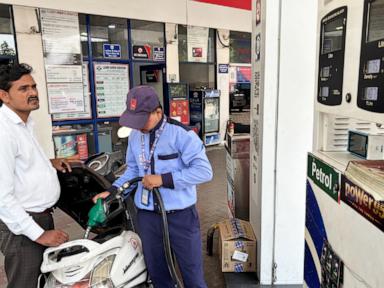
The financial press is running the same tired headline again. You have seen it in every major publication: global energy pressures are mounting, oil prices are spiking, and the Indian government is squeezing the consumer by raising fuel prices. The narrative is always wrapped in a blanket of economic doom, painting price hikes as a desperate, reactive measure that will inevitably crush growth and spark runaway inflation.
It is a neat, emotionally triggering story. It is also completely wrong.
The lazy consensus among mainstream analysts is that cheap, subsidized fuel is the lifeblood of an emerging economy. They treat high pump prices as a policy failure. In reality, artificial price suppression is an economic death sentence disguised as charity. By allowing domestic fuel prices to align with global market realities, India is not weakening its economy; it is executing a masterclass in fiscal discipline that protects its sovereign balance sheet from catastrophic shocks.
Stop looking at the pump price as a tax on the citizen. Start looking at it for what it truly is: a defense mechanism against macroeconomic instability.
The Subsidization Trap That Almost Broke the Nation
To understand why raising fuel prices is a sign of economic maturity, we have to look at the scars of the past. For decades, Indian policymakers operated under the delusion that shielding consumers from global oil volatility via heavy subsidies was a moral and economic necessity.
It was a disaster.
When the government forces oil marketing companies to sell fuel below market cost, that deficit does not magically vanish. It manifests as under-recoveries. In the late 2000s and early 2010s, the fiscal burden of these under-recoveries was massive. The government issued "oil bonds" to state-owned refiners to cover the losses. This was nothing more than a dangerous shell game—kicking the financial liability down the road and saddling future generations with sovereign debt just to keep petrol artificially cheap today.
I have watched emerging market economies blow billions trying to defend artificial currency levels and subsidized commodity prices during global shocks. The result is always identical: a depleted foreign exchange reserve, a blowing out of the current account deficit, and an eventual, uncontrolled currency collapse.
When a country relies on imported crude for over 80% of its needs, trying to subsidize its way out of a global energy crunch is equivalent to drinking poison to cure a thirst. The market always wins. By dismantling the administered pricing mechanism and letting prices float, India forced its economy to absorb shocks in real-time, rather than letting fiscal rot accumulate behind the scenes.
Dismantling the Inflation Myth
The immediate counterargument from the status quo defenders is predictable: But what about inflation? High fuel prices drive up logistics costs, which drives up food prices, which hurts the poorest.
This argument sounds logical on the surface, but it falls apart under structural analysis.
First, consider the mechanics of a fiscal deficit. When a government spends trillions of rupees subsidizing fuel, it has to fund that deficit either by borrowing heavily from the market or by printing money. Massive government borrowing crowds out private investment, drives up interest rates across the entire banking system, and weakens the currency. A weaker rupee makes every single imported good more expensive, creating a structural inflationary spiral that is far more damaging than a localized increase in transport costs.
Second, the pass-through effect of fuel prices on the Consumer Price Index (CPI) is frequently overstated by commentators who do not understand the index weightings. Food and beverages make up nearly half of the Indian CPI basket. While diesel prices affect agricultural logistics, the primary drivers of food inflation remain monsoon patterns, cold storage infrastructure, and supply chain inefficiencies—not the marginal cost of a liter of fuel.
Letting fuel prices reflect global realities acts as a natural consumption brake. It forces efficiency. When fuel is expensive, logistics firms optimize routes, industries transition to energy-efficient processes, and waste is eliminated. Subsidies, conversely, incentivize overconsumption of a scarce, imported resource.
The Hypocrisy of Capital Expenditure Critiques
Look at where the money actually goes. When the government retains tax revenues from fuel instead of burning them in the furnace of consumer subsidies, that capital is redirected into capital expenditure (CapEx).
Over the past several years, India has aggressively scaled up its infrastructure spending, pouring capital into highways, dedicated freight corridors, ports, and renewable energy grids.
| Fiscal Choice | Short-term Effect | Long-term Structural Impact |
|---|---|---|
| Fuel Subsidies | Artificial consumer relief; political popularity. | Bloated deficit, high long-term inflation, crumbling infrastructure. |
| Market-Linked Pricing + CapEx | Short-term pain at the pump; localized price adjustments. | World-class logistics, reduced business costs, structural GDP growth. |
Imagine a scenario where the government bowed to political pressure and slashed fuel taxes to the bone during an energy crisis. The immediate result would be a multi-billion-dollar hole in the budget. To plug that hole, the state would be forced to halt construction on highway networks and infrastructure projects.
You would have cheaper petrol for your morning commute, but you would spend twice as long idling in traffic on a broken, congested road. Which of those scenarios actually hurts economic productivity more?
True economic stability is built on assets that yield returns for decades, not on subsidizing the consumption of a commodity that is burned away in seconds. The transition from a consumption-subsidizing economy to an investment-led economy is the exact pivot that separates perpetual developing nations from rising global powers.
Answering the Questions Everyone Gets Wrong
The public debate around energy policy is cluttered with flawed premises. Let us dismantle the most common questions circulating in the financial ecosystem right now.
Why cannot the government just cap fuel margins for oil companies?
Because it destroys the energy sector's ability to attract capital. If you force state-owned refiners like Indian Oil, BPCL, or HPCL to absorb global price shocks by capping their margins, you kill their profitability. Without profits, these companies cannot invest in expanding refining capacity, upgrading to cleaner fuel standards, or building out green energy alternatives. You effectively starve the very entities responsible for the nation's energy security.
Why not include petroleum products under the Goods and Services Tax (GST)?
The loudest voices in the retail sector constantly demand that petrol and diesel be brought under the GST framework to cap the maximum tax rate at 28%. This demand ignores fiscal reality. Fuel taxes are one of the few predictable, highly liquid revenue streams available to both the central and state governments. Stripping states of their power to levy Value Added Tax (VAT) on fuel would cripple their fiscal autonomy, leaving them entirely dependent on central devolutions. It would trigger a constitutional standoff over federal finance while starving local governments of the funds needed for healthcare and education.
If global crude prices drop, why don't retail prices drop instantly?
Because the government uses periods of lower crude prices to recoup fiscal space and build a buffer. When crude plummets, keeping domestic taxes steady allows the state to build up its reserves and fund welfare cushions without increasing market borrowing. It is a counter-cyclical fiscal strategy. It smooths out volatility over a multi-year horizon rather than letting the economy whipsaw based on the daily whims of Brent crude traders in London or New York.
The Real Cost of the Green Transition
There is a final, uncomfortable truth that environmentalists and economists rarely discuss in the same breath. You cannot achieve a transition to renewable energy while keeping fossil fuels cheap.
The stated goal of the modern economic framework is to decarbonize, scale electric vehicle (EV) adoption, and incentivize green hydrogen production. But economics is driven by incentives, not intentions. If petrol and diesel are kept artificially cheap through state intervention, the economic incentive for consumers to switch to electric vehicles or for logistics companies to adopt alternative fuels evaporates.
High fuel prices are the most effective carbon tax in existence. They create an undeniable financial imperative for the private sector to innovate. Fleet operators migrate to electric three-wheelers and intra-city delivery vans because the total cost of ownership makes sense only when fossil fuels are priced accurately. Subsidies act as an artificial life support system for an outdated, polluting energy paradigm.
The Downside Nobody Wants to Own
To be absolutely intellectually honest, this contrarian approach does have a brutal downside. The pain of market-linked fuel pricing is not distributed equally.
The wealthy driver of an SUV notices the price hike but does not change their lifestyle. The gig-economy delivery worker, the independent trucker, and the small-scale farmer operating a diesel generator feel the squeeze immediately. For them, the margin contraction is real, sharp, and painful.
But the solution to this inequality is not to distort the entire price discovery mechanism of a macro-economy. The solution is targeted, direct benefit transfers (DBT) to the vulnerable segments, funded precisely by the tax revenues collected from those who can afford to pay market rates. You fix the pain with a scalpel—via direct welfare—not with a sledgehammer that breaks the country's fiscal framework.
The next time you see a headline lamenting raised fuel prices as an economic failure, recognize it for what it is: economic illiteracy. A nation that refuses to shield its citizens from market realities is a nation that is serious about its long-term survival. The pump pain is real, but the alternative is a structurally weak, debt-ridden state operating at the mercy of global commodity markets.
Stop demanding cheap fuel from a government trying to build a resilient economy. You cannot fuel the future on the deficits of the past.