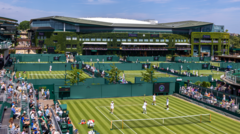
The gates at Church Road open tomorrow with a forecast that looks like a marketing executive’s dream. Forecasters are promising a dry, rain-free opening week for Wimbledon, a rare luxury for a tournament historically defined by sudden downpours and frantic groundstaff pulling covers over grass. Temperatures will hover comfortably between 24 and 26 degrees Celsius. The relentless, record-breaking heatwave that gripped London last week has broken just in time.
Beneath this calm meteorological facade lies a complex set of operational pressures. A dry week does not mean an easy week. The sudden shift from extreme heat to stable, dry air alters the very surface the athletes compete on, affects player endurance, and strains the tournament’s delicate logistics. The All England Club is preparing for a tournament where the primary adversary is not precipitation, but the physical consequences of an increasingly volatile climate.
The Chemistry of Compromised Grass
Grass courts are living, breathing ecosystems. They react to atmospheric moisture, soil temperature, and compaction with extreme sensitivity. The intense heatwave preceding the tournament baked the courts, driving moisture deep into the soil and drying out the upper layer of the perennial ryegrass.
When a heatwave breaks abruptly into clear, dry days, it accelerates the hardening of the clay base beneath the turf. This creates an exceptionally high, fast bounce early in the tournament. Serve-and-volley players might celebrate this development, but baseline players will find themselves struggling with traction. The surface becomes slick, not from water, but from the powdery residue of pulverized grass blades crushed underfoot without enough humidity to keep the plant tissue pliable.
Tournament groundstaff face a delicate balancing act. They must irrigate the courts overnight to prevent the grass from dying, yet they cannot overwater because excessive moisture under morning covers creates a greenhouse effect that invites fungal diseases. A dry forecast removes the threat of rain delays, but it increases the burden of precision agronomy. A single miscalculation in overnight watering can turn a court into a slippery sheet or a concrete slab by mid-afternoon.
The Physical Toll of the Fresh Air Shift
Athletes often struggle more with rapid weather transitions than with sustained harsh conditions. The break in the heatwave means players will not be suffocating in 35-degree heat, but the air trailing the front brings its own complications.
Pollen counts are projected to reach very high levels across Greater London during the first four days of play. The dry, breezy conditions will stir up grass pollen from the surrounding fields, creating a hostile environment for players who suffer from seasonal allergies. Respiratory strain reduces oxygen efficiency. When a player is sprinting into the third hour of a grueling match, a minor reduction in lung capacity can dictate the outcome of a tiebreak.
The physical toll was already visible during the qualifying rounds at Roehampton last week, where extreme heat caused a power outage that briefly knocked out the Electronic Line Calling system. While the main draw will benefit from cooler air, the structural infrastructure has already been stressed by the June heat. The human body behaves similarly. Players who spent the last month adjusting to intense heat must now recalibrate their hydration and recovery routines for drier, breezier air that evaporates sweat instantly, masking early signs of dehydration.
The Logistics of a Dry Queue
For the thousands of fans camping out on the Wimbledon Park golf course, a dry forecast sounds like a triumph. The reality of the Queue under prolonged dry weather involves different risks.
Dust becomes a major environmental factor when thousands of feet trample dry grass for days on end. The air quality in the temporary tent cities can degrade quickly, forcing medical tents to pivot their resources from treating hypothermia and trench foot to managing asthma attacks and heat exhaustion. The local water infrastructure is also feeling the strain. South East Water has already signaled regional water restrictions starting later this week to manage high demand, meaning the All England Club must rely heavily on its private recycling and storage systems to keep the venue running without drawing excessively from municipal supplies.
The absence of rain also alters consumer behavior inside the grounds. Rain delays drive crowds into the covered concourses, champagne bars, and merchandise shops, boosting indoor retail revenue. When the sun shines continuously, spectators stay in their seats or gather on Henman Hill. This shifts the operational pressure entirely to outdoor concession stands, which face severe supply chain bottlenecks trying to keep up with the demand for chilled beverages and fresh fruit.
The Shadow of the Second Week
Meteorologists are already looking past the pristine opening days toward a more troubling long-range outlook. The break in the weather is temporary.
By the time the round of 16 begins, the heatwave is expected to return with greater intensity, pushing temperatures back past 31 degrees Celsius. This means the first week is merely a grace period. The grass will be stripped of its natural resilience during these dry, sunny days, leaving it vulnerable to being baked into dust when the extreme heat returns for the finals.
The tournament organizers cannot afford to treat the dry opening week as a period of relaxation. It is a preparation window for a severe meteorological event. Every gallon of water applied now, every hour of rest given to the staff, and every adjustments made to the court maintenance schedule will determine whether the tournament can survive the second week without structural failure.
The modern sports landscape requires a rejection of simplistic weather analysis. A dry week is a shifting matrix of micro-climatic challenges that tests the limits of human endurance and agricultural science. The players who lift the trophies in July will be those who recognize that a clear sky is not an invitation to relax, but a different kind of pressure. Focus on the soil moisture data and the pollen metrics, because that is where the real tournament is being contested.