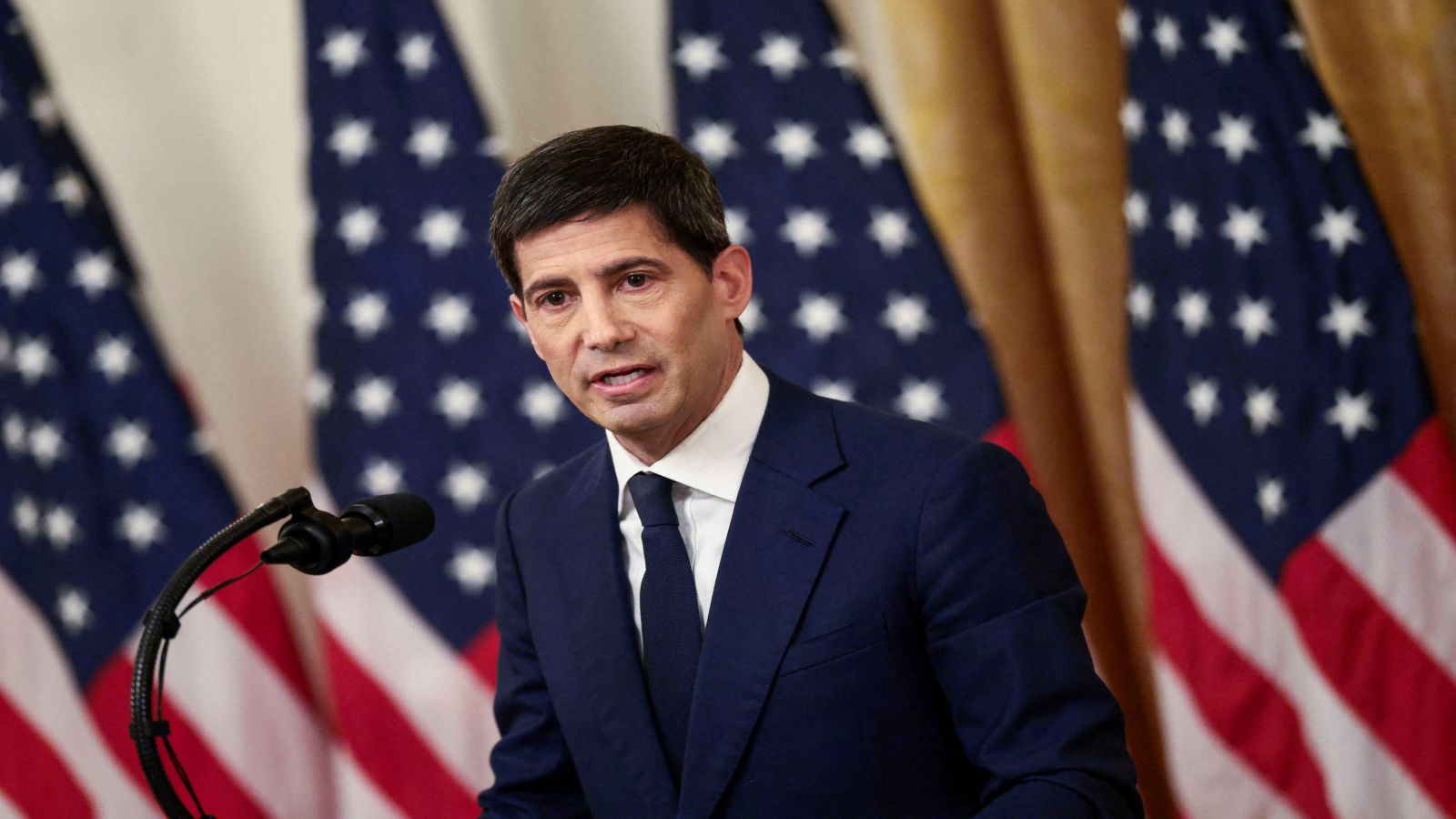
Wall Street is treating today's Federal Reserve meeting as a done deal, betting with near-total certainty that interest rates will remain locked between 3.50% and 3.75%. This perspective misses the real story unfolding at the Marriner S. Eccles building. The headline stability masks a profound structural shift as Kevin Warsh presides over his inaugural session as Chair, inheriting an economy where inflation has reaccelerated to 4.2%. Investors expecting a predictable, data-dependent central bank are about to confront a leadership determined to tear up the old playbook.
The immediate policy decision is fixed, but the long-term trajectory is resetting completely. Rate cuts, once viewed as inevitable for late 2026, have been systematically erased from institutional forecasts. Major investment desks are pushing easing expectations deep into 2027, while pricing models reveal a surging probability of another rate hike before the year ends.
The Warsh Doctrine and the Death of Forward Guidance
For a decade, the central bank operated like an open book, telegraphing every policy move months in advance to prevent market tantrums. That era is over. The new leadership believes over-communication binds the committee's hands, forces artificial consensus, and creates moral hazard in asset pricing.
Expect a systematic dismantling of the institutional apparatus that defined the previous regime. The quarterly Summary of Economic Projections, specifically the individual interest rate dots, has faced heavy criticism for creating false precision. The new administration intends to de-emphasize these projections, moving toward a framework where the central bank reacts to current conditions rather than managing long-term psychological expectations.
Traders accustomed to a highly vocal committee will find the new approach disorienting. Press conferences are likely to become less frequent, and the language in the official policy statements will be stripped of explicit policy biases. This deliberate reduction in clarity is designed to reintroduce two-sided risk to fixed-income markets, forcing participants to hedge for multiple outcomes rather than front-running a guaranteed policy path.
The Geopolitical Inflation Trap
The recent spike in headline consumer prices cannot be dismissed as temporary noise. While a tentative diplomatic breakthrough between the United States and Iran has pushed West Texas Intermediate crude back below $80 a barrel, the underlying economic insulation has already sustained damage.
Recent Fed Target Rate Decisions (2024–2026)
+-----------------------+-----------------------+
| FOMC Meeting Date     | Target Range          |
+-----------------------+-----------------------+
| September 18, 2024    | 4.75% to 5.00%        |
| November 7, 2024      | 4.50% to 4.75%        |
| December 18, 2024     | 4.25% to 4.50%        |
| September 17, 2025    | 4.00% to 4.25%        |
| October 29, 2025      | 3.75% to 4.00%        |
| November 12, 2025     | 3.50% to 3.75%        |
| March 18, 2026        | 3.50% to 3.75%        |
| June 17, 2026 (Est.)  | 3.50% to 3.75%        |
+-----------------------+-----------------------+
The energy shock triggered by the conflict in the Persian Gulf has filtered into the broader supply chain over the last quarter. Core Personal Consumption Expenditures, the metric the committee watches closest, continues to hover above 3%, driven by structural forces that a temporary drop in oil prices will not immediately fix.
- Tariff Pressures: Evolving trade barriers are permanently altering import costs, establishing a higher floor for consumer goods.
- The AI Capital Expenditures Surge: Massive institutional investment in computing infrastructure is driving historic demand for energy and industrial equipment, creating localized inflation that resists high interest rates.
- Labor Market Resilience: Non-farm payroll expansion continues to exceed baseline expectations, keeping domestic consumption strong enough to absorb elevated prices.
The Balance Sheet Battlefield
While the financial press obsesses over the overnight lending rate, the real structural policy shift may occur quietly within the Federal Reserve's balance sheet. Quantitative tightening has drawn down bank reserves, yet the systemic liquidity profile remains highly uneven.
The new leadership views the massive balance sheet as an emergency intervention mechanism rather than a permanent monetary tool. A faster runoff of asset holdings could be deployed as a stealth tightening measure, allowing the central bank to cool credit expansion without explicitly raising the benchmark funds rate and drawing political pushback.
This creates a complicated environment for regional banking institutions and digital asset markets. As the central bank drains liquidity from the system, the true cost of capital will rise, regardless of where the target policy rate sits.
Sector Allocation Realities
The transition toward a less communicative, potentially more aggressive central bank is already changing capital flows across equity sectors. The prolonged pause is not a green light for risk assets; it is a sorting mechanism that separates speculative growth from operational resilience.
Financials and Asset Managers
Commercial banks and net-interest-margin sensitive institutions stand to benefit from a prolonged plateau. If short-term funding costs remain steady while long-term yields stay elevated due to term premium inflation, traditional lending models become highly profitable.
Technology and High-Multiples
Speculative growth companies relying on long-duration cash flows face structural headwinds. When the risk-free rate remains near 4% indefinitely, the present value of earnings projected a decade from now drops sharply. Capital will continue migrating toward companies with immediate cash generation and strong pricing power.
Commodities and Hard Assets
The retreat in crude prices provides a temporary relief valve for industrial margins, but structural supply constraints across the broader materials complex remain unresolved. If the committee prioritizes nominal growth over absolute price stability, hard assets will serve as an essential hedge against a permanently higher inflation target.
The illusion of a stable, predictable pause is about to shatter. Investors waiting for a clear signal to resume risk-taking are misreading the room. The true metric of success in this new cycle will not be anticipating the next quarter-point move, but surviving the structural volatility introduced by a central bank that no longer feels obligated to guide the market's hand.