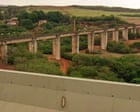
A 21-year-old woman falls to her death from a bridge in Brazil during a "rope jump" excursion because she wasn't attached to a harness.
The media immediately spins its predictable, lazy narrative. They point fingers at unregulated local operators. They hyper-focus on the tragic absence of a single piece of nylon. They cry out for stricter government oversight, standardized checklists, and international safety audits.
They are missing the point entirely.
The tragedy in Campo Magro isn't an anomaly of oversight. It is the logical conclusion of a dangerous psychological delusion: the belief that commercializing an inherently lethal activity somehow magically introduces an acceptable margin of error.
We have sanitized adventure. We have turned raw, gravity-defying terror into a commodified tourist attraction, packaged it neatly for social media feeds, and signed waivers under the assumption that "commercial" means "foolproof."
It doesn't. When you leap off a 100-foot bridge, you are not participating in tourism. You are playing Russian roulette with physics. No amount of bureaucracy changes that.
The Fatal Flaw of the Checklist Mentality
The standard response to an adventure sports tragedy is to demand more rigorous checklists. Double-check the carabiner. Triple-check the anchor points. Have a second instructor verify the harness.
This relies on a concept risk analysts call Normal Accident Theory, popularized by sociologist Charles Perrow. In high-risk, tightly coupled systems, unexpected failures are inevitable because human beings run the systems.
When an activity has a zero-tolerance threshold for failure—meaning, if the system fails once, the participant dies—adding more steps to the checklist often creates a false sense of security. It breeds complacency.
I have spent over a decade auditing operational risk in high-consequence environments, from backcountry expedition guiding to industrial rigging. The most dangerous moment in any operation is not when the gear is old or the environment is harsh. The most dangerous moment is when the crew believes their system is foolproof.
Consider the mechanics of a "rope jump"—which differs from a bungee jump because it uses dynamic climbing ropes to create a sweeping pendulum swing rather than a vertical rebound.
[Bridge Anchor] ─── (Dynamic Rope) ─── [The Divergent Point]
                                              │
                                     (Did the guide clip
                                      the harness?)
                                              │
                     ┌────────────────────────┴────────────────────────┐
                    YES                                               NO
                     │                                                 │
          [Successful Pendulum]                                [Terminal Velocity]
In a standard bungee operation, the system is often linear. In rope jumping, the rigging is highly customized to the specific geography of the bridge. The margin between a thrilling arc and a catastrophic impact is measured in inches.
When a tourist steps onto that platform, they assume the operator possesses the meticulous precision of an aerospace engineer. In reality, they are usually dealing with underpaid seasonal workers operating under intense pressure to cycle through as many paying customers as possible per hour.
The Commodification of Adrenaline
Why do people jump off bridges in the first place?
We live in a hyper-regulated, risk-averse society. True risk has been systematically stripped out of daily life. To compensate, the modern travel industry invented "controlled risk."
It is a multi-billion-dollar lie.
The industry sells the feeling of facing death without the actual possibility of dying. They market the terror of the void, but guarantee the safety of an amusement park ride. This creates a cognitive disconnect in the consumer.
Because you paid $100 via credit card and signed a digital waiver, your brain categorizes the event as an amusement. You assume that someone, somewhere, has validated the math. You trust that the state or a local council has vetted the operator.
But gravity does not recognize a business license. Physics does not care about your tourism board certification.
When you strip away the branding, the Instagram geo-tags, and the colorful gear, you are standing on a rusted steel beam trusting your life to a stranger who might have had a fight with their partner the night before, or who might be suffering from a momentary lapse of situational awareness.
If you are not willing to accept that reality, you have no business standing on the edge.
Dismantling the "People Also Ask" Consensus
Whenever these tragedies hit the headlines, the public asks the wrong questions. Let’s look at the actual mechanics of the industry to answer them with brutal honesty.
Are international adventure travel associations keeping you safe?
No. Organizations like the Adventure Travel Trade Association (ATTA) offer guidelines, best practices, and networking frameworks. They do not possess regulatory teeth. They do not conduct surprise midnight inspections on a remote bridge in Paraná, Brazil. Membership in an association is often a marketing line item, not a guarantee of operational perfection.
Can you spot a dangerous operator before you jump?
The conventional wisdom says to look for frayed ropes, dirty gear, or unprofessional behavior. That is useless advice. A pristine, brand-new $200 climbing harness is entirely useless if the guide forgets to loop it around your waist. The most dangerous operational failures are invisible. They exist in the guide’s distracted mind, the lack of a standardized two-person verification protocol, and the pressure to increase daily throughput.
Does signing a liability waiver mean you can't sue?
Legally, it depends on the jurisdiction. Emotionally and practically, it misses the point. A lawsuit will not reverse a deceleration trauma at 60 miles per hour. The waiver's true function isn't just legal protection for the company; it is psychological conditioning for the consumer. It frames the danger as a theoretical legal abstraction rather than a physical certainty if something goes wrong.
The Reality of Human Error
To understand how a guide can let someone jump without a harness, you have to look at the phenomenon of habituation.
When a guide launches 50 people a day, five days a week, for three years, the existential dread of the cliff vanishes. The client is terrified; the guide is bored. The guide is thinking about lunch, or their shift end, or the repetitive music playing from the gear truck.
The process becomes automated in their brain. Psychologists call this "inattentional blindness." The brain expects to see the harness attached because it has seen it attached 5,000 times before. The visual field registers the presence of the client, the presence of the rope, and fills in the blanks.
The system fails precisely because it usually works.
Total Jumps Conducted     -->  Guide Confidence Rises  -->  Perceived Risk Drops
(Thousands of Successes)       (Complacency Settles In)     (Checklists Skipped)
This is the inherent flaw in relying purely on human vigilance in high-consequence environments. In commercial aviation, this is mitigated by redundant mechanical systems and automated flight decks. In adventure tourism, the redundant system is usually just another human being who is equally tired and equally habituated.
The Uncomfortable Truth About Personal Accountability
The hard, unpopular truth is that the ultimate responsibility for survival cannot be outsourced to a tour operator.
If you choose to step over the railing of a bridge, you must possess the baseline knowledge required to verify your own life-support system. If you do not know what a properly deadlocked carabiner looks like, if you cannot identify a double-back harness configuration, if you do not understand the trajectory of a pendulum swing—you are not a participant. You are cargo.
And cargo occasionally drops.
This is the downside of my argument. It places a heavy, uncomfortable burden on the individual. It demands that consumers stop acting like passive audience members at a theater production and start acting like active participants in a hazardous operation.
If you want absolute safety, stay in the hotel pool. If you want true adventure, accept that the price of admission might be your life, regardless of how much you paid for the ticket. Stop demanding that the world become a padded cell just so you can pretend to be brave.