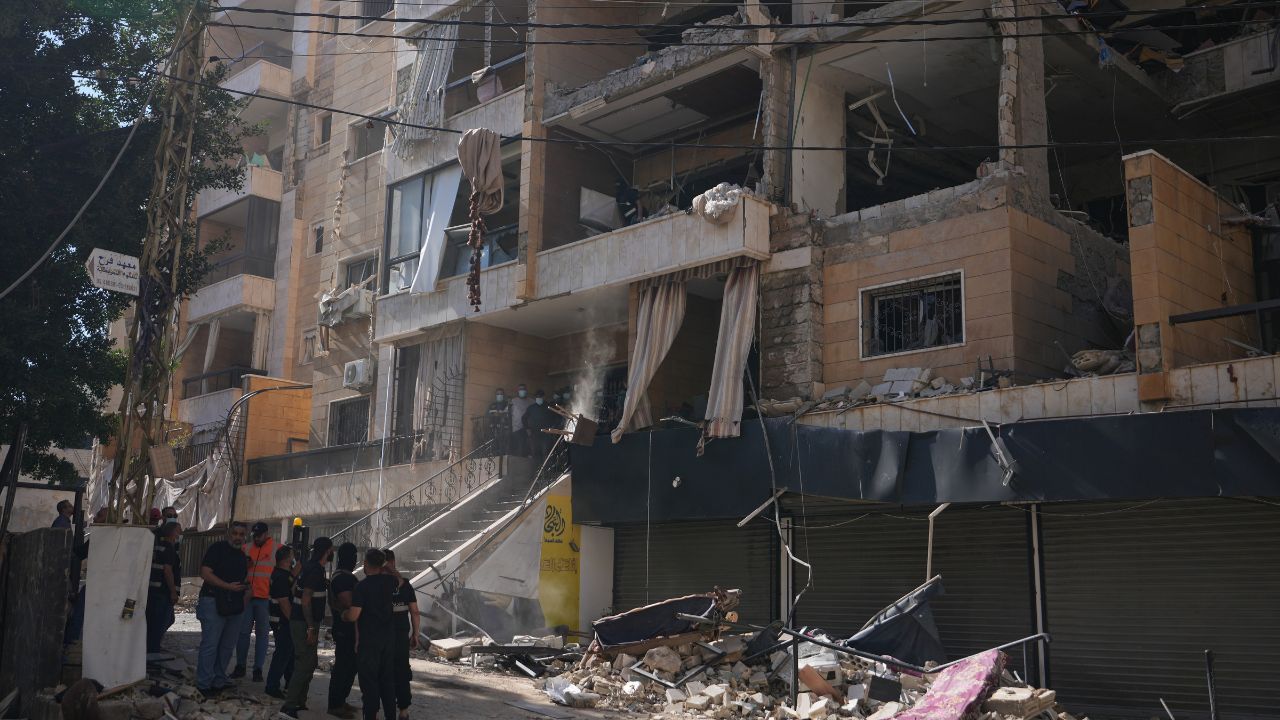
Iran claims its military forces successfully struck 21 American-linked targets across the Middle East in a sweeping drone and missile barrage, but initial intelligence assessments show that regional air defenses blunted the true impact of the assault. The Islamic Revolutionary Guard Corps announced the massive retaliatory operation following a wave of United States airstrikes aimed at Iranian coastal infrastructure. Despite the high-decibel declarations emerging from Tehran, Pentagon officials confirmed that nearly all hostile drones and ballistic missiles were intercepted before reaching their coordinates, revealing a significant gap between Iranian state rhetoric and operational reality on the ground.
The sudden flare-up shattered a fragile diplomatic window, occurring just as negotiators hinted that a comprehensive bilateral agreement was within reach.
The Trigger in the Strait
The crisis traces back to the northern waters of the Strait of Hormuz, where a United States Army Apache helicopter plunged into the sea. Early reports from the scene remained ambiguous, with conflicting narratives surfacing immediately from both capitals. The Associated Press later confirmed the aircraft went down following a mid-air collision with an Iranian unmanned aerial vehicle.
What remains unclear is intent. Pentagon analysts are still debating whether the drone operator deliberately rammed the helicopter or if the incident was a catastrophic navigational error in highly congested airspace.
While the two American pilots were quickly pulled from the water by an autonomous surface vessel, the political damage was already done. In Washington, defense officials spent hours analyzing telemetry data. President Donald Trump initially minimized the gravity of the crash during a telephone interview, describing it as a minor issue because the flight crew survived.
The political calculus shifted rapidly following an afternoon briefing at the White House. Defense Secretary Pete Hegseth and Chairman of the Joint Chiefs of Staff Dan Caine presented an assessment arguing that leaving the drone collision unaddressed would compromise American deterrence in the shipping lanes. Shortly after the meeting, a declaration on social media signaled a hardened stance, stating that the action required a direct response.
Precision Against the Coast
The American counter-strike materialized with speed. United States Central Command directed Navy and Air Force fighter jets to hit specific military installations along Iran’s southern coastline, focusing heavily on assets that monitor and restrict traffic through the global energy chokepoint.
Precision-guided munitions hit roughly 20 distinct targets spread across several sensitive geographic zones.
- Bandar Abbas: The strategic port city housing Iran's main southern naval command infrastructure suffered multiple hits aimed at coastal radar installations.
- Qeshm Island: Naval surveillance outposts capable of tracking international shipping lines were systematically targeted.
- Sirik and Jask: Ground control stations operating regional drone networks saw their communication arrays disabled.
Iranian state media acknowledged the bombardment but sought to downplay the structural damage, claiming the strikes only managed to destroy a local telecommunications tower and a pair of municipal water storage tanks. Yet, the strategic intent of the American operation was unmistakable. By blinding the radar networks and disabling the ground stations used to pilot surveillance drones, Washington effectively degraded Tehran's ability to monitor the Strait of Hormuz in real time.
Tehran Invokes the Twenty One Targets
Tehran's response was rapid, expansive, and loud. The Aerospace Force of the Islamic Revolutionary Guard Corps claimed it launched long-range, solid-fuel ballistic missiles and low-flying attack drones against 21 separate American installations throughout the Persian Gulf and the Levant.
The state-run media infrastructure immediate broadcasted a narrative of overwhelming success. Statements claimed that elite missile units had successfully penetrated regional air defense networks to destroy sensitive hangars housing American F-35 fighter jets, alongside a primary command hub at the Muwaffaq Salti Air Base in Jordan. Additional operations allegedly struck the United States Fifth Fleet headquarters in Bahrain and the Ali Al Salem Air Base in Kuwait.
The reality on the ground told a completely different story.
In Jordan, military radar tracked five incoming ballistic missiles moving toward the eastern desert. Air defense batteries engaged the targets, neutralizing every single threat before impact. Debris rained down over unpopulated terrain in Zarqa province, resulting in zero personnel casualties and no infrastructure damage.
Simultaneously, sirens echoed across Bahrain and Kuwait as both nations activated their domestic defense systems. Low-flying drones, designed to evade traditional radar by hugging the terrain, were picked up by integrated regional networks. Automated systems and interceptor missiles neutralised the threats over the water and desert buffers, preventing the spectacular explosions Iranian state television had promised its domestic audience.
The Architecture of Regional Defense
The failure of the Iranian barrage highlights a fundamental shift in the security architecture of the Middle East. Over the past decade, isolated defense batteries have been replaced by a highly integrated, multi-layered air defense grid that links American assets with those of its regional partners.
When a solid-fuel missile clears a launchpad in western Iran, early-warning satellites detect the thermal signature instantly. This data feeds directly into tracking stations across the Gulf, allowing batteries in Jordan, Kuwait, and Bahrain to calculate interception trajectories long before the weapon enters their airspace.
The quantitative results of this engagement speak for themselves.
| Target Facility | Iranian Claim | Verified Operational Outcome |
|---|---|---|
| Muwaffaq Salti Air Base (Jordan) | F-35 hangars and command center destroyed | 5 missiles intercepted; zero base damage |
| US Fifth Fleet Headquarters (Bahrain) | Severe infrastructure damage to naval hub | Drones intercepted over Gulf waters |
| Ali Al Salem Air Base (Kuwait) | Flight line and staging areas disabled | Inbound aerial targets destroyed by local batteries |
This integrated grid creates a profound strategic dilemma for Iranian military planners. To achieve a single successful kinetic strike on an American facility, the Revolutionary Guards must launch an exponentially larger volume of weapons to overwhelm the defensive network. Doing so risks triggering a full-scale conventional war for which Tehran is ill-prepared.
Diplomatic Progress Upended
The timing of this military exchange could not have been more disruptive. Prior to the helicopter incident in the Strait, diplomats from both sides were signaling that months of quiet, back-channel negotiations were on the verge of producing a breakthrough.
The core of those talks centered on a structured trade. Washington was reviewing mechanisms to grant Tehran limited access to billions of dollars in frozen foreign assets, which remain a primary driver of dissatisfaction within the sanction-choked Iranian economy. In return, Iran was expected to implement verifiable restrictions on its regional proxy activities and maritime harassment.
Those discussions have ground to an immediate halt.
The political space required to execute a delicate diplomatic compromise has evaporated in both capitals. In Washington, any immediate move to offer financial relief to Iran would be viewed domestically as an act of weakness following a direct missile assault on American bases. In Tehran, Foreign Minister Abbas Araghchi has taken a hard line, asserting that the Strait of Hormuz cannot be treated as international waters and warning that any subsequent American actions will face immediate counter-measures.
The economic fallout from the brief military engagement rippled through global markets within hours. Asian stock indexes registered sharp drops, with the Nikkei shedding nearly one percent and tech-heavy markets in South Korea falling further. Concurrently, international oil benchmarks spiked, with Brent futures climbing past ninety-two dollars a barrel as energy traders factored in the heightened risk of prolonged instability along the primary transit routes of the global energy trade.
Military commands on both sides now face the delicate task of calculating their next threshold for deterrence. While Washington has stated its coastal mission is complete, the presence of active regional proxy networks ensures that the potential for an unplanned tactical error remains exceptionally high.