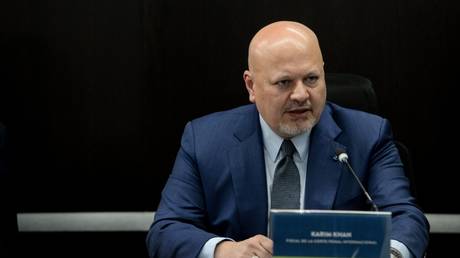
The headlines surrounding the International Criminal Court (ICC) are currently obsessed with a singular, sensational narrative: the suspension of Chief Prosecutor Karim Khan amid allegations of sexual misconduct. Mainstream commentators are treating this as an isolated HR crisis, a shocking lapse in personal ethics, or a sudden administrative hiccup that can be ironed out with an independent investigation and a temporary replacement.
They are entirely missing the point.
This is not a story about one man’s alleged behavior. It is a story about how global institutions are structurally designed to collapse under the weight of their own hypocrisy. By focusing exclusively on the salacious details of the misconduct claims, the media is missing the real institutional tragedy: the ICC has long traded its judicial independence for political survival, and this current crisis is merely the predictable fallout of a system that insulates high-ranking bureaucrats from the very accountability they claim to enforce.
I have spent years analyzing international legal frameworks and watching supranational organizations operate behind closed doors. I have seen these institutions burn through hundreds of millions of dollars while delivering virtually nothing but symbolic press releases. The "lazy consensus" surrounding the ICC suggests that the court is a noble, functioning pillar of global justice that has simply hit a bump in the road.
That view is dangerously naive. The institution is fundamentally broken, and a temporary leadership shuffle will fix absolutely nothing.
The Myth of the Independent Global Prosecutor
The mainstream press loves to frame the ICC Chief Prosecutor as a modern-day knight errant, wielding the law against the world's worst tyrants without fear or favor. This is a fiction. The office of the prosecutor is, by design, a deeply political entity that relies entirely on the cooperation and funding of powerful nation-states.
When you look closely at the Rome Statute—the treaty that established the court—the structural vulnerabilities become glaringly obvious. The court lacks an independent enforcement mechanism. It has no police force, no sovereign territory, and no inherent power to compel compliance. If a state chooses to ignore an ICC warrant, the court can do nothing but issue a sternly worded complaint to the Assembly of States Parties.
Consider the reality of how justice is rationed globally:
- Selective Prosecution: The court historically targets leaders from politically weak nations, primarily in sub-Saharan Africa, while systematically avoiding meaningful action against global superpowers or their protected allies.
- Funding Asymmetry: A handful of Western nations provide the vast majority of the ICC's budget, giving them immense, unspoken leverage over which investigations get prioritized and which get buried.
- Diplomatic Immunity Barriers: The court routinely runs into the brick wall of state sovereignty, making its grandest pronouncements little more than expensive theater.
To believe that an organization operating under these constraints can maintain an unblemished, objective internal culture is absurd. The absolute power vested in the top leadership, combined with a total lack of transparent, external oversight, creates an environment where abuse of authority—whether geopolitical or interpersonal—is almost guaranteed to occur.
Dismantling the "People Also Ask" Delusions
When crises like this hit the international stage, the public inevitably asks the wrong questions. Let’s dismantle the flawed premises driving the current discourse.
Can the ICC remain impartial during an internal investigation?
The short answer is no. The premise that a bureaucratic entity can objectively police its own highest-ranking official while simultaneously managing high-stakes geopolitical prosecutions is a fantasy. International organizations are notoriously protective of their brand equity. The primary goal of an internal investigation in this context is not absolute truth; it is damage control.
True impartiality requires an entirely external, binding oversight mechanism that does not answer to the Assembly of States Parties or any internal judicial board. Until that exists, any investigation is just institutional theater designed to restore a veneer of respectability.
Will this suspension derail ongoing war crimes investigations?
The mainstream media is terrified that this scandal will stall high-profile investigations in regions like Gaza, Ukraine, or Sudan. What they fail to realize is that these investigations were already structurally stalled.
The ICC’s track record for securing convictions against sitting heads of state or well-protected military leaders is abysmal. The court has spent billions of dollars over more than two decades to secure a handful of convictions, mostly against low-to-mid-level rebel commanders. The suspension of the chief prosecutor does not derail global justice because global justice was not moving forward in the first place; it was spinning its wheels in a mud pit of diplomatic compromise.
ICC Institutional Track Record (Approximate)
+------------------------+----------------------------------+
| Metrics                | Realities                        |
+------------------------+----------------------------------+
| Annual Budget          | Over $200 Million                |
| Lifetime Expenditures  | Billions of Dollars              |
| Major Convictions      | Fewer than 15 individuals        |
| Enforcement Power      | Dependent entirely on states     |
+------------------------+----------------------------------+
The Dark Side of Supranational Immunity
The core vulnerability of the ICC—and the reason scandals of this nature fester behind closed doors—is the doctrine of functional immunity. High-ranking international civil servants enjoy a level of legal insulation that would be unthinkable in the private sector or under domestic law.
This immunity is meant to protect prosecutors and judges from politically motivated retaliation by angry rogue states. In practice, however, it creates a dangerous accountability vacuum. When an official is shielded from the jurisdiction of local courts and subjected only to internal administrative tribunals, the threshold for accountability skyrockets.
"When you insulate an elite class of bureaucrats from the real-world legal consequences that govern ordinary citizens, you do not protect justice. You protect the institution from scrutiny."
Imagine a scenario where a corporate CEO faced serious misconduct allegations, but the only body authorized to investigate was a committee made up of the company's own board members and major shareholders, operating entirely in secret, away from local law enforcement. The public would rightfully decry it as a cover-up. Yet, when the ICC operates this way, it is defended under the guise of protecting "international judicial independence."
The downside of challenging this immunity is obvious: stripping it away opens the door for bad-actor states to weaponize legal claims against prosecutors who dare to investigate them. It is a genuine dilemma. But the current alternative—maintaining an untouchable oligarchy that polices itself—is actively destroying the very credibility the court needs to survive.
Stop Trying to Fix the Unfixable
The standard response to this crisis from international legal experts will be a predictable chorus of calls for reform. They will demand more robust internal reporting mechanisms, better training for staff, and clearer administrative guidelines.
These solutions are useless band-aids on a terminal patient.
You cannot reform an institution whose foundational premise is flawed. The ICC was built on the utopian delusion that global law could exist independently of global power dynamics. It assumed that a court in The Hague could command universal moral authority without possessing the hard power to back it up.
The current scandal is not a distraction from the ICC’s mission. It is the logical endpoint of it. When an institution realizes it cannot achieve its grand, stated goals on the world stage, it turns inward. It becomes a self-serving bureaucracy focused on internal prestige, political maneuvering, and the preservation of its own elite status.
If nation-states are genuinely committed to international accountability, they need to stop outsourcing their moral conscience to an expensive, toothless tribunal. True accountability happens through domestic courts exercising universal jurisdiction, through targeted multilateral coalitions, and through transparent, enforceable bilateral agreements.
The ICC chief prosecutor's suspension is not an isolated event to be managed by a public relations team. It is an indictment of the entire supranational project.
Stop looking to The Hague for salvation. The court has no clothes, and it never did. Use the funding to empower domestic judiciaries that actually possess the jurisdiction and the teeth to enforce the law. Shut down the theater. Only then can real justice begin.