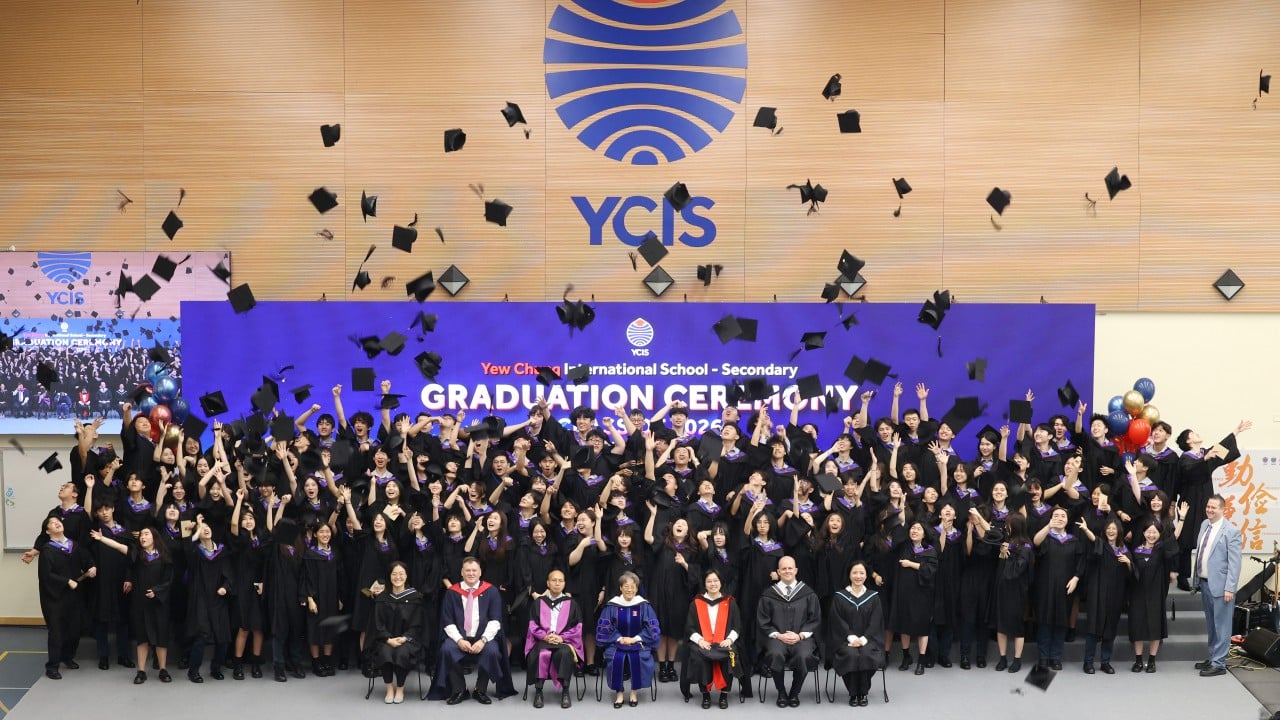
Every July, international school marketing departments run the exact same playbook. A press release drops, complete with smiling teenagers, confetti metaphors, and a bold headline celebrating "exceptional results" driven by one or two students who managed a perfect 45 in the International Baccalaureate (IB) Diploma Programme. Parents clap, tuition fees are justified, and the illusion remains intact.
It is a masterful distraction.
Chasing perfect IB scores has become a race to the bottom for true education. The obsessive celebration of outliers—those two or three students out of a cohort of hundreds who tick every box on a standardized rubric—hides a systemic failure in how elite schools prepare young adults for the actual world.
I have spent over a decade auditing academic systems and watching universities filter through thousands of identical applications. Trust me on this: the obsession with maximum point counts is warping student priorities, draining genuine intellectual curiosity, and optimizing for a world that no longer exists.
The Mirage of the 45-Point Score
Let’s dismantle the premise of the perfect score. The IB Diploma requires students to select six subjects alongside the core components: Theory of Knowledge (TOK), the Extended Essay (EE), and Creativity, Activity, Service (CAS). To hit a 45, a student must score a perfect 7 in every single subject and secure the maximum 3 bonus points from TOK and the EE.
Statistically, fewer than one percent of IB candidates worldwide achieve this. Elite private schools use these rare individuals as shields. By plastering the faces of their top 0.5% across banners, institutions avoid answering a much tougher question: What happened to the median student?
Focusing on the extreme right of the bell curve allows schools to mask a mediocre middle. A school can boast about two perfect scorers while simultaneously graduating dozens of students who barely scraped through with a 28, exhausted, burned out, and resentful of learning. When institutions optimize their teaching resources, faculty attention, and curriculum tracks toward producing a handful of trophy students, the broader student body pays the price.
Standardized Compliance vs. Original Thinking
The mechanism required to score a 45 is not deep intellect; it is flawless compliance.
To score a 7 in IB English or History, a student cannot simply write a brilliant, iconoclastic essay. They must adhere strictly to the assessment criteria laid out by examiners in Cardiff. The internal assessments and extended essays are graded against rigid rubrics where deviations are penalized.
- Did you formulate the hypothesis using the exact phrasing required?
- Did your reflection include the specific self-critique keywords the external examiner wants to see?
- Did you check the box for global context?
This is training for bureaucracy, not leadership. We are teaching highly capable young minds to guess what an anonymous assessor wants to hear, rather than how to construct a disruptive, original argument. The moment these students step into a venture-backed startup, a research lab, or a chaotic market, that compliance engine breaks down. The world does not hand out rubrics.
The Open Secret in Ivy League Admissions
Elite schools love to imply that a perfect score guarantees entry into Oxford, Cambridge, Harvard, or Stanford. It does not.
Speak to any seasoned admissions officer at a top-tier US university, and they will tell you the same thing: a student with a 42 who built a functioning community initiative or published original field research is vastly more attractive than a student with a 45 who did nothing but study.
Once a student passes the academic threshold—typically around 38 to 40 points in the IB—the marginal utility of an extra point drops to near zero. A 45 does not communicate that you are a genius; it communicates that you spent your weekends memorizing mark schemes instead of building something real.
Top universities are looking for "spiky" students—individuals with deep, obsessive expertise in one specific area. The IB structure, by its very nature, forces students to be well-rounded generalists. By demanding perfection across six disparate fields, schools force natural poets to stress over calculus, and brilliant programmers to agonize over literature analysis. The pursuit of the 45 flattens individual brilliance into a uniform, low-risk average.
The Mental Cost of Institutional Marketing
We need to talk about the hidden tax of these shiny press releases: chronic burnout before the age of 18.
The pressure to maintain a perfect academic record within a high-stakes, multi-year program manifests in unprecedented anxiety levels among international school students. Sleep deprivation is treated as a badge of honor. True intellectual exploration—taking a class just because you might fail it, or chasing a research rabbit hole that does not fit the syllabus—is actively discouraged because it risks the GPA.
Schools act as if this pressure is a necessary crucible for adult life. It is not. It is an artificial pressure cooker designed to generate data points for the school’s admissions brochure.
Rethinking the Metrics That Matter
If perfect scores are a distraction, what should parents and students actually look for?
The Value-Added Metric
Look at the spread, not the peak. A truly exceptional school is not one that takes a naturally brilliant student and keeps them brilliant. It is a school that takes an average student and elevates their critical thinking, confidence, and output by multiple standard deviations. Ask for the median score, the standard deviation, and the year-over-year growth of the bottom half of the cohort.
The Persistence of Failure
Look for programs that allow students to fail safely. If a school’s culture is so terrified of a drop in average scores that they steer students away from harder higher-level subjects, that school is prioritizing its own brand over the student's growth.
The Unstructured Output
Evaluate what students create outside the curriculum. Do they have time to build applications, launch independent publications, or engage in unmonitored community work? Or is every single hour of their day weaponized toward hitting a target on an exam sheet?
The Counter-Intuitive Truth
The fixation on celebrating perfect scorers is an admission of creative bankruptcy. It proves that an institution values the certainty of a standardized test over the unpredictable nature of real capability.
Stop measuring the quality of an education by the handful of students who managed to survive the system without making a single mistake. The real world belongs to the people who make mistakes, learn to pivot, and build things that cannot be graded by an examination board.
Take down the banners. Stop celebrating the 45s as if they are the ultimate goal of human development. Start looking at what happens to the rest of the classroom when the cameras are turned off.