The Great Bipedal Blunder
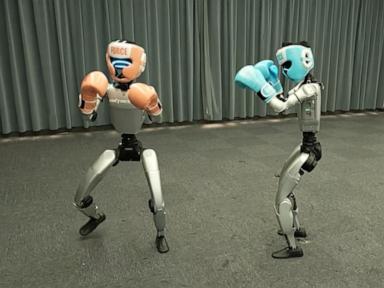
Geopolitics loves a shiny object. Right now, that object has two arms, two legs, and a price tag that would make a Silicon Valley VC blush. The narrative being shoved down your throat is simple: the United States and China are locked in a "Sputnik moment" for humanoid robots.
It is a lie. Learn more on a connected subject: this related article.
The obsession with the human form factor is not a technological necessity. It is a failure of imagination. While pundits argue about whether Tesla’s Optimus or Unitree’s H1 will dominate the factory floor, they are ignoring a fundamental truth of engineering: humans are built for survival, not efficiency.
We are biological compromises. We have back pain because we stood up too fast in evolutionary terms. We have fragile joints. We are top-heavy. Why, in a world governed by the laws of physics and the bottom line of a balance sheet, are we trying to replicate a flawed design to solve industrial problems? Additional reporting by Engadget delves into related views on the subject.
The "race" is a vanity project fueled by nationalistic posturing and marketing departments. If you want to win the automation war, stop building metal men.
The Physics of Failure
I have spent years watching companies torch capital on "general purpose" robotics. The pitch is always the same: "The world is built for humans, so the robots must be human."
This is the "Legacy Infrastructure Fallacy."
It assumes that it is cheaper to build a $150,000 robot capable of navigating a staircase than it is to install a $5,000 ramp or a conveyor belt. It assumes that a robot needs five fingers to pick up a box, despite the fact that a suction gripper or a specialized clamp has a 99.9% success rate compared to the clumsy haptics of a robotic hand.
The Math Doesn't Square
Let’s look at the $M \cdot g \cdot h$ of the situation.
- Energy Density: A humanoid robot spends roughly 70% of its battery life just not falling over. Active balancing is an energy hog.
- Point of Failure: A bipedal robot has dozens of degrees of freedom. Each one is a motor, a sensor, and a potential break point.
- The Center of Gravity Problem: Humans are inherently unstable. Putting a 30-pound battery pack in the torso of a biped creates a pendulum effect that requires massive computational overhead to manage.
Contrast this with a "boring" four-wheeled autonomous mobile robot (AMR). It is stable. It is energy-efficient. It can carry three times its own weight without a complex balancing algorithm. But wheels don’t look good in a promotional video set to synth-wave music, so they don't get the headlines.
China’s Scale vs. America’s Software
The media paints this as a binary competition. China has the supply chain; America has the AI.
China’s advantage is real, but it’s not what you think. It isn't about their ability to build a humanoid; it's about their ability to iterate on the actuators. Companies like Unitree and Fourier Intelligence are churning out hardware at a pace that makes Boston Dynamics look like a boutique hobby shop. They are commoditizing the joints.
However, China is falling into the same trap as the US. They are prioritizing the "cool factor" of the humanoid form to satisfy government mandates for "high-tech leadership."
Meanwhile, the US is obsessed with "End-to-End Neural Networks." The idea is that we can just show a robot 10,000 hours of video and it will magically learn how to fold laundry.
Imagine a scenario where you spend $100 million on a Blackwell GPU cluster to teach a robot how to use a screwdriver. You’ve just created the world’s most expensive, least reliable construction worker.
True innovation isn't making a robot act like a human. It’s making the environment so smart that "human-like" dexterity becomes obsolete.
The Dexterity Myth
"But humans are versatile!" the proponents scream.
Yes, a human can flip a pancake and then go perform heart surgery. A robot does not need to do both. In an industrial setting, versatility is a bug, not a feature.
When you buy a CNC machine, you don’t want it to be versatile enough to walk to the breakroom. You want it to cut metal with sub-micron precision 24/7. The humanoid is a "jack of all trades, master of none" in a world where mastery is the only thing that pays.
The Cost of "General Purpose"
- Training Time: Teaching a humanoid a new task via reinforcement learning takes weeks of simulation and "real-world" fine-tuning.
- Maintenance: If a humanoid trips, the repair bill is the price of a mid-sized sedan.
- Integration: Factories aren't "human-shaped." They are optimized for flow. A humanoid walking through a modern warehouse is an obstacle, not a solution.
The Silicon Valley Ego Trip
The American push for humanoids—led by figures like Elon Musk—is less about labor shortages and more about the "God Complex."
Building a humanoid is the ultimate engineering flex. It says, "We have mastered the human form." It’s an exercise in ego that distracts from the real, grit-under-the-fingernails automation that actually moves the GDP.
If we were serious about the "US-China Competition," we would be talking about standardizing pallet sizes, modularizing assembly lines, and perfecting the "lights-out" factory. Instead, we are debating whether a robot should have a face.
The face is there for you. It’s there to make the machine less threatening so you don't realize it's a glorified, inefficient forklift.
Where the Real Money Hides
If you want to track who is actually winning the automation war, look at the companies ignoring the humanoid hype.
Look at the firms perfecting multi-agent systems—swarms of small, specialized robots that work together. One robot picks, one robot carries, one robot packs. None of them look like people. Together, they outperform a humanoid by a factor of ten.
The future belongs to the "Form Follows Function" crowd.
The humanoid is a transitional fossil. It’s the "skeuomorphism" of robotics. Just as early digital interfaces tried to look like physical calendars and leather-bound notebooks, we are trying to make robots look like their predecessors: us.
We eventually realized that a digital calendar doesn't need to look like paper to be useful. We will eventually realize that a robot doesn't need legs to be productive.
The Coming Pivot
Watch the headlines carefully over the next 24 months. You will see a quiet shift.
The companies that raised hundreds of millions on the promise of "a robot in every home" will start pivoting. They will announce "specialized platforms." They will put their humanoid torsos on wheeled bases. They will ditch the five-fingered hands for three-pronged grippers.
They will call it an "evolutionary step." It’s actually a surrender to reality.
The US and China aren't competing to see who can build the best humanoid. They are competing to see who can realize the humanoid is a dead end first.
The winner won't be the country with the most lifelike machines. It will be the one that stops trying to play God and starts playing Engineer.
Stop looking at the legs. Look at the throughput. The rest is just expensive theater.
Build the tool, not the man.