Donald Trump is attempting to bomb his way out of an energy crisis that his own military campaign helped ignite. By issuing a 48-hour ultimatum to Tehran—threatening to "obliterate" Iran’s power plants if the Strait of Hormuz is not "fully open, without threat"—the White House has abandoned the pretense of a "winding down" phase. The deadline, set for Monday evening, is not just a military threat; it is a desperate gamble to lower soaring domestic gas prices and force a conclusion to a four-week-old war that has proven far more resilient than the administration predicted.
Tehran’s response has been immediate and predictably defiant. Rather than blinking, the Islamic Revolutionary Guard Corps (IRGC) and the Iranian military command have expanded their target list. They have vowed to strike every piece of U.S.-linked energy, desalination, and information technology infrastructure across the Middle East if their own civilian grid is touched. This is no longer a localized conflict over nuclear enrichment. It is a full-scale infrastructure war that threatens to plunge the region into darkness and the global economy into a tailspin.
The Mirage of a Quick Victory
Just days ago, the President stood outside the White House claiming that the U.S. had already "won." He told reporters that Iran's air force and navy were finished and that the U.S. military was "roaming free." If that were the case, the 48-hour deadline would not be necessary. The reality on the water tells a different story.
While the U.S. and Israel have successfully degraded conventional Iranian military assets, they have failed to neutralize the "asymmetric blockade" of the Strait of Hormuz. Iran has used a combination of mobile missile batteries, swarming drones, and sea mines to effectively shut down a waterway that handles 20% of the world’s oil. This has created a strategic paradox for Washington. The U.S. has achieved air superiority, yet it cannot guarantee the safety of a single commercial tanker passing through the 21-mile-wide chokepoint.
The economic fallout is hitting home. U.S. crude oil has surged 70% since the start of the year, and gasoline prices have jumped nearly a dollar per gallon. For a president who campaigned on economic stability and avoiding "stupid" foreign wars, the optics of cars idling in long lines at American gas stations are politically fatal. The 48-hour clock is as much about the 2026 election cycle as it is about Middle Eastern security.
Targeting the Grid
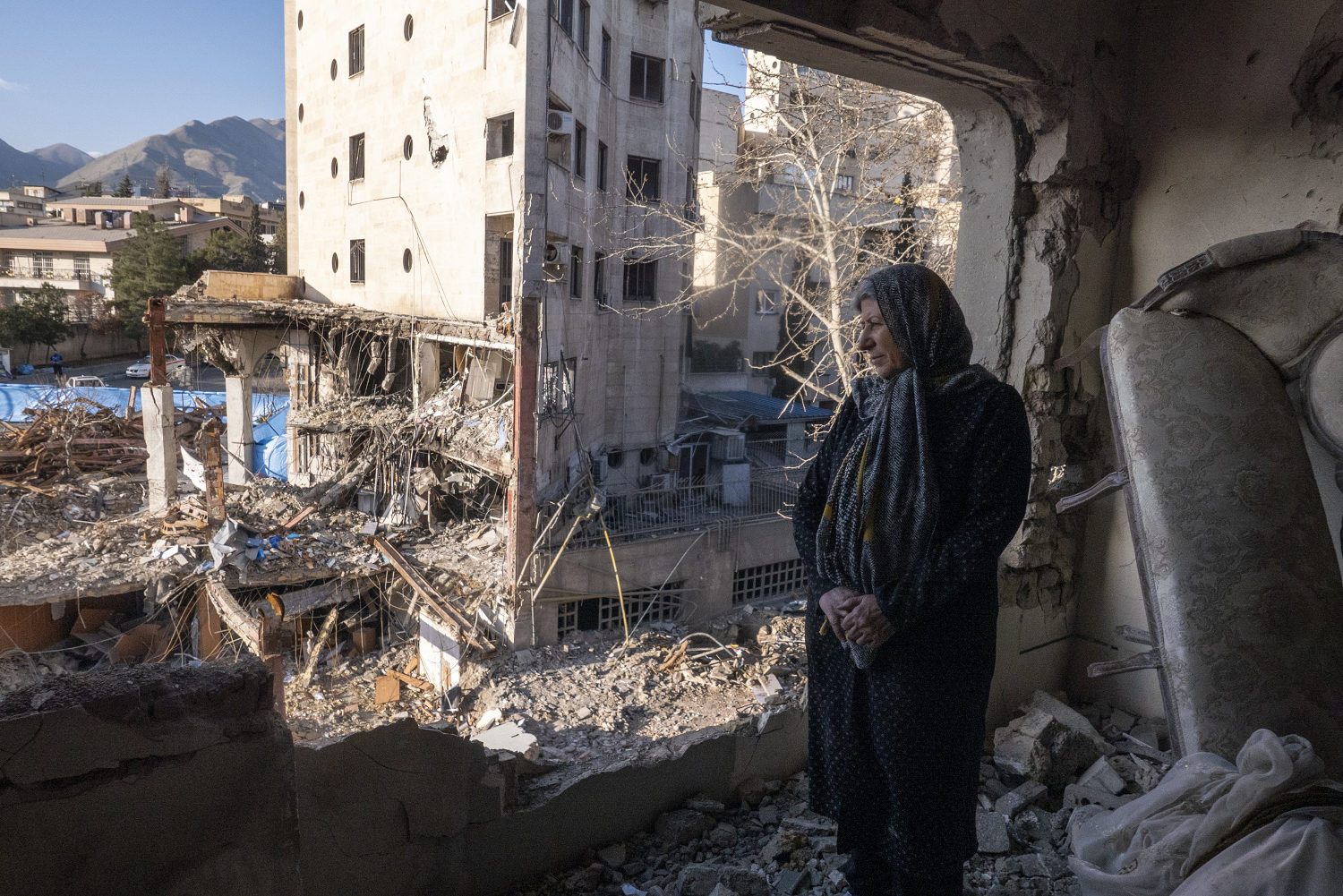
Trump’s specific threat to hit "power plants, starting with the biggest one first" represents a massive escalation in the rules of engagement. Targeting civilian infrastructure is a grey area in international law, often blurring the line between military necessity and collective punishment. The President previously claimed he wanted to avoid "trauma" to the Iranian civilian population, but that restraint has evaporated as the blockade persists.
Iranian officials have identified the "biggest" plant as either the Bushehr nuclear facility or the massive Damavand natural gas plant near Tehran. Striking Bushehr, in particular, carries the risk of radiological fallout, a move that would alienate even the few regional allies the U.S. has left.
The Iranian counter-threat is equally specific. By naming desalination plants and IT hubs, Tehran is pointing directly at the vulnerabilities of the Gulf monarchies and Israel. In a region where water is as precious as oil, the destruction of desalination plants in the UAE or Saudi Arabia would trigger a humanitarian catastrophe.
The Failed Coalition and the Lone Wolf Strategy
One of the most telling aspects of this crisis is the silence from America’s traditional allies. Trump has lashed out at NATO members and Asian partners like Japan and South Korea, calling them "cowards" for refusing to send warships into the Hormuz meat grinder.
The reluctance of these nations is grounded in a simple calculation: they do not believe the U.S. has a viable exit strategy. In London and Paris, there is a growing sense that the U.S.-Israeli campaign was launched without a clear definition of "victory." If the goal was regime change, the strikes have instead unified the Iranian public around a defensive nationalist banner. If the goal was to stop the nuclear program, the IAEA reports of continued strikes on sites like Natanz suggest the job is far from finished.
In a move of stunning geopolitical incoherence, the Trump administration recently moved to lift sanctions on 140 million barrels of "stranded" Iranian oil. The Treasury Department’s goal was to flood the market and lower prices. This means the United States is effectively trying to sell the very oil that funds the regime it is currently trying to bomb into submission. This "funding the enemy to save the consumer" policy highlights the lack of a cohesive long-term plan.
The Long Range Escalation
While the world watches the Strait, a more dangerous development occurred on Saturday. For the first time, Iran launched long-range ballistic missiles with a 4,000-kilometer range. These were not aimed at Israel, but at the joint U.S.-UK base on Diego Garcia in the Indian Ocean.
The message from Tehran was clear: our reach is no longer confined to the Persian Gulf. Israeli military officials noted that these missiles place European capitals like Paris, Berlin, and Rome within strike range. By demonstrating this capability, Iran is trying to fracture the Western alliance, signaling to Europe that their involvement in a "U.S. war" will bring the front line to their doorsteps.
The Deadline Looming
As the 48-hour clock ticks toward Monday night, the margin for error has disappeared. The U.S. has thousands of Marines heading toward the Gulf, and the Pentagon has requested another $200 billion in emergency funding.
The fundamental flaw in the 48-hour ultimatum is that it assumes Iran has a way to "fully open" the strait without losing face or security. For the Iranian leadership, reopening the waterway under the threat of total grid destruction looks like a surrender that would end their domestic legitimacy. For Trump, backing down after such a public threat would be seen as a sign of weakness that he has spent a lifetime trying to avoid.
The most likely outcome isn't a peaceful reopening, but a chaotic expansion of the target list. When the lights go out in Tehran, the taps may go dry in the Gulf, and the price at the pump in Ohio will reflect a world where the most vital trade route on earth has become a permanent no-go zone.
Keep a close eye on the movement of U.S. carrier groups in the next 12 hours. If they move within striking distance of the Iranian coast before the deadline expires, the window for a diplomatic off-ramp will have officially slammed shut.